Punjab inherited ₹14,191 crore DA arrears liability, says Finance Minister Cheema
Synopsis
Punjab's AAP government says it inherited a ₹14,191 crore DA arrears burden from predecessor governments — with the pay commission report frozen since 2016 and not a rupee cleared by the Congress before it left office. Having paid over ₹6,000 crore under a court-approved plan, the state is now weighing legal options after a High Court ruling it says overlooked key constitutional precedents.
Key Takeaways
Punjab Finance Minister Harpal Singh Cheema stated on 5 August that the AAP government inherited a ₹14,191 crore employees' pay commission arrears liability.
The liability arose from DA arrears frozen between January 2016 and July 2021 , after the pay commission report went unimplemented for years.
The AAP government has cleared over ₹6,000 crore under a structured liquidation plan approved by the Punjab and Haryana High Court .
Cheema cited the 2005 Constitution Bench judgment in the State of Maharashtra case, arguing the single-bench ruling overlooked key precedents.
The state government is examining the court's Monday judgment and available legal remedies , indicating a possible challenge.
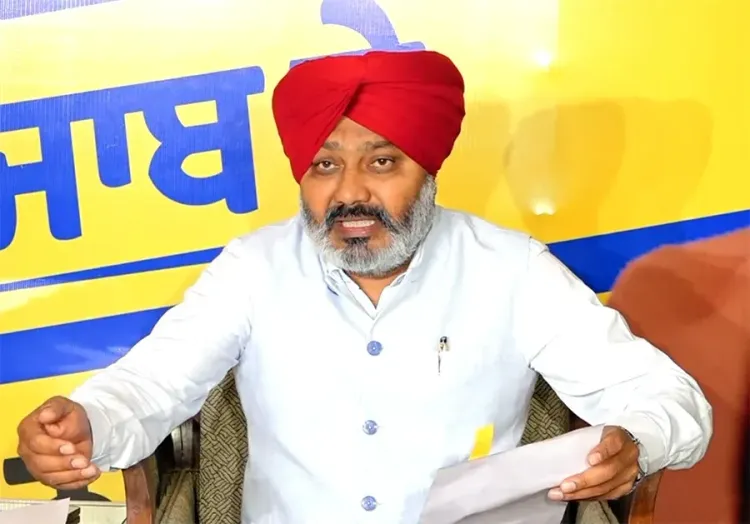
Punjab Finance Minister Harpal Singh Cheema on Tuesday, 5 August stated that the current Aam Aadmi Party (AAP)-led state government inherited a ₹14,191 crore liability in employees' pay commission arrears — a burden he attributed to decisions made under predecessor governments. The remarks came in response to a Punjab and Haryana High Court judgment on dearness allowance (DA) disbursements issued the previous day.
Origin of the ₹14,191 Crore Liability
According to Minister Cheema, the state's pay commission report was originally formulated in 2016 under the Shiromani Akali Dal (SAD)-Bharatiya Janata Party (BJP) coalition government but remained unimplemented for years. The report was eventually acted upon only in July 2021, during the tenure of the then Congress government.
As a result, DA arrears spanning January 2016 to July 2021 were frozen, crystallising a liability of ₹14,191 crore. Cheema alleged that the Congress administration, despite initiating the implementation process, did not release a single rupee towards clearing those arrears before leaving office.
What the AAP Government Has Done
Following legal action by state employees, the AAP government prepared a structured liquidation plan that was accepted by the High Court. Of the total ₹14,191 crore outstanding, the state has reportedly cleared over ₹6,000 crore under this court-approved schedule. Cheema said implementation of the plan is proceeding smoothly and the government remains committed to honouring all constitutionally and legally valid dues.
Government's Legal Position on the HC Judgment
Responding to the High Court's single-bench ruling on DA disbursements, Cheema argued that certain constitutional benchmarks and judicial precedents appeared to have been overlooked. He cited the 2005 Constitution Bench judgment in the State of Maharashtra case to support the state's position.
The Finance Minister contended that Punjab already offers 'some of the highest pay scales in the country, exceeding Central government pay structures in several categories.' The state's legal argument, he explained, was that a state government cannot simultaneously sustain both the highest basic pay scales and the highest Central DA rates when its own pay structures are already significantly elevated. He also noted that the previous Congress government had itself decided that newly recruited employees would be inducted under Central Pay Commission guidelines.
Political Context and What Comes Next
The AAP government is now examining the High Court's Monday judgment alongside available legal remedies, suggesting a possible appeal or review petition. The dispute underscores a recurring tension in state finances: the gap between constitutionally mandated employee entitlements and fiscal capacity, particularly in states that have inherited large wage and pension commitments. With over ₹8,000 crore in arrears still outstanding, the pace of future disbursements will remain under judicial and employee scrutiny.
Point of View
191 crore figure is a textbook example of deferred liability politics — each successive government implemented just enough to claim credit while leaving the bill for the next. The AAP's structured liquidation plan is a more transparent approach than its predecessors managed, but the High Court's intervention signals that judicial patience with state fiscal excuses has limits. The deeper issue is structural: Punjab's wage-to-revenue ratio leaves almost no room for arrears clearance without either borrowing or cutting development spending. Cheema's invocation of the 2005 Maharashtra bench judgment is legally credible, but courts have grown wary of states using pay-scale comparisons to delay DA obligations that employees have already earned.
NationPress
19 Sept 2026
Frequently Asked Questions
What is the ₹14,191 crore DA arrears liability in Punjab?
It refers to dearness allowance arrears owed to Punjab government employees for the period from January 2016 to July 2021, which were frozen when the state's pay commission report — formulated in 2016 — was implemented only in July 2021. The total outstanding liability stands at ₹14,191 crore.
How much has the Punjab government paid towards these arrears?
The AAP government has cleared over ₹6,000 crore of the ₹14,191 crore liability under a structured liquidation plan that was accepted by the Punjab and Haryana High Court. The government says implementation is proceeding as scheduled.
Why did the Punjab and Haryana High Court issue a judgment on DA arrears?
State employees approached the High Court seeking clearance of their pending DA arrears. The court accepted the government's liquidation plan but issued a fresh judgment on Monday — which Finance Minister Cheema says appeared to overlook certain constitutional benchmarks and the 2005 Constitution Bench ruling in the State of Maharashtra case.
Who is responsible for the DA arrears backlog, according to the AAP government?
Finance Minister Cheema attributed the backlog to the SAD-BJP government, which formulated the pay commission report in 2016 but did not implement it, and to the subsequent Congress government, which initiated implementation in July 2021 but reportedly did not release any funds towards clearing the arrears before leaving office.
What legal options is the Punjab government considering?
The state government is currently examining the High Court's Monday judgment alongside available legal remedies, which could include filing an appeal or a review petition before a division bench. No formal decision has been announced yet.