Puri Questions Congress States Over High Petrol VAT Rates
Synopsis
Union Petroleum Minister Hardeep Singh Puri on 9 June 2026 publicly challenged Congress-ruled states to explain why they have not cut VAT on petrol and diesel, noting the Modi government reduced central excise and BJP states followed with their own VAT cuts, resulting in consumers in Congress states paying over Rs 10 per litre more.
Key Takeaways
Union Petroleum Minister Hardeep Singh Puri posted on X on 9 June 2026 questioning why Congress-governed states have not reduced VAT on petrol and diesel.
The post claims consumers in Congress-ruled states pay more than Rs 10 per litre extra on petrol compared to BJP-ruled states.
The Modi government cut central excise duty on petrol by Rs 8 per litre and diesel by Rs 6 per litre in May 2022 .
BJP-governed states including Uttar Pradesh , Gujarat , and Madhya Pradesh subsequently reduced VAT by Rs 2 to Rs 5 per litre .
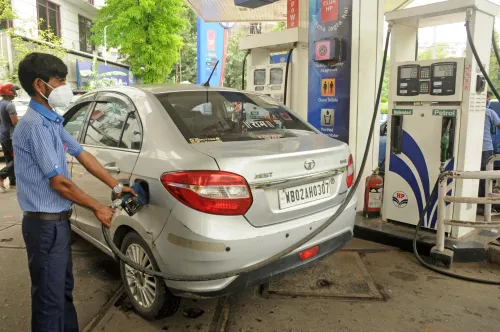
Petroleum products remain outside GST , leaving states full discretion over VAT rates and creating visible price gaps across state borders.
Responses from Congress state finance ministers and any upcoming VAT revision announcements will be key developments to watch.
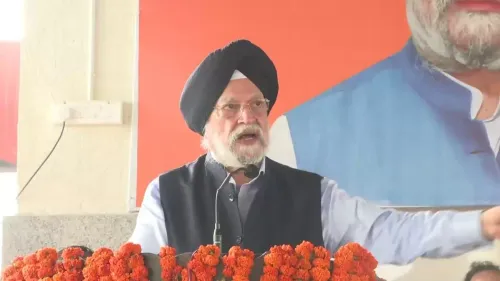
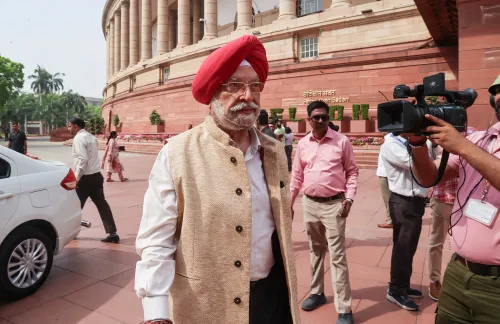
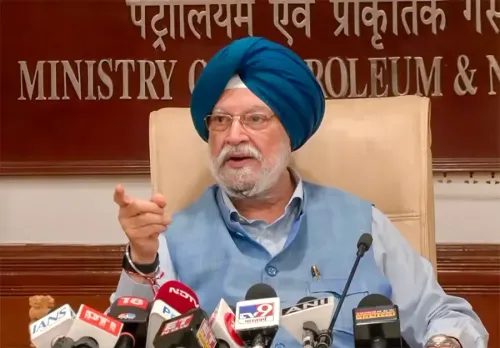
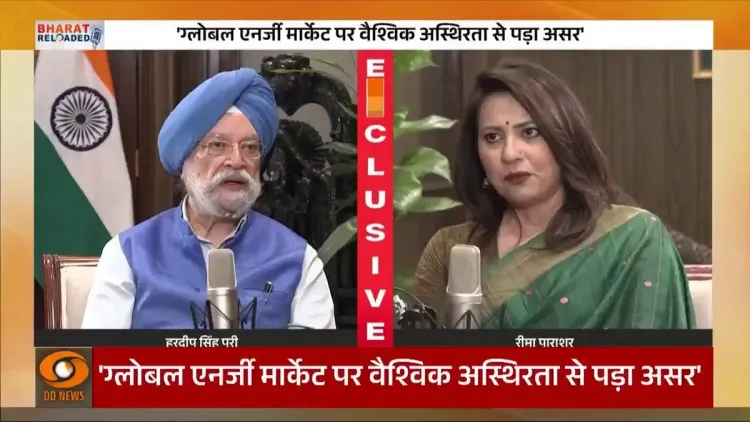
Union Petroleum Minister Hardeep Singh Puri on Tuesday, 9 June 2026 challenged Congress-governed states to explain why they have not reduced Value Added Tax on petrol and diesel, pointing out that both the central government and BJP-ruled states have already passed on relief to consumers through tax cuts. The minister posed the question directly on X, asking why Congress states continue to levy more than Rs 10 per litre extra on petrol compared to BJP-governed counterparts.
In his post, Puri wrote — translated from Hindi — 'When the Modi government can reduce central excise duty on petrol and diesel, and BJP-ruled states can reduce VAT... why can't Congress-ruled states reduce VAT? Why is more than Rs 10 per litre being collected on petrol compared to BJP-ruled states?'
Context
Fuel taxation in India is split between a central excise levy and a state-level Value Added Tax. Because petroleum products remain outside the Goods and Services Tax framework, each state retains full discretion to set its own VAT rate, meaning retail prices at the pump can vary significantly across state borders. This structural division has made fuel pricing a recurring flashpoint between the Union government and opposition-ruled states.
In May 2022, the central government cut excise duty on petrol by Rs 8 per litre and on diesel by Rs 6 per litre to cushion consumers against elevated global crude prices. Several BJP-governed states — including Uttar Pradesh, Gujarat, and Madhya Pradesh — followed with VAT reductions of Rs 2 to Rs 5 per litre.
Policy Backdrop
The Indian National Congress governs a number of states where VAT on fuel has remained at higher levels. Ministers in those states have historically argued that fuel tax revenues are essential for financing social welfare programmes and infrastructure, and that the central government's own excise collections dwarf state VAT receipts. The debate has resurfaced periodically whenever global crude benchmarks spike or when central excise cuts are announced without a corresponding reduction in state levies.
Puri, who has held the Petroleum and Natural Gas portfolio since 2021, has previously highlighted inter-state price differentials as evidence of a coordinated approach by BJP governments to ease the burden on consumers. His post on 9 June frames the differential explicitly as a political choice by Congress administrations rather than a fiscal compulsion.
Stakeholders and Impact
For ordinary petrol and diesel consumers — particularly in states like Rajasthan, Telangana, and Karnataka, which have at various points maintained higher VAT slabs — the gap translates directly into higher costs at the fuel station. Truckers, taxi operators, and two-wheeler commuters who rely on retail fuel prices are most exposed to inter-state differentials.
State finance departments in Congress-ruled states face a genuine trade-off: reducing VAT narrows their own-tax revenue base at a time when many states are managing fiscal deficits. Any VAT cut would require either compensatory borrowing or reallocation from other budget heads, a constraint that Union ministers have tended to downplay in the political debate.
What's Next
Puri's post is likely to invite formal responses from finance ministers of Congress-governed states, who may contest both the Rs 10 per litre differential figure and the framing of the issue. Analysts will watch whether the challenge accelerates any VAT revision announcements ahead of upcoming state budget sessions or whether it remains a point of political contestation without immediate policy movement. With global crude prices remaining volatile, the pressure on all state governments — regardless of political affiliation — to review fuel tax structures is unlikely to ease in the near term.
Point of View
The framing shifts the burden of proof onto Congress state governments to either dispute the number or justify the differential to their own voters. The post fits a broader pattern of the ruling party using fuel pricing as a retail political issue, particularly ahead of state elections, where pump prices are among the most viscerally felt economic indicators. Congress-ruled states will need a sharper counter-narrative than fiscal necessity alone if they want to neutralise the charge before it takes hold in public discourse.
NationPress
26 Oct 2026
Frequently Asked Questions
Why is petrol more expensive in Congress-ruled states than BJP states?
The difference arises primarily from state-level Value Added Tax rates, which each state sets independently since petroleum products are outside GST. BJP-ruled states reduced VAT following central excise cuts in 2022, while several Congress-governed states maintained higher rates, contributing to the per-litre price gap Puri highlighted.
What did the Modi government do to reduce petrol prices?
In May 2022, the central government reduced excise duty on petrol by Rs 8 per litre and on diesel by Rs 6 per litre to offset high global crude prices, followed by VAT cuts of Rs 2 to Rs 5 per litre in several BJP-governed states.
Can state governments reduce VAT on petrol and diesel?
Yes. Because petrol and diesel are not covered under GST, state governments retain full authority to set and revise VAT rates on these fuels at any time, independent of central government decisions.
What is the difference between central excise duty and state VAT on fuel?
Central excise duty is levied by the Union government on fuel production and is uniform nationwide. State VAT is a separate levy set by each state government, meaning it varies across states and is a significant factor in why retail fuel prices differ from one state to another.
How much extra do consumers pay for petrol in Congress states compared to BJP states?
Union Petroleum Minister Hardeep Singh Puri claimed on 9 June 2026 that consumers in Congress-ruled states pay more than Rs 10 per litre extra on petrol compared to BJP-governed states, though this specific figure has not been independently verified.