Understanding the Fuel Tax Reduction: Who Gains and Its Implications
Synopsis
This article delves into the recent fuel tax cut by the Indian government, exploring its effects on consumers and the potential revenue implications for the Centre and states amidst rising crude prices.
Key Takeaways
Excise duty on petrol reduced to Rs 3 per litre.
Diesel has effectively been exempted from excise duty.
Expected annual revenue loss of Rs 1.5 trillion for the government.
Fuel taxes are crucial for government revenue .
This cut aims to protect consumers from rising prices.
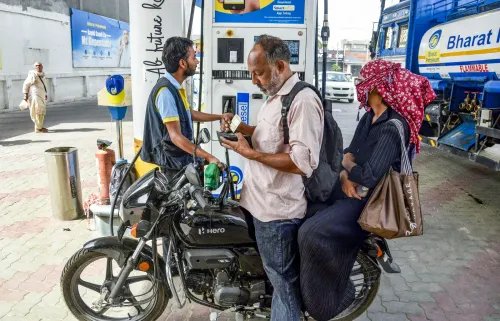
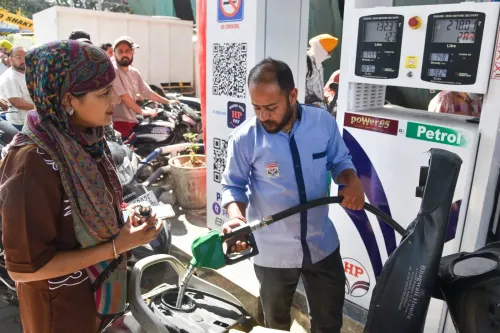
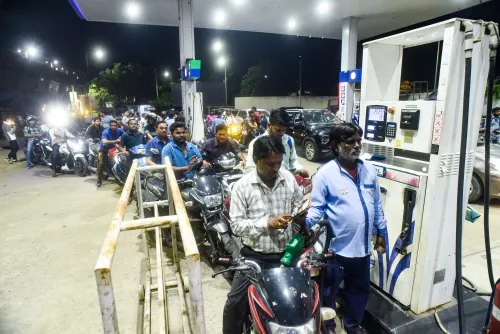
New Delhi, March 27 (NationPress) In response to surging crude oil prices and increasing pressures on oil retailers, the government's recent decision to slash the excise duty on petrol and diesel by Rs 10 per litre offers immediate relief to consumers while potentially influencing a crucial revenue source.
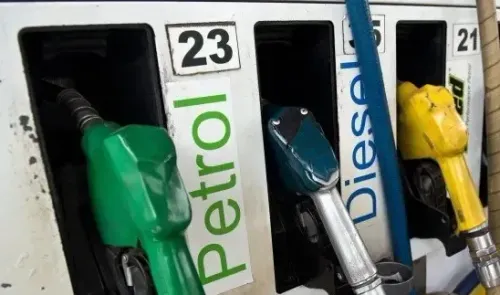
Following the updated rates, the excise duty on petrol is now set at Rs 3 per litre, with diesel effectively becoming duty-free.
This change is prompted by the high global crude oil prices linked to the ongoing conflict in West Asia, which has raised costs for oil marketing companies (OMCs).
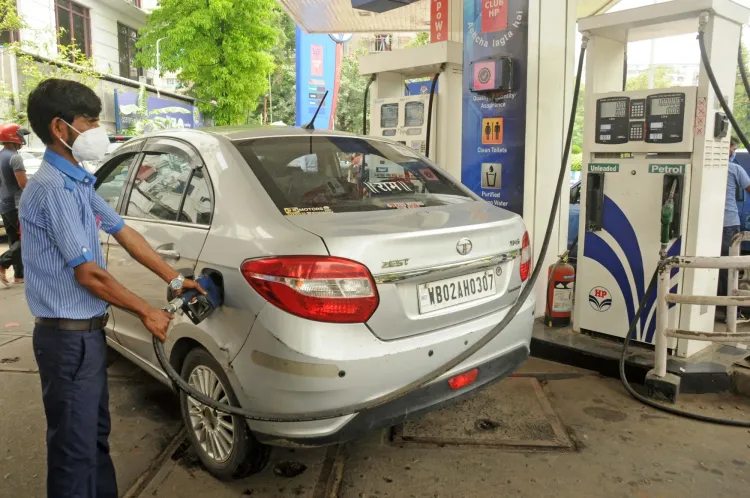
The duty reduction aims to assist OMCs in managing elevated input costs, allowing them to approach break-even operations without the immediate need to increase retail fuel prices, thereby shielding consumers from a possible price surge.
Additionally, this decision draws attention to the significance of fuel taxes, a major contributor to government revenues.
The taxes collected on petrol and diesel—through central excise duty and state-level VAT—play a vital role in funding for both the Centre and state governments. Data from the Petroleum Planning and Analysis Cell (PPAC) indicates that the petroleum sector yielded over Rs 7.5 trillion in tax revenue during 2023–24.
Out of this, the Centre has accrued approximately Rs 2.7–3 trillion annually from excise duties, while states have received over Rs 3 trillion from VAT.
Fuel taxes gained importance during the Covid-19 pandemic, as lower crude prices enabled governments to increase duties and bolster their revenues. Since then, collections have adjusted as taxes were lowered to address inflationary pressures.
The excise duty represents a fixed tax applied by the Union government on every litre of petrol and diesel. Beyond the basic excise, the Centre imposes additional cesses, such as road and infrastructure cesses, which are entirely retained by the Centre. States, on the other hand, impose VAT or sales tax that varies by region.
In metropolitan areas like Delhi, central taxes constitute about 43 percent of petrol prices and approximately 37 percent of diesel prices, with state taxes also making a considerable impact.
A significant concern has been the rising share of cess and surcharge within the Centre's excise system, which is excluded from the divisible pool shared with states, resulting in greater revenue retention by the Centre. This issue is frequently highlighted by state governments.
Fuel taxes are a crucial element of public finances, contributing around 18–19 percent of the Centre's gross tax revenue, while for states, petroleum taxes make up roughly 25–35 percent of their tax collections.
However, the fiscal implications of such duty reductions can be substantial. Market assessments indicate that each Re 1 per litre cut in excise duty translates to an annual revenue loss of Rs 14,000–16,000 crore.
Following this logic, a Rs 10 per litre cut could lead to an annual revenue reduction of around Rs 1.5 trillion for the Centre.
Fuel taxes directly affect household budgets, impacting transportation costs and the prices of goods. Increased taxes generally contribute to inflationary pressures, while reductions can alleviate some of these burdens.
In light of the government's announcement, Finance Minister Nirmala Sitharaman stated that this measure aims to safeguard consumers from escalating prices.
Meanwhile, global crude oil prices remain high, with Brent crude futures surpassing the $100 per barrel mark amid ongoing geopolitical tensions.
Point of View
Emphasizing the balance between consumer relief and government revenue implications, highlighting the importance of fuel taxes in public finance.
NationPress
26 Sept 2026
Frequently Asked Questions
What is the current excise duty on petrol and diesel?
The excise duty on petrol has been reduced to Rs 3 per litre, while diesel is effectively exempt from excise duty.
How will the fuel tax cut affect consumers?
The fuel tax cut is expected to provide immediate relief to consumers by preventing a rise in retail fuel prices.
What revenue loss does the government anticipate from this cut?
The government could face an annual revenue loss of approximately Rs 1.5 trillion due to the Rs 10 per litre cut.
How significant are fuel taxes for government finances?
Fuel taxes contribute around 18–19 percent of the Centre's gross tax revenue and 25–35 percent of state tax collections.
What factors are influencing current fuel prices?
Current fuel prices are heavily influenced by elevated global crude oil prices and geopolitical tensions.