Puri: E20 fuel raised no technical issues in 1.5 cr Maruti vehicles
Synopsis
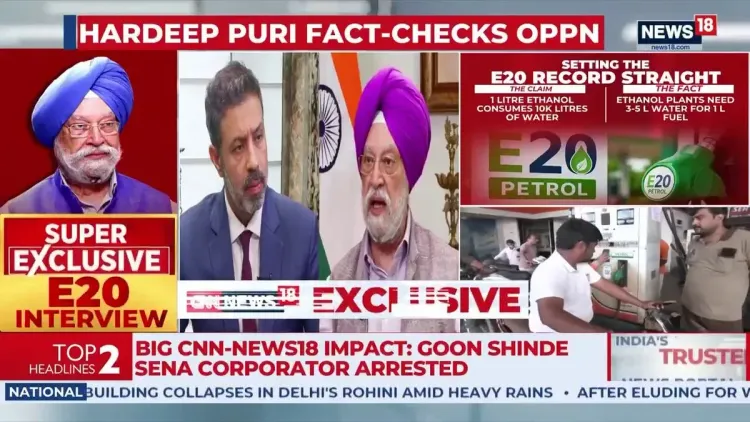
Union Petroleum Minister Hardeep Singh Puri cited Maruti Suzuki data showing no technical issues in over 1.5 crore E20-serviced vehicles, and said automakers and insurers have both confirmed E20 does not affect warranties or insurance policies, calling earlier contrary claims mere propaganda.
Key Takeaways
Maruti Suzuki reported zero E20-related technical problems during servicing of more than 1.5 crore vehicles , according to Minister Puri's post.
Vehicle manufacturers have confirmed that using E20 ethanol-blended petrol does not void vehicle warranties.
Insurance companies have clarified that E20 usage has no bearing on insurance claims or policy terms.
India's Ethanol Blended Petrol Programme targets 20 per cent blending , with nationwide E20 availability rolled out since April 2023 .
The programme is designed to cut crude oil imports — India's import dependence has exceeded 85 per cent — while supporting sugarcane farmers.
Puri framed earlier consumer concerns as deliberate propaganda, signalling the government intends to press forward with the blending mandate.
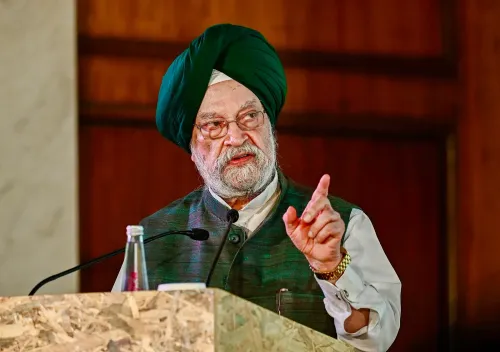
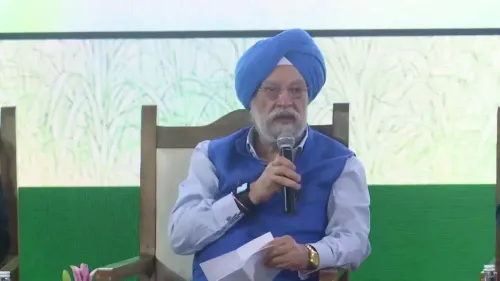
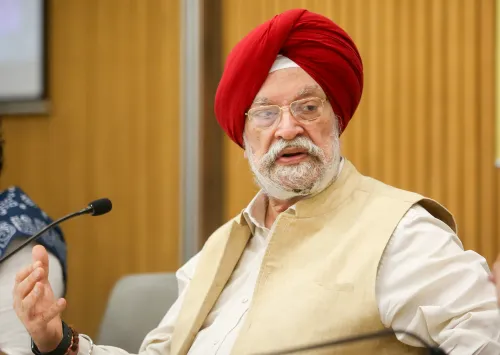
Union Petroleum Minister Hardeep Singh Puri on Friday, 10 July 2026 cited data from Maruti Suzuki to assert that E20 ethanol-blended petrol has not caused any technical problems across more than 1.5 crore vehicles serviced by the automaker, and that earlier concerns about warranty and insurance implications were unfounded.
Posting in Hindi on X, the Minister stated: 'मारुति सुज़ुकी ने बताया कि 1.5 करोड़ से अधिक वाहनों की सर्विसिंग के दौरान E20 से जुड़ी कोई भी तकनीकी समस्या सामने नहीं आई' — ('Maruti Suzuki has confirmed that during the servicing of more than 1.5 crore vehicles, no technical problem related to E20 came to light.')
Puri further noted that vehicle manufacturers have clarified that using E20 does not affect vehicle warranties, and that insurance companies have confirmed E20 causes no impact on insurance claims or policies. He added pointedly: 'Propaganda only lasts a few days.'
Context
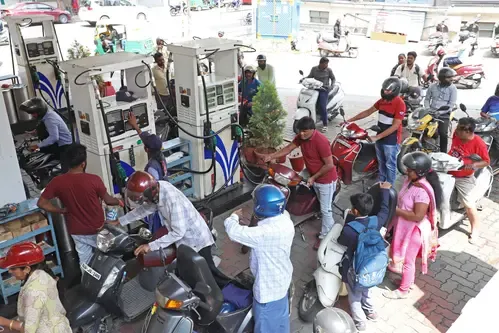
E20 is petrol blended with 20 per cent ethanol, the flagship target of India's Ethanol Blended Petrol (EBP) Programme. The government has been rolling out E20 availability at fuel stations nationwide since April 2023, alongside compatibility certifications for new vehicles from major original equipment manufacturers (OEMs).
Since the rollout, a section of social media and consumer forums had raised questions about whether running E20 through older or incompatible engines could void manufacturer warranties or trigger insurance claim rejections. Puri's post is a direct rebuttal to those concerns, citing industry-level data and official clarifications from both automakers and insurers.
Policy Backdrop
India's National Biofuels Policy 2018 originally set an indicative target of 20 per cent ethanol blending by 2030. In 2021, the government advanced this deadline to 2025, reflecting strategic urgency around reducing crude oil import dependence — which has remained above 85 per cent in recent years.
The programme draws ethanol primarily from sugarcane molasses and surplus food grains, simultaneously serving as an assured revenue stream for farmers. India's EBP Programme is often compared to Brazil's long-running flex-fuel mandate, though India's timeline is notably compressed and is directly linked to domestic food-stock management priorities.
As Petroleum Minister, Puri has been a consistent advocate for the blending programme, framing it as a convergence of energy security, agricultural welfare, and emissions reduction. His ministry oversees the oil marketing companies (OMCs) that procure and blend ethanol at refineries before distribution.
Stakeholders and Impact
Maruti Suzuki, India's largest passenger vehicle manufacturer by volume, carries significant weight in this debate — its fleet represents a substantial share of cars on Indian roads. A confirmation from the company that 1.5 crore-plus vehicles have been serviced without E20-related technical complaints is a materially significant data point for consumer confidence.
For vehicle owners, the warranty and insurance clarifications address the most common anxieties around switching to E20. For sugarcane farmers and the broader agricultural supply chain, sustained demand for ethanol feedstock hinges on consumer and industry acceptance of blended fuel. Oil marketing companies benefit from a more predictable blending mandate and reduced crude import bills.
What's Next
Attention will now turn to whether remaining OEMs issue similar fleet-wide E20 compatibility notifications, and whether the government moves to formalise insurance and warranty protections in regulation rather than relying on voluntary industry clarifications. Ethanol procurement pricing for the 2026-27 sugar season is also expected to be a key policy decision in the coming months.
If the industry-level data cited by Puri continues to hold, it is likely to accelerate the political and regulatory push toward higher blending targets beyond E20 — a trajectory that would further test both engine technology standards and the country's ethanol production capacity.
Point of View
' he is working to insulate the E20 rollout from consumer-level resistance before it can harden into a political liability. The choice of Maruti Suzuki, whose mass-market positioning makes it the most credible voice for ordinary car owners, is deliberate and tactically sound. This fits a broader pattern in which the government has moved to pre-empt misinformation cycles around fuel policy rather than respond to them after they gain traction. The real test will be whether the warranty and insurance clarifications are codified in regulation, giving consumers enforceable rights rather than voluntary assurances.
NationPress
10 Jul 2026
Frequently Asked Questions
Does E20 petrol affect my car's warranty in India?
No. Vehicle manufacturers in India have officially clarified that using E20 ethanol-blended petrol does not affect vehicle warranties. Union Petroleum Minister Hardeep Singh Puri cited these clarifications in a post on 10 July 2026.
Can using E20 fuel affect my car insurance claim?
No. Insurance companies have confirmed that using E20 petrol has no impact on insurance claims or policy terms, according to clarifications cited by Minister Puri.
What is E20 petrol and is it safe for my car?
E20 is petrol blended with 20 per cent ethanol. Maruti Suzuki, India's largest carmaker, has reported no technical issues related to E20 during the servicing of more than 1.5 crore vehicles, indicating it is safe for compatible cars.
What is India's ethanol blending target?
India's target is 20 per cent ethanol blending in petrol, originally set for 2030 under the National Biofuels Policy 2018 and later advanced to 2025. Nationwide E20 fuel availability at pumps began in April 2023.
Why is India promoting ethanol blending in petrol?
India promotes ethanol blending primarily to reduce crude oil import dependence, which exceeds 85 per cent of domestic demand, lower tailpipe emissions, and provide additional income to sugarcane farmers through ethanol procurement.