Puri Flags DSF-IV Awards, Samudra Manthan Push to Cut Import Bill
Synopsis
Union Petroleum Minister Hardeep Singh Puri on 22 October 2026 presided over DSF Bid Round IV contract awards covering 55 discoveries and 260 MMToe in-place volume, and released Samudra Manthan Operational Guidelines, framing both as India's twin strategy to cut crude import dependence and hit a 1 million sq km exploration target by 2030.
Key Takeaways
DSF Bid Round IV covers 55 discoveries across 9 contract areas in 5 sedimentary basins , totalling 6,133.02 sq km and an estimated 260 MMToe of in-place volume.
9 new private-sector players participated in DSF-IV, signalling growing industry confidence in the reformed licensing regime.
India currently imports 88% of crude oil and about 50% of natural gas ; the country is projected to account for 30% of global incremental energy demand over the next two decades.
Active exploration now covers 12% of India's sedimentary basin area; inclusion of OALP rounds X and XI is expected to push this to 19% .
81% of active exploration area has been awarded post- 2014 , underlining the scale of reform since the HELP and OALP frameworks were introduced.
The government targets 1 million sq km of exploration acreage by 2030 ; Samudra Manthan will fund shared drilling costs for around 60 deep- and ultra-deep-water wells .
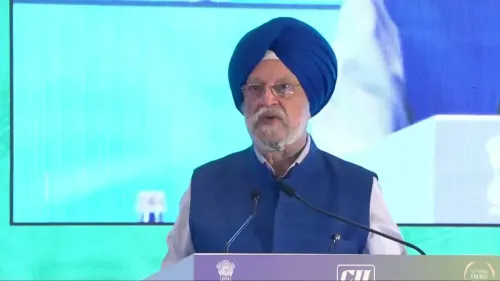
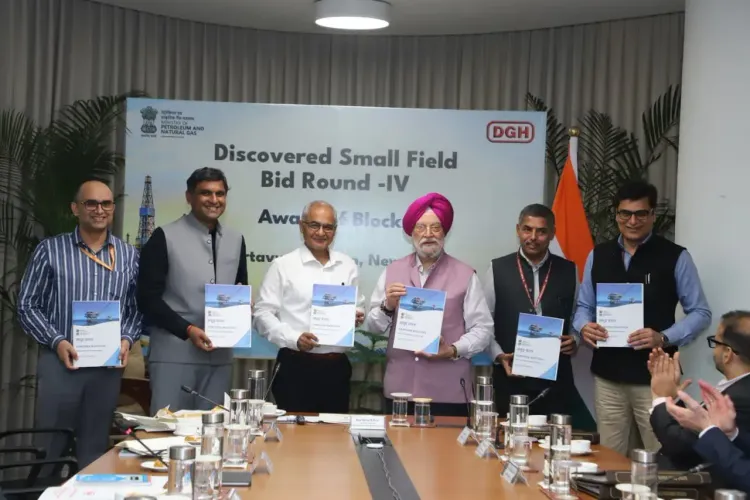
India's oil and gas exploration sector got a tangible shot in the arm on Thursday, 22 October 2026, as Union Petroleum Minister Hardeep Singh Puri presided over the DSF Bid Round IV Contract Awards and the simultaneous release of the Samudra Manthan Operational Guidelines — two concrete steps in the government's decade-long drive to wean the country off imported hydrocarbons.
What DSF-IV puts on the table
DSF Bid Round IV, launched on 15 April 2025, offered 55 discoveries grouped into nine contract areas across five sedimentary basins, covering 6,133.02 sq km. Of these, three onland areas account for 1,120.91 sq km and six offshore areas cover 5,012.11 sq km. Together those fields hold an estimated 260 million tonnes of oil equivalent of in-place volume — stranded resources that have been waiting for the right terms to attract a drill bit.
Nine new private-sector players entered the fray in DSF-IV, a detail Puri highlighted as proof that reform is 'meaningful when it improves the terms on which companies can invest, take technical decisions and bring fields into production.' The Discovered Small Fields (DSF) policy, notified in 2015, was designed precisely to do that — unlocking discoveries previously parked with national oil companies under the old nomination-based regime and putting them up for competitive auction.
The Samudra Manthan dimension: going deeper
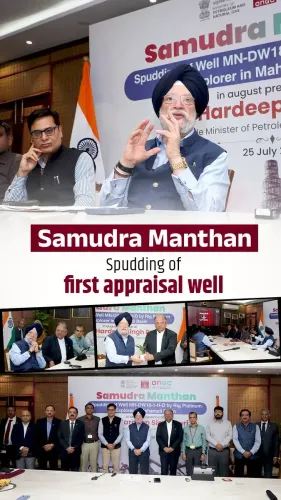
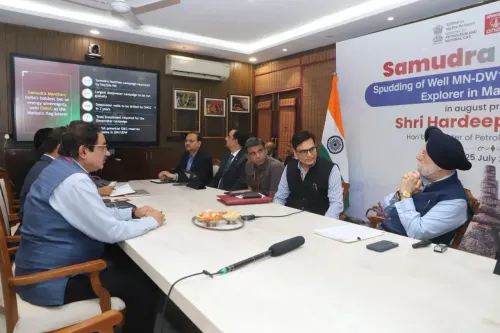
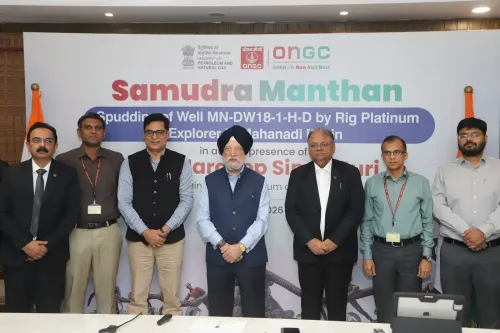
Awarding known small fields is one half of the equation. The other is venturing into territory India has barely scratched. That is where Samudra Manthan comes in — an offshore-focused programme built around new seismic surveys, shared drilling costs for around 60 deep- and ultra-deep-water wells, and common offshore infrastructure designed to spread risk across players who would never individually bear it alone.
The release of the programme's operational guidelines on the same day as the DSF-IV awards was deliberate framing. As Puri put it, 'DSF-IV and Samudra Manthan are two halves of one strategy — develop what we have discovered; explore what remains beyond our reach.' One instrument monetises the low-hanging fruit; the other plants seeds in India's deep-water frontier.
The import-dependence arithmetic driving urgency
The numbers make the urgency hard to argue with. India currently imports 88% of its crude oil and about 50% of its natural gas. With the country projected to drive roughly 30% of global incremental energy demand over the next two decades, that import exposure is a structural vulnerability — for the rupee, for the current account, and for energy security every time geopolitics rattles oil markets.
Post-2014 reforms under the Hydrocarbon Exploration and Licensing Policy (HELP) and the Open Acreage Licensing Policy (OALP) have moved the needle. Active exploration has climbed to 12% of India's sedimentary basin area, and with the award of OALP rounds X and XI blocks, that figure is expected to reach 19%. Puri underscored that 81% of the active exploration area has been awarded after 2014 — a statistic that frames the post-reform decade as the decisive turning point. The government's stated target is to reach 1 million sq km of exploration acreage by 2030.
From NELP to New ORD Act: the reform scaffolding
Puri placed Thursday's events inside a broader legislative and regulatory scaffold: a new Oilfields (Regulation and Development) Act, updated PNG Rules, a new Framework Contract, and revised Exploration Programme Specifications (EPS) norms — reforms that collectively modernise the legal architecture India's upstream sector operates under. The Directorate General of Hydrocarbons (DGH), the technical regulator that administers bid rounds and field-development approvals, has been the operational backbone of each successive round.
India's sedimentary basins span roughly 3.4 million sq km. Even after a decade of reform momentum, the country has explored a fraction of that prospective territory. The path from 12% to 19% to the 1 million sq km goal runs straight through the choices made at events like Thursday's — which contracts get signed, which operators actually drill, and whether the Samudra Manthan seismic campaigns translate into commercially viable deepwater finds.
That, more than any single announcement, is the story India's energy policymakers are betting on.
Point of View
And Samudra Manthan's value will ultimately be judged by whether shared seismic and drill-cost mechanisms actually attract private capital to water depths Indian operators have historically avoided. The 1 million sq km by 2030 target gives the government roughly four years to convert policy momentum into barrels.
NationPress
22 Oct 2026
Frequently Asked Questions
What is DSF Bid Round IV and what was announced on 22 October 2026?
DSF Bid Round IV is the fourth auction of small oil and gas discoveries previously held by national oil companies. On 22 October 2026, Union Petroleum Minister Hardeep Singh Puri presided over the contract awards for DSF-IV, which covers 55 discoveries across 9 contract areas in 5 sedimentary basins totalling 6,133.02 sq km and an estimated 260 million tonnes of oil equivalent in-place volume.
What is the Samudra Manthan Mission and how does it work?
Samudra Manthan is an offshore exploration programme launched by Prime Minister Narendra Modi that aims to unlock India's deep- and ultra-deep-water resources through new seismic surveys, shared drilling costs for around 60 deepwater wells, and common offshore infrastructure to spread risk across multiple operators.
How dependent is India on imported oil and gas?
India currently imports 88% of its crude oil and about 50% of its natural gas. With the country expected to account for roughly 30% of global incremental energy demand over the next two decades, reducing this import dependence is a central goal of the government's upstream reform programme.
What is India's exploration acreage target and how close is the country to achieving it?
India's target is to bring 1 million sq km under active exploration by 2030. Currently, active exploration covers 12% of the country's sedimentary basin area; with the award of OALP rounds X and XI blocks, this is expected to rise to 19%. The government notes that 81% of the active exploration area has been awarded after 2014.
What is the Open Acreage Licensing Policy (OALP) and how does it differ from the old system?
OALP, introduced in 2016 under the Hydrocarbon Exploration and Licensing Policy framework, allows companies to select exploration blocks on a continuous basis rather than waiting for government-announced discrete rounds. This replaced the earlier New Exploration Licensing Policy regime and shifted the model to revenue sharing, giving investors more flexibility in timing and block selection.