Puri Spuds ONGC Deepwater Well in Mahanadi Basin
Synopsis
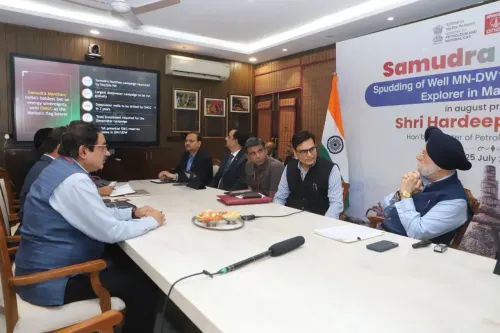
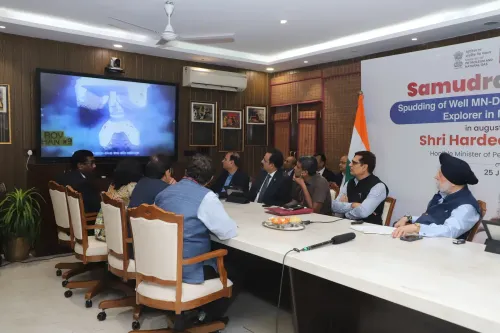
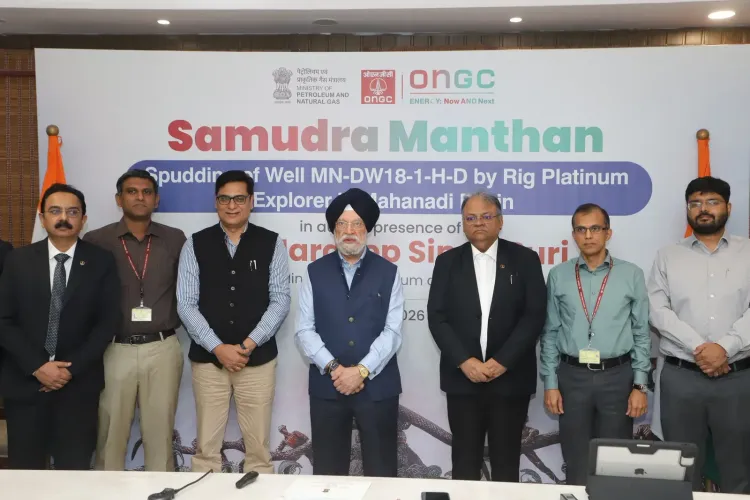
Union Petroleum Minister Hardeep Singh Puri on 25 July 2026 virtually spudded ONGC's exploratory well MN-DW18-1-H-D in the Mahanadi Offshore Basin, launching the Samudra Manthan Campaign to tap India's estimated 5,600 MMTOE deepwater hydrocarbon potential and reduce import dependence.
Key Takeaways
Union Petroleum Minister Hardeep Singh Puri virtually spudded ONGC 's exploratory well MN-DW18-1-H-D in the Mahanadi Offshore Basin on 25 July 2026 .
The spudding is described as a major milestone in the Samudra Manthan Campaign , targeting deep and ultra-deepwater hydrocarbon exploration.
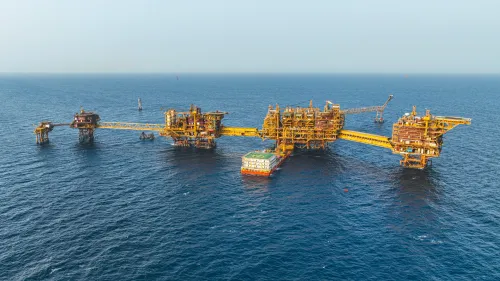
India's offshore basins are estimated to hold over 5,600 MMTOE of hydrocarbon potential at water depths of up to 3,000 metres .
Recent exploration activity in the Cauvery , Mahanadi and Andaman basins has reinforced the promise of India's offshore frontier.
The campaign aligns with PM Modi 's call for harnessing untapped offshore resources and the broader Atmanirbhar Bharat energy self-reliance objective.
India's crude import dependence has consistently exceeded 80 per cent , making frontier deepwater exploration a strategic priority.
Union Petroleum Minister Hardeep Singh Puri on Saturday, 25 July 2026, virtually spudded ONGC's exploratory well MN-DW18-1-H-D in the Mahanadi Offshore Basin, marking the formal commencement of drilling under the government's Samudra Manthan Campaign — an ambitious push to unlock India's deep and ultra-deepwater hydrocarbon resources.
Context
The spudding of well MN-DW18-1-H-D is described by the minister as 'a major milestone' in the Samudra Manthan Campaign, which targets exploration of offshore acreage extending to water depths of up to 3,000 metres. Puri stated that India's eastern and western offshore basins are estimated to hold over 5,600 MMTOE (million metric tonnes of oil equivalent) of hydrocarbon potential. The event was conducted virtually, with Puri noting he was 'very happy' to mark the occasion.
The minister directly linked the campaign to Prime Minister Narendra Modi's call for harnessing India's untapped offshore oil and gas resources, framing deepwater drilling as central to the country's energy self-reliance agenda.
Policy Backdrop
ONGC, India's largest state-owned exploration and production company, has operated offshore since the landmark Mumbai High discovery in 1974, which established the country's offshore production capability. Subsequent policy shifts — including the Hydrocarbon Exploration and Licensing Policy (HELP) introduced in 2016 and the Open Acreage Licensing Policy (OALP) rounds launched from 2017 — restructured the licensing regime to attract broader investment in frontier acreage, including deepwater blocks.
India's crude import dependence has consistently exceeded 80 per cent of domestic consumption, making frontier exploration a recurring policy priority across successive governments. The Samudra Manthan Campaign represents the current administration's most structured deepwater push, aligning with the broader Atmanirbhar Bharat objective of reducing reliance on imported energy.
Recent exploration activity in the Cauvery, Mahanadi and Andaman basins has been cited by the minister as reinforcing the promise of India's offshore frontier, with seismic and drilling campaigns across these sectors gaining momentum over recent licensing rounds.
Stakeholders and Impact
ONGC bears the primary operational and financial risk of the deepwater campaign, with each well in ultra-deep settings representing significant technical complexity and capital expenditure. A commercial discovery in the Mahanadi Offshore Basin could open a new eastern offshore production province, complementing existing western-coast output from fields such as Mumbai High.
For energy consumers and the broader economy, successful deepwater finds would contribute to moderating India's import bill. The minister stated that 'every prospect evaluated, well drilled and discovery made will contribute towards enhancing domestic production, reducing import dependence and strengthening India's energy security and self-reliance.'
What's Next
The results from well MN-DW18-1-H-D will be closely watched as an early indicator of the Samudra Manthan Campaign's commercial viability. Deepwater drilling timelines typically span several months before preliminary findings are available. Further announcements on additional wells under the campaign, as well as upcoming OALP bid rounds covering additional deepwater acreage, are expected to follow as the programme scales up.
If the Mahanadi well yields encouraging results, it could accelerate investor interest in India's eastern offshore frontier and prompt accelerated acreage releases — a development that would carry significant long-term implications for India's domestic production trajectory and its ambition to reduce dependence on imported crude.
Point of View
Echoing the pattern of government schemes that consolidate multiple policy threads under a single communicable umbrella. For ONGC, deepwater drilling is a high-stakes bet: the technical and capital demands are substantial, and commercial outcomes remain uncertain. The minister's framing of every well drilled as a contribution to national security elevates the programme beyond a routine exploration exercise, building political capital that will be drawn upon if and when discoveries are announced.
NationPress
25 Jul 2026
Frequently Asked Questions
What is the Samudra Manthan Campaign?
The Samudra Manthan Campaign is a government initiative to accelerate exploration of India's deep and ultra-deepwater hydrocarbon resources in offshore basins, with the goal of enhancing domestic production and reducing crude oil import dependence.
What is well MN-DW18-1-H-D and where is it located?
MN-DW18-1-H-D is an ONGC exploratory well spudded in the Mahanadi Offshore Basin, located in the Bay of Bengal off the coast of Odisha, as part of India's deepwater exploration campaign.
How much hydrocarbon potential do India's offshore basins hold?
India's eastern and western offshore basins, extending to water depths of up to 3,000 metres, are estimated to hold over 5,600 MMTOE (million metric tonnes of oil equivalent) of hydrocarbon potential.
Why is deepwater exploration important for India's energy security?
India imports over 80 per cent of its crude oil requirements. Successful deepwater discoveries could boost domestic production, reduce the import bill, and strengthen energy self-reliance under the Atmanirbhar Bharat framework.
What is ONGC's role in India's offshore exploration?
ONGC is India's largest public-sector oil and gas exploration and production company. It has led offshore exploration since the Mumbai High discovery in 1974 and is the primary operator of the Mahanadi deepwater campaign under the Samudra Manthan programme.