Nepal's record exports mask edible oil dependence and India risk
Synopsis
Nepal just posted its best-ever export numbers — but the headline masks a fragile story. Nearly half of all export earnings come from refined edible oil made from imported South American crude, sold almost entirely to India. Now India's domestic oil industry is pushing back, and a single policy shift in New Delhi could put Nepal's record run at serious risk.
Key Takeaways
Nepal's merchandise exports rose 13.8 per cent to a record NPR 315.29 billion in fiscal year 2025-26 .
Refined soybean oil earned NPR 128.74 billion , making up 40.8 per cent of total exports; all edible oils combined account for 47.3 per cent .
Exports to India totalled NPR 258.65 billion — 82 per cent of Nepal's total merchandise exports.
The IVPA has urged the Indian government to scrutinise Nepal's SAFTA-compliant duty-free edible oil exports and verify Rules of Origin compliance.
Nepal imported NPR 132.77 billion in crude soybean oil — mostly from South America — before processing and re-exporting to India.
Nepal's trade deficit with China widened to NPR 423.35 billion as exports to China fell 28 per cent and imports rose 24.7 per cent .
Nepal's merchandise exports hit a record NPR 315.29 billion in fiscal year 2025-26, ending mid-July, according to annual foreign trade statistics released by the Department of Customs this week. Yet beneath the 13.8 per cent year-on-year growth lies a structural vulnerability: the country's export earnings are increasingly concentrated in a single product category — edible oils — and a single market — India.
Edible Oils Dominate Nepal's Export Basket
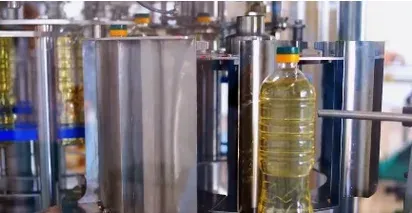
Refined soybean oil alone generated NPR 128.74 billion, accounting for 40.8 per cent of total merchandise exports. When all animal and vegetable fats and oils are included, the category climbed to NPR 148.98 billion — or 47.3 per cent of Nepal's total export earnings. In effect, nearly one in every two export rupees earned by Nepal came from edible oils, almost all of which were sold in the Indian market.
Nepal's refined cooking oil industry is built on imported crude edible oil, primarily sourced from Argentina and other South American countries. The crude oil is processed domestically and re-exported to India as refined product. Since Nepal lacks large-scale commercial soybean farming, the country's single-largest export industry is structurally reliant on imported raw materials — a model that raises questions about the depth of domestic value addition.
India's Outsized Role in Nepal's Trade
Nepal's exports to India reached NPR 258.65 billion in fiscal year 2025-26, representing 82 per cent of total merchandise exports. India was simultaneously Nepal's largest import source, with imports totalling NPR 1.210 trillion out of Nepal's overall import bill of NPR 2.096 trillion.
Trade expert Rabin Sainju cautioned that this concentration carries real risk. 'Such a concentration of products and markets is definitely a risk for Nepal's export industry,' he said. 'Nepal's exports basically depend on Indian government policy.'
Indian Industry Pushes Back on Duty-Free Imports
The dependence on India is increasingly precarious. The Indian Vegetable Oil Producers' Association (IVPA) this week called on the Indian government to act against what it described as an 'unprecedented surge' in duty-free refined edible oil imports from Nepal under the South Asian Free Trade Area (SAFTA) framework. Under SAFTA, eligible Nepali products enter the Indian market without import duties.
The IVPA argued that the surge represented a significant structural shift in India's edible oil trade and urged the government to verify whether Nepal's exports comply with SAFTA's Rules of Origin provisions — citing Nepal's limited domestic production of soybean and palm oil. The association said trade, tariff, and domestic value-addition objectives needed to remain aligned.
According to the Department of Customs, Nepal imported NPR 132.77 billion worth of crude soybean oil during the fiscal year before processing and re-exporting the refined product, primarily to India. Sainju noted that Nepal must increase domestic value addition to ensure the long-term sustainability of its edible oil industry.
Electricity, China Trade, and Other Trends
Beyond edible oils, Nepal exported electricity worth NPR 29.32 billion to India and Bangladesh, though Bangladesh accounted for only a minor share. Meanwhile, exports to China fell 28 per cent to just NPR 1.89 billion, even as imports from China surged 24.7 per cent to NPR 425.25 billion, widening Nepal's trade deficit with China to NPR 423.35 billion. For every NPR 1 Nepal exported to China, it imported approximately NPR 225 worth of Chinese goods. Trade with the United Arab Emirates also weakened as imports of gold and other precious metals increased sharply.
What Comes Next
If India responds to IVPA pressure by tightening SAFTA Rules of Origin enforcement or imposing non-tariff barriers, Nepal's record export performance could unravel rapidly. The structural question — whether Nepal can diversify both its product basket and its export markets — will define the country's trade trajectory in the years ahead.
Point of View
But it is built on a remarkably thin foundation — imported crude oil, refined domestically, sold almost entirely to one neighbour under a preferential trade agreement that India's own industry is now lobbying to restrict. That is not an export success story; it is a single-point-of-failure trade model. The IVPA's Rules of Origin challenge is not a fringe concern — if India acts, Nepal has no comparable alternative market for refined edible oil at this scale. Kathmandu's policymakers need to treat this moment as a structural warning, not a temporary headwind. Diversification into electricity, tourism services, and higher value-added manufacturing is talked about every budget cycle; the trade data suggests it has not happened in any meaningful way.
NationPress
25 Jul 2026
Frequently Asked Questions
How much did Nepal's exports grow in fiscal year 2025-26?
Nepal's merchandise exports rose 13.8 per cent to a record NPR 315.29 billion in fiscal year 2025-26, which ended in mid-July, according to the Department of Customs. The growth was driven primarily by refined edible oil exports to India.
Why are Nepal's exports considered risky despite the record high?
Nearly 47.3 per cent of Nepal's total exports are edible oils, and 82 per cent of all exports go to India alone. Trade expert Rabin Sainju has warned that this concentration means Nepal's export performance is effectively hostage to Indian government policy decisions.
What is the IVPA's concern about Nepal's edible oil exports?
The Indian Vegetable Oil Producers' Association (IVPA) has urged the Indian government to act against what it calls an 'unprecedented surge' in duty-free refined edible oil imports from Nepal under the SAFTA framework. It has also asked authorities to verify whether Nepal's exports meet SAFTA's Rules of Origin requirements, given Nepal's limited domestic soybean production.
Where does Nepal source the raw material for its refined edible oil exports?
Nepal imports crude soybean oil primarily from Argentina and other South American countries, processes it domestically, and exports the refined product to India. The Department of Customs recorded NPR 132.77 billion in crude soybean oil imports during fiscal year 2025-26.
How does Nepal's trade with China compare to its trade with India?
Nepal's trade relationship with China is starkly asymmetric — exports to China fell 28 per cent to just NPR 1.89 billion while imports from China surged 24.7 per cent to NPR 425.25 billion, leaving a trade deficit of NPR 423.35 billion. By contrast, India remains Nepal's dominant export destination, absorbing 82 per cent of its merchandise exports.