Puri Visits Sonbhadra, Revisits Eight-Year Bond with Aspirational District
Synopsis
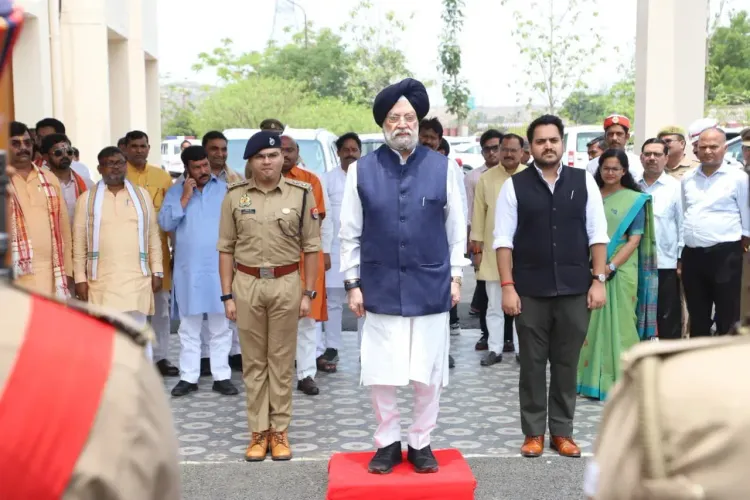
Union Petroleum Minister Hardeep Singh Puri visited Sonbhadra on 20 June 2026, renewing his eight-year association with the district he adopted under NITI Aayog's Aspirational Districts Programme. He met local officials and BJP workers at the Circuit House, spotlighting the Centre's continued engagement with one of Uttar Pradesh's most backward districts.
Key Takeaways
Hardeep Singh Puri visited Sonbhadra , eastern Uttar Pradesh , on 20 June 2026 .
Puri adopted Sonbhadra under the Aspirational Districts Programme approximately eight years ago during his tenure as a Rajya Sabha member from Uttar Pradesh .
The Aspirational Districts Programme was launched by NITI Aayog in January 2018 , covering 112 backward districts across India.
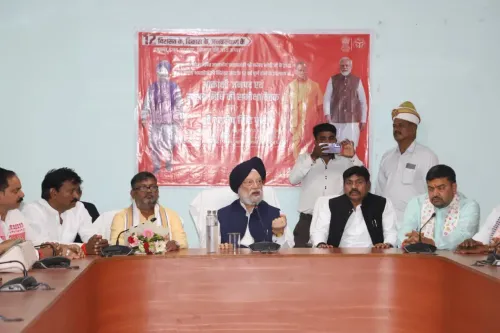
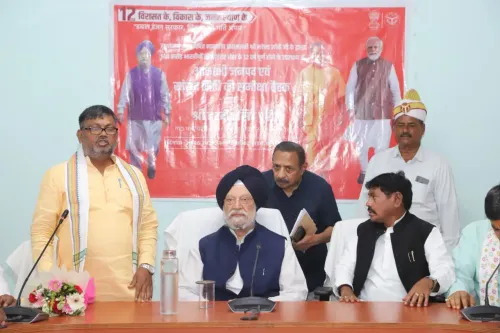
Puri met district officials and BJP karyakartas at the Circuit House in Sonbhadra.
Uttar Pradesh has the largest number of aspirational districts of any state in India.
NITI Aayog tracks district progress through monthly competitive rankings on health, education, agriculture, and infrastructure metrics.
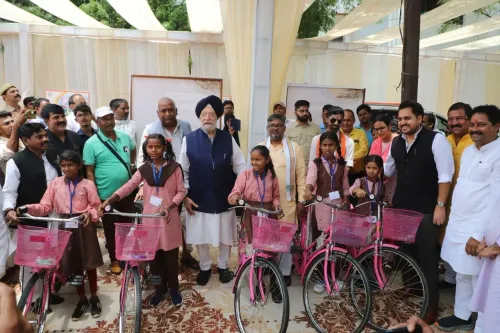
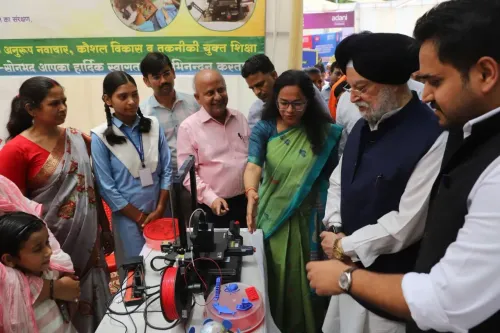
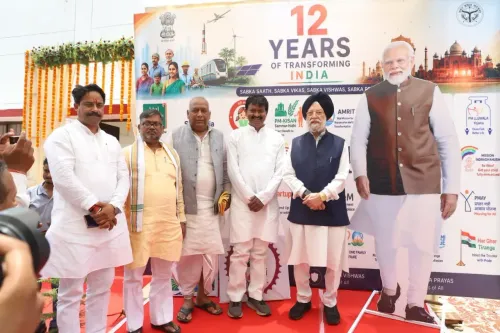
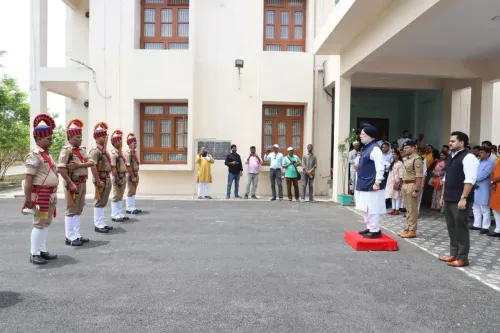
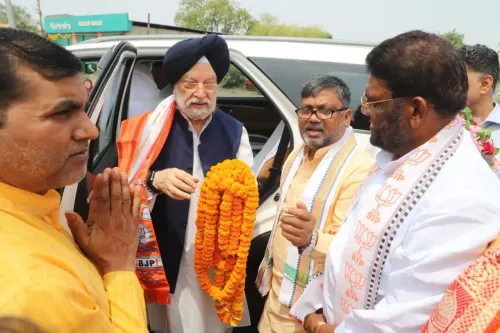
Union Petroleum Minister Hardeep Singh Puri visited Sonbhadra, eastern Uttar Pradesh, on Saturday, 20 June 2026, reconnecting with a district he adopted roughly eight years ago under the Aspirational Districts Programme — one of the Centre's flagship initiatives to accelerate development in India's most backward regions.
Context
Puri, who was nominated to the Rajya Sabha from Uttar Pradesh, adopted Sonbhadra under the Aspirational Districts Programme when the scheme was in its early years, creating a direct ministerial link between the district and the Central government. On Saturday he met district officials and local BJP workers at the Circuit House, describing his connection to the district as a bond that began 'about eight years ago.' The visit underscores the continuing role that Union ministers play in personally monitoring lagging districts they have adopted.
Policy Backdrop
The Aspirational Districts Programme was launched by NITI Aayog in January 2018, originally covering 115 districts — later revised to 112 — selected on a composite index of backwardness spanning health, education, agriculture, and infrastructure. Uttar Pradesh accounts for the largest share of aspirational districts in the country, and Sonbhadra in the state's eastern belt was among those identified as ranking low on human-development indicators. The programme introduced a competitive ranking mechanism, with NITI Aayog publishing monthly scorecards to push districts to improve on measurable outcomes.
The model of Union ministers adopting specific aspirational districts was designed to tighten coordination between the Centre and state administrations, ensuring that flagship schemes reached the ground in regions where implementation had historically lagged. Sonbhadra's inclusion reflected a broader recognition that mineral-rich but economically marginalised districts in eastern Uttar Pradesh required sustained Central attention.
Stakeholders and Impact
The primary beneficiaries of the Aspirational Districts Programme in Sonbhadra are its residents, who stand to gain from improved delivery of health, education, and livelihood schemes. District officials who met Puri at the Circuit House are responsible for translating Central and state government targets into on-ground outcomes. Local BJP karyakartas (party workers) also participated in the meeting, reflecting the dual administrative and organisational character of such ministerial visits.
For the broader Aspirational Districts Programme, sustained ministerial engagement signals continued political commitment to the initiative even as the programme enters its eighth year. Successive NITI Aayog reports have documented incremental gains in participating districts, though the pace of improvement varies considerably across regions.
What's Next
The next quarterly ranking release by NITI Aayog on aspirational districts will indicate where Sonbhadra stands relative to its peers on key development metrics. Any announcements emerging from Puri's discussions with district officials — on petroleum infrastructure, welfare scheme coverage, or local development projects — will be watched by both state and Central planners. The visit may also prompt other ministers who have adopted aspirational districts to schedule similar field reviews, reinforcing the programme's accountability architecture ahead of the next assessment cycle.
Point of View
Yet still dependent on sustained high-level attention to avoid stagnation. For the BJP, such field visits also serve an organisational function, energising local cadre in a state that remains central to the party's national arithmetic. The broader signal is that the Centre intends to keep the aspirational-districts framework alive and visible well into the programme's second decade.
NationPress
20 Jun 2026
Frequently Asked Questions
Why did Hardeep Singh Puri visit Sonbhadra?
Puri visited Sonbhadra on 20 June 2026 to reconnect with the district he adopted roughly eight years ago under the Aspirational Districts Programme, meeting officials and BJP workers at the Circuit House.
What is the Aspirational Districts Programme?
The Aspirational Districts Programme is a NITI Aayog initiative launched in January 2018 to fast-track development in 112 of India's most backward districts across health, education, agriculture, and infrastructure, using monthly competitive rankings to drive improvement.
How did Hardeep Singh Puri come to adopt Sonbhadra?
Puri adopted Sonbhadra under the Aspirational Districts Programme during his time as a Rajya Sabha member nominated from Uttar Pradesh, creating a direct ministerial link between him and the district.
How many aspirational districts does Uttar Pradesh have?
Uttar Pradesh has the largest number of aspirational districts of any state in India, reflecting the concentration of backward regions in the state's eastern and Bundelkhand belts.
What happens after a Union minister visits an aspirational district?
After such visits, NITI Aayog's quarterly and monthly rankings will indicate the district's progress; any commitments made during the review are tracked against the programme's composite development index.