CM Fadnavis highlights Ambabai Temple restoration at Kolhapur event
Synopsis
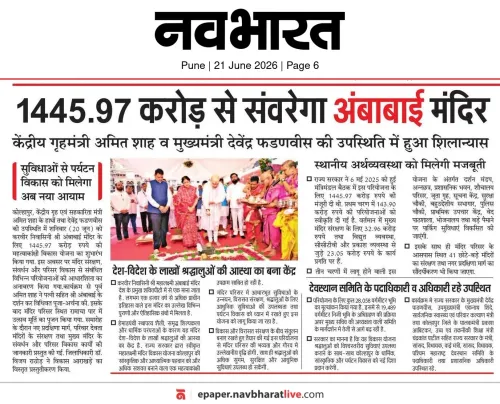
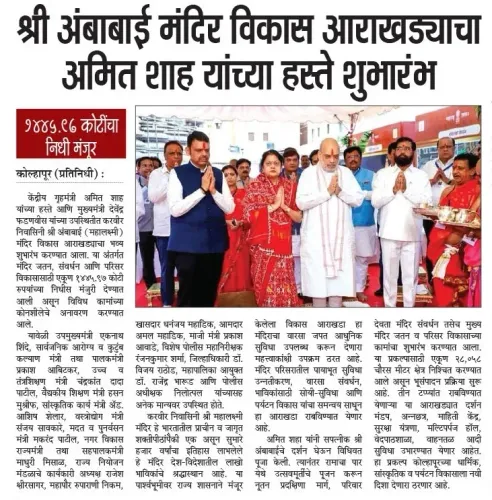
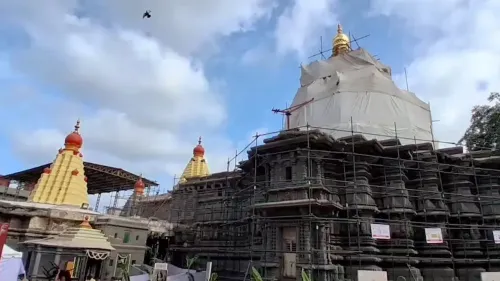
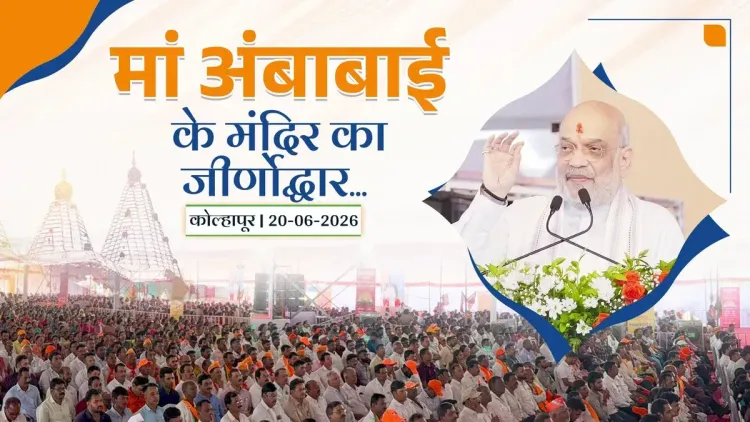
At a public event in Kolhapur on 20 June 2026, Union Minister Amit Shah confirmed that the Maharashtra government is undertaking renovation and corridor construction at the Ambabai (Mahalakshmi) Temple. CM Devendra Fadnavis shared the statement on X, highlighting the state's commitment to the major heritage and pilgrimage infrastructure project.
Key Takeaways
Union Minister Amit Shah confirmed at a Kolhapur public meeting on 20 June 2026 that the Maharashtra government is carrying out renovation and corridor construction at the Ambabai (Mahalakshmi) Temple .
CM Devendra Fadnavis amplified the announcement on X in both Marathi and Hindi.
The Ambabai Temple is a prominent Shakti Peetha in Kolhapur attracting devotees from Maharashtra, Karnataka, and Goa.
The project follows the temple corridor model pioneered by the Kashi Vishwanath Corridor in Uttar Pradesh.
Stakeholders include devotees, the local tourism industry, and traders in the Kolhapur region.
Future budgetary allocations may extend similar corridor projects to other Maharashtra temples.
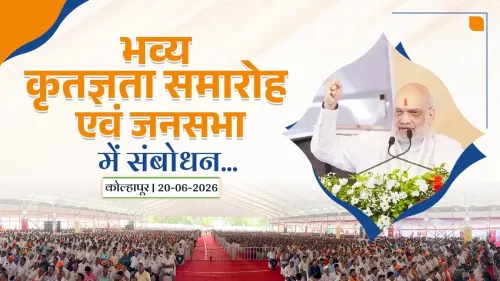
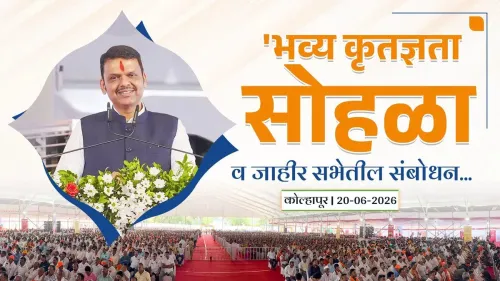
Maharashtra Chief Minister Devendra Fadnavis on Saturday, 20 June 2026, shared remarks by Union Home and Cooperation Minister Amit Shah confirming that the Maharashtra government is actively carrying out the renovation and corridor construction of the Ambabai (Mahalakshmi) Temple in Kolhapur. The statement was made at a grand public felicitation event in Kolhapur and was amplified by the Chief Minister on X.
Context
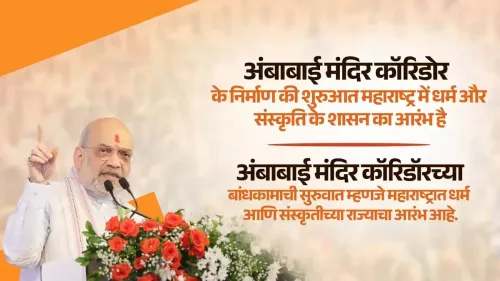
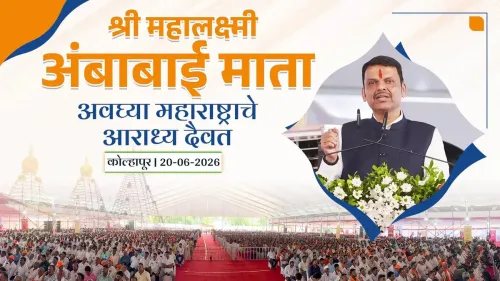
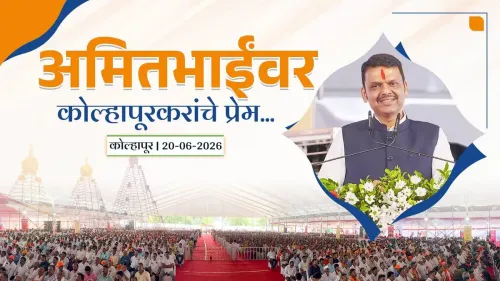
At the Bhavya Krutadnyata Sohala va Jahir Sabha (Grand Gratitude Ceremony and Public Meeting) held in Kolhapur on 20 June 2026, Union Minister Amit Shah publicly stated: 'The Maharashtra government is carrying out the renovation and corridor construction of Maa Ambabai's temple.' Chief Minister Fadnavis shared the statement in both Marathi and Hindi, tagging @AmitShah and flagging the announcement under #Maharashtra and #Mahalakshmi.
The Ambabai Temple, formally known as the Mahalakshmi Temple, is one of the most revered Shakti Peethas in India, drawing millions of devotees annually to Kolhapur in western Maharashtra. It holds deep religious significance for communities across Maharashtra, Karnataka, and Goa.
Policy Backdrop
The project fits squarely within a broader pattern of BJP-led state governments undertaking corridor and restoration works at prominent Hindu temples across India. The model draws heavily from the Kashi Vishwanath Corridor in Uttar Pradesh, which combined heritage conservation with large-scale pilgrimage infrastructure to boost religious tourism.
Maharashtra governments have periodically supported restoration of historic temples under state heritage schemes, with renewed institutional emphasis after 2014 on public-private models for pilgrimage sites. The Ambabai Temple project represents one of the more significant such undertakings in western Maharashtra.
Stakeholders and Impact
The renovation and corridor project is expected to benefit a wide range of stakeholders, including the large community of devotees who visit the temple year-round, the local tourism industry in Kolhapur, and traders and vendors operating near the shrine. Improved infrastructure typically translates to higher footfall and greater economic activity in the surrounding area.
The presence of Amit Shah at the Kolhapur event underscores the political and administrative importance the central government attaches to the project, with coordination between state and central leadership a recurring feature of such public announcements.
What's Next
Attention will now turn to project completion timelines, tender awards, and the scale of infrastructure planned around the temple precinct. Tourism revenue data for Kolhapur will serve as a key metric to assess the corridor's long-term impact once work progresses.
Observers will also watch whether the upcoming Maharashtra state budget includes allocations for similar corridor projects at other prominent temples across the state, signalling a possible expansion of the heritage-tourism model beyond Kolhapur.
Point of View
A strategy that simultaneously serves religious sentiment and tourism economics. By framing the Ambabai Temple corridor as a government deliverable at a high-profile public gathering, the party reinforces its positioning as a custodian of Hindu religious sites ahead of future electoral cycles. The pattern mirrors the political capital extracted from the Kashi Vishwanath Corridor, suggesting a replicable template being rolled out across BJP-governed states. How swiftly the project advances from announcement to visible construction will determine whether it sustains public momentum or invites scrutiny over timelines.
NationPress
19 Sept 2026
Frequently Asked Questions
What is the Ambabai Temple corridor project in Kolhapur?
The Ambabai Temple corridor project involves the renovation of the historic Mahalakshmi (Ambabai) Temple in Kolhapur and the construction of a new corridor to improve infrastructure for pilgrims, being undertaken by the Maharashtra government.
What did Amit Shah say about the Ambabai Temple in Kolhapur?
At a public event in Kolhapur on 20 June 2026, Union Home Minister Amit Shah stated that the Maharashtra government is actively carrying out the renovation and corridor construction of the Ambabai (Mahalakshmi) Temple.
What is the Ambabai or Mahalakshmi Temple in Kolhapur?
The Ambabai Temple, formally known as the Mahalakshmi Temple, is one of India's most revered Shakti Peethas located in Kolhapur, western Maharashtra, drawing millions of devotees annually from across Maharashtra, Karnataka, and Goa.
Is the Kolhapur temple corridor similar to the Kashi Vishwanath Corridor?
Yes, the Ambabai Temple corridor project follows a model similar to the Kashi Vishwanath Corridor in Uttar Pradesh, combining heritage conservation with pilgrimage infrastructure to boost religious tourism.
Who is overseeing the Ambabai Temple renovation in Maharashtra?
The renovation and corridor construction is being undertaken by the Maharashtra government, led by Chief Minister Devendra Fadnavis, with the project receiving public backing from Union Minister Amit Shah.