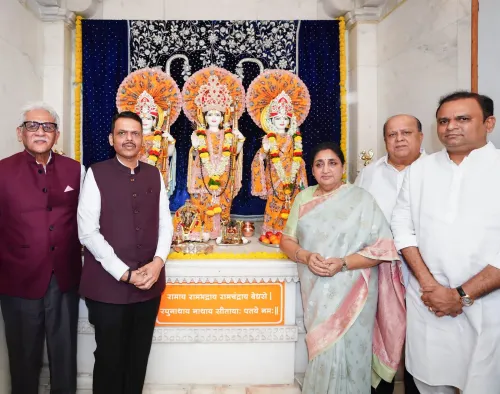
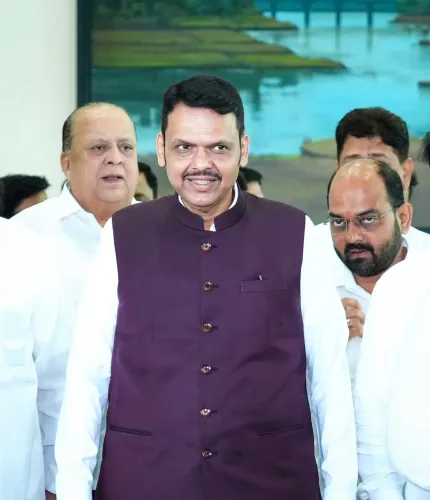
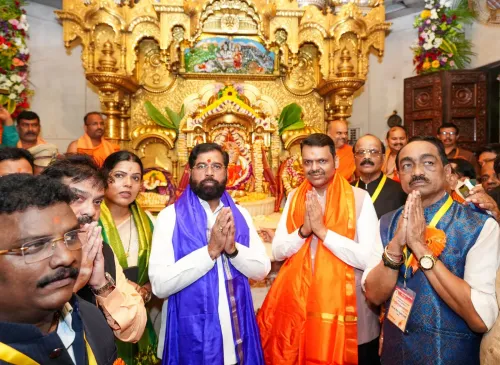
CM Fadnavis at Kolhapur Ambabai Temple Gratitude Ceremony
Synopsis
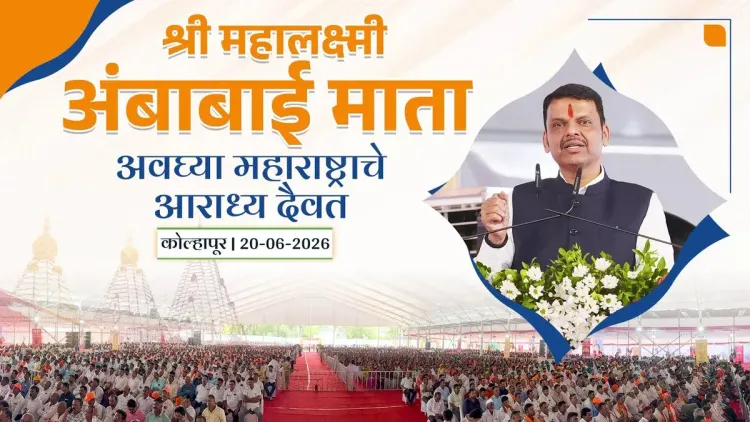
Maharashtra Chief Minister Devendra Fadnavis attended a grand gratitude ceremony at Kolhapur on 20 June 2026, celebrating the Shri Mahalakshmi Ambabai Temple — the state's presiding deity — and acknowledging lakhs of pilgrims who visit from across India.
Key Takeaways
CM Devendra Fadnavis attended a grand gratitude ceremony and public meeting in Kolhapur on 20 June 2026 .
The event centred on the Shri Mahalakshmi Ambabai Temple , revered as Maharashtra's presiding deity .
Fadnavis posted in both Marathi and Hindi , highlighting the temple's significance to pilgrims from across India.
Lakhs of devotees travel to the Kolhapur temple from across the country each year.
The temple is one of Maharashtra's foremost Shakti Peethas , historically linked to the Maratha royal legacy .
The event reflects a broader pattern of Maharashtra leaders engaging with major pilgrimage sites for community and policy outreach.
Maharashtra Chief Minister Devendra Fadnavis attended a grand gratitude ceremony and public meeting at Kolhapur on 20 June 2026, honouring the Shri Mahalakshmi Ambabai Temple — the state's presiding deity — and acknowledging the millions of pilgrims who travel from across the country to seek the goddess's blessings.
Context
In his post on X, Chief Minister Fadnavis wrote in both Marathi and Hindi, underscoring the temple's pan-national significance. 'श्री महालक्ष्मी अंबाबाई मातेचे मंदिर महाराष्ट्राचे आराध्य दैवत असून, येथे दर्शनासाठी देशभरातून लाखो भाविक येतात' — 'The Shri Mahalakshmi Ambabai Mata temple is Maharashtra's presiding deity, and lakhs of devotees from across the country come here for darshan.' The bilingual message signals an outreach to both Marathi-speaking devotees and Hindi-speaking pilgrims nationwide.
The event, described as a 'Bhavy Krutadnyata Sohala va Jahir Sabha' (grand gratitude ceremony and public meeting), was held in Kolhapur on 20 June 2026. The gathering brought together devotees, community leaders, and state officials at one of Maharashtra's most revered religious sites.
Policy Backdrop
The Shri Mahalakshmi Ambabai Temple in Kolhapur is one of Maharashtra's most prominent Shakti Peethas, drawing pilgrims from every corner of India throughout the year. The temple is historically linked to the Maratha royal legacy and has long been central to the cultural and religious identity of western Maharashtra.
Successive Maharashtra governments have included major pilgrimage sites such as Ambabai within broader tourism and heritage development frameworks. Public events at such temples have served as important platforms for state leaders to connect with large devotee communities and reinforce the government's commitment to preserving religious heritage.
Stakeholders and Impact
The ceremony brought together a wide cross-section of stakeholders — from the temple administration and local religious bodies to lakhs of pilgrims who visit Kolhapur each year. For devotees, the Chief Minister's presence at such a ceremony signals continued state attention to the upkeep and promotion of the shrine.
Kolhapur itself, a city historically associated with Maratha royalty and religious tourism, stands to benefit from heightened political and administrative focus on the temple complex. The public meeting format also allowed for direct engagement between the state's top executive and citizens gathered at the site.
What's Next
Specific announcements or policy decisions emerging from the 20 June 2026 gratitude ceremony in Kolhapur are expected to be detailed by the state government in the coming days. Observers will watch for any formal declarations regarding temple development, pilgrim infrastructure, or heritage conservation linked to the Ambabai Temple.
The event reinforces a broader pattern of Maharashtra's political leadership engaging publicly with the state's major religious institutions — a trend that is likely to continue as the government balances cultural stewardship with administrative priorities.
Point of View
Fadnavis signals an intent to address not just local Marathi-speaking devotees but also the large Hindi-speaking pilgrim base that visits Ambabai annually. The event fits within a broader BJP governance arc of positioning the party as a custodian of Hindu cultural heritage, particularly at historically significant Shakti Peethas. Whether the ceremony yields concrete policy announcements on temple infrastructure or pilgrim amenities will determine its lasting administrative significance.
NationPress
19 Sept 2026
Frequently Asked Questions
Where is the Shri Mahalakshmi Ambabai Temple located?
The Shri Mahalakshmi Ambabai Temple is located in Kolhapur, a city in western Maharashtra. It is one of the most prominent Shakti Peethas in India and is considered Maharashtra's presiding deity.
Why did CM Devendra Fadnavis visit Kolhapur on 20 June 2026?
CM Devendra Fadnavis attended a grand gratitude ceremony and public meeting in Kolhapur on 20 June 2026 to honour the Shri Mahalakshmi Ambabai Temple and engage with devotees and community members gathered there.
What is the significance of the Ambabai Temple in Maharashtra?
The Ambabai Temple in Kolhapur is revered as Maharashtra's presiding deity and is one of the state's foremost Shakti Peethas. Lakhs of pilgrims from across India visit the temple every year.
What is a Shakti Peetha?
A Shakti Peetha is a sacred Hindu shrine dedicated to the goddess Shakti. The Ambabai Temple in Kolhapur is among the most celebrated Shakti Peethas in Maharashtra and draws nationwide devotees.
What language did Fadnavis use in his post about the Kolhapur temple event?
CM Fadnavis posted in both Marathi and Hindi, reflecting the temple's importance to devotees across linguistic communities throughout India.