Rahul Gandhi Accuses BJP of Forcing CP Shops Shut During Rally

Synopsis
Congress leader Rahul Gandhi accused BJP of forcibly shutting all shops at Connaught Place on November 1, 2026, ahead of a Congress march and maharally, alleging the ruling party was directly harming local traders his supporters had been urged to patronise.
Key Takeaways
Rahul Gandhi alleged on Sunday, November 1, 2026 that BJP forced all shops at Connaught Place to shut during a Congress march and maharally.
Gandhi had publicly urged rally attendees to shop at Connaught Place merchants, framing the shutdown as a direct blow to trader revenue.
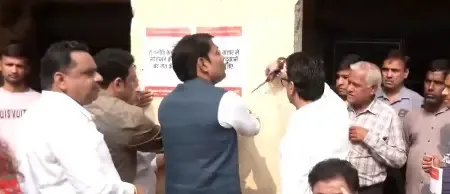
The allegation was accompanied by a video posted on X from the Connaught Place precinct.
No formal closure directive or official clarification from Delhi Police or civic authorities had been verified at the time of the post.
Trader associations in Connaught Place had not yet issued a public response to the alleged shutdown.
The episode follows a recurring pattern of Congress-BJP confrontations in Delhi over the administrative handling of opposition rallies and their impact on commerce.
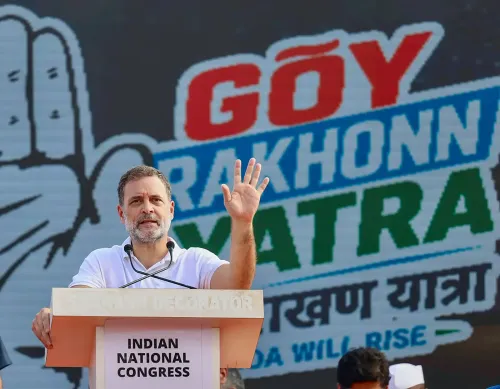
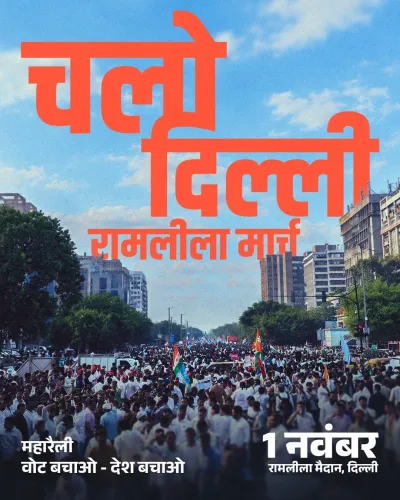
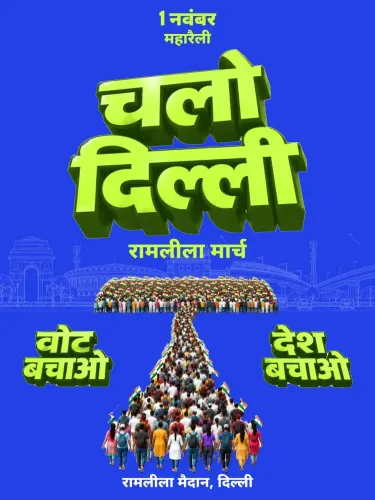
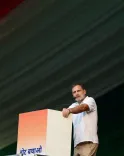
At Connaught Place, one of Delhi's busiest commercial hubs, shutters were down on Sunday, November 1, 2026 — not by choice, Congress leader Rahul Gandhi alleged, but by pressure. Gandhi, Leader of the Opposition in Lok Sabha, claimed that the BJP had forcibly shut all shops in the area ahead of a Congress march and maharally, directly harming the very traders his party had urged supporters to patronise.
Posting a video from Connaught Place, Gandhi wrote in Hindi: 'हमने सब लोगों से कहा कि जब आप मार्च और महारैली के लिए यहां आएंगे, चीजें खरीदें, खरीदारी करें।' ('We told everyone — when you come here for the march and maharally, buy things, shop here.') The contrast he drew was sharp: Congress had tried to turn the rally crowd into a business opportunity for local traders; the BJP, he alleged, had erased it by forcing every shop to close.
Connaught Place at the Centre of the Dispute
Connaught Place is no ordinary marketplace. The colonial-era circular precinct in central Delhi houses hundreds of retail outlets, restaurants, and offices, and draws footfall from across the National Capital Region. A forced shutdown on a high-attendance day — when Congress was expecting large crowds — would translate directly into lost revenue for traders who cannot recover a closed Sunday.
Gandhi made the political arithmetic explicit: 'तो traders का नुकसान कौन कर रहा है, कैसे हो रहा है, यह आप जान लीजिए!' ('So find out for yourselves who is harming traders and how.') The statement frames the BJP not merely as a political adversary but as an active agent of commercial damage — a charge aimed squarely at the ruling party's credibility with Delhi's business community.
A Familiar Pattern in Delhi's Political Street Fights
This is not the first time a protest in Delhi has spilled into a dispute over market closures. Opposition rallies in the capital have repeatedly triggered accusations — from both sides — that administrative machinery is deployed to disrupt or contain events. Whether that involves traffic diversions, police cordons, or shop-closure advisories, the downstream effect on traders becomes a political liability that parties fight to pin on each other.
Trader associations in Connaught Place have not yet issued a public response. Any formal closure directive from Delhi Police or civic authorities would carry significant weight in determining whether the allegation holds — that verification is precisely what observers are now waiting for.
The deeper question Gandhi is raising is not merely procedural. With elections never far from Delhi's political calendar, the loyalties of the capital's trader community — historically a swing constituency — are a prize worth contesting. Whoever is seen as the aggressor against their livelihoods pays a cost at the ballot box.
Point of View
A party that has long cultivated the business community as a core constituency. By urging supporters to shop and then immediately alleging that the BJP denied those traders that revenue, he attempts to drive a wedge between the ruling party and small merchants in a high-visibility commercial district. The broader pattern of administrative friction around opposition events in Delhi has become a recurring stage for this kind of proxy battle over who is genuinely 'pro-business.' Until trade bodies or official records confirm or deny a formal closure directive, the charge remains politically explosive but factually unresolved.
NationPress
1 Nov 2026
Frequently Asked Questions
What did Rahul Gandhi allege about BJP and Connaught Place shops?
Rahul Gandhi alleged that BJP forcibly shut all shops at Connaught Place on November 1, 2026, ahead of a Congress march and maharally, thereby harming traders his party had urged rally-goers to patronise.
Where is Connaught Place and why does it matter in this controversy?
Connaught Place is a major commercial and shopping district in central Delhi with hundreds of retail outlets. A forced shutdown on a high-attendance rally day would mean direct lost income for traders who cannot recover a closed business day.
Did Congress organise a march in Delhi on November 1, 2026?
Gandhi's post references a march and maharally in Delhi on November 1, 2026, though specific details about the event's name, route, and scale have not been independently verified.
Was any official closure order issued for Connaught Place shops?
No formal directive from Delhi Police or civic authorities confirming a mandatory shop closure order had been verified at the time of Gandhi's post. Trader associations had also not issued a public response.
How does the BJP-Congress dispute over Delhi rallies affect traders?
Opposition rallies in Delhi have repeatedly sparked accusations from both sides that administrative actions — including traffic cordons, police deployments, and shop-closure advisories — disrupt commerce, making traders an indirect but significant stake-holder in these political confrontations.