Rahul Gandhi Accuses BJP, RSS and EC of 'Vote Chori', Calls It Treason

Synopsis
Congress leader Rahul Gandhi accused the BJP, RSS and Election Commission of orchestrating 'vote chori', calling it treason and a direct attack on India's constitution, in a sharp post on 23 September 2026.
Key Takeaways
Rahul Gandhi publicly accused the BJP , RSS , and Election Commission of India of committing 'vote chori' — vote theft.
Gandhi described the alleged act as 'a crime against the Indian people and a direct attack on our constitution.' He used the word 'treason' to characterise the conduct of all three named entities.
The post was accompanied by a video; the specific incident referenced remains unverified.
Opposition challenges to Election Commission independence date back at least to the 2019 Lok Sabha elections , when Congress demanded paper ballots and raised EVM security concerns.
Gandhi's vow that 'justice will be served' signals potential legal or parliamentary follow-up action by Congress.
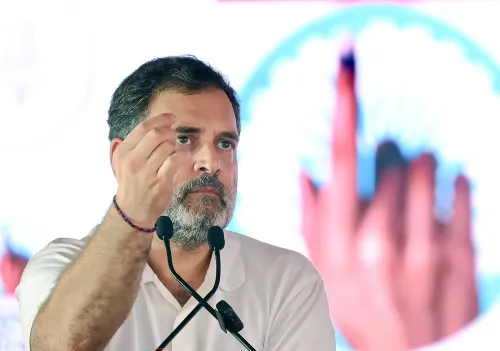
A charge of treason — levelled not at a foreign adversary, but at the ruling party, its ideological parent, and India's constitutional election authority. Congress leader Rahul Gandhi, Leader of the Opposition in Lok Sabha, posted a blunt, three-sentence indictment on Wednesday, 23 September 2026, accusing the BJP, the RSS, and the Election Commission of India of orchestrating what he called 'vote chori' — vote theft — and vowing that 'justice will be served.'
The Accusation in Full: What Rahul Gandhi Said
Gandhi's post left no room for ambiguity: 'Vote chori is a crime against the Indian people and a direct attack on our constitution. The BJP, RSS and EC who organised it have committed an act of treason.' The language is among the sharpest he has deployed against the Election Commission, a constitutional body, placing it in the same sentence as the ruling party and the Rashtriya Swayamsevak Sangh — the Hindu nationalist organisation that has long been described as the BJP's ideological backbone.
The post was accompanied by a video, the contents of which could not be independently verified at the time of publication. The specific incident of 'vote chori' Gandhi references falls outside currently verifiable reporting.
A Recurring Fault Line: Opposition vs. the Election Commission
This is not the first time India's opposition has trained its fire on the EC's independence. As far back as the 2019 Lok Sabha elections, Congress and allied parties demanded paper ballots and raised pointed questions about the security of Electronic Voting Machines and the VVPAT paper-trail system. Those demands were rejected; the controversy never fully subsided.
What has evolved is the intensity of the language. Calling the Election Commission a co-conspirator in 'treason' marks a significant escalation — from institutional critique to criminal allegation. Opposition figures have historically questioned EC autonomy after unfavourable electoral outcomes, but the framing of a constitutional body as an active participant in vote theft is a charge that will demand a formal response.
Why the RSS Mention Matters
Gandhi's decision to name the RSS alongside the BJP and the EC is a deliberate political signal. The Congress has long argued that the RSS — a volunteer organisation with no official role in government — exercises informal influence over state institutions under BJP rule. Including the RSS in an allegation of electoral fraud extends that argument to its sharpest possible conclusion: that the ideological network, the political party, and the constitutional watchdog are, in Gandhi's framing, operating as a single apparatus.
The BJP and RSS have consistently denied any such alignment with or influence over the Election Commission. The EC, for its part, has repeatedly defended its independence and the integrity of India's electoral machinery.
What Comes Next: Legal and Institutional Stakes
The phrase 'justice will be served' points toward some form of legal or institutional follow-through — though Gandhi's post does not specify the mechanism. Whether Congress pursues a formal complaint, approaches the Supreme Court, or uses the allegation as a parliamentary flashpoint, the claim of treason against constitutional officials is extraordinary enough to force a response from multiple directions.
The Election Commission's reply — or silence — will itself become part of the story. So will any legal notice that flows from either side. Indian democracy has weathered fierce institutional battles before. The question this time is whether the language of treason stays in the political arena or migrates into a courtroom.
Point of View
A tactic that gains traction among opposition supporters but risks being dismissed as sour-grapes politics by the ruling establishment. The invocation of the RSS, an organisation with no formal electoral role, is a deliberate attempt to frame the BJP's ideological ecosystem as a single, coordinated threat to democratic norms. How the EC and the judiciary respond — or decline to respond — will shape whether this charge lands as a serious constitutional moment or dissipates as campaign-season noise.
NationPress
23 Sept 2026
Frequently Asked Questions
What did Rahul Gandhi mean by 'vote chori'?
'Vote chori' is a Hindi phrase meaning 'vote theft.' Gandhi used it to allege that votes were stolen or manipulated, accusing the BJP, RSS and Election Commission of organising the act.
Why did Rahul Gandhi call the Election Commission part of the treason?
Gandhi's post explicitly named the Election Commission alongside the BJP and RSS, alleging all three collectively organised 'vote chori.' This is a significant escalation from past opposition criticism, which typically questioned EC autonomy without using the word treason.
Has Congress raised concerns about India's Election Commission before?
Yes. During the 2019 Lok Sabha elections, Congress and allied parties questioned the security of Electronic Voting Machines and demanded VVPAT paper-trail verification, arguing the EC was not acting with full independence.
What is the RSS's role in Indian elections?
The RSS has no official role in the electoral process. It is a Hindu nationalist volunteer organisation with longstanding ideological ties to the BJP. Opposition parties have frequently alleged informal RSS influence over government institutions, a charge both the RSS and BJP deny.
What legal action could follow Rahul Gandhi's treason allegation?
Gandhi's post did not specify a mechanism, but the phrase 'justice will be served' suggests Congress may pursue a formal complaint, approach the Supreme Court, or raise the matter in Parliament. Equally, those named could seek legal redress against the allegation itself.