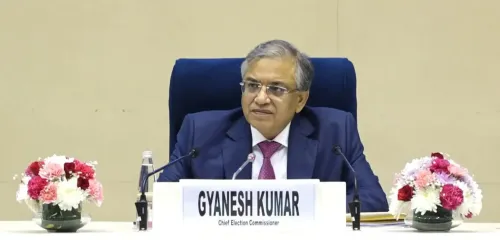
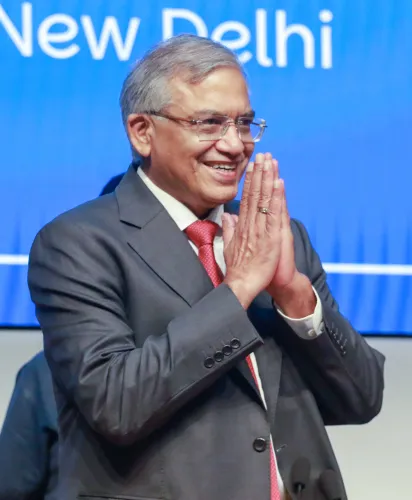
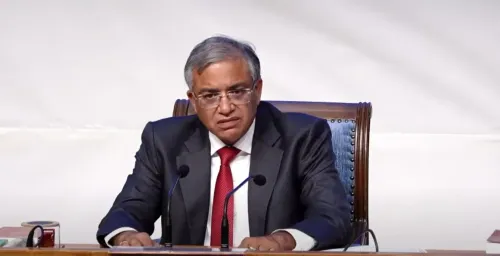
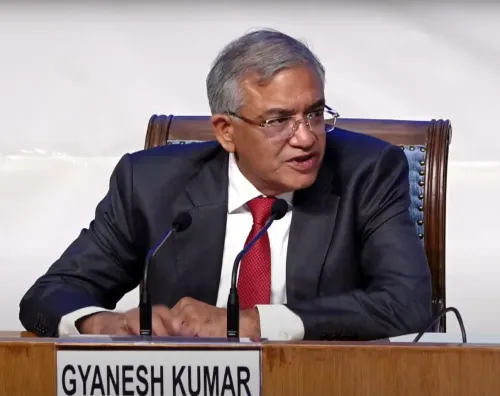
Kejriwal demands CEC Gyanesh Kumar's arrest, cancellation of recent elections over ECI rift
Synopsis
Arvind Kejriwal has called for the arrest of Chief Election Commissioner Gyanesh Kumar and the cancellation of elections in six states, citing a media report that the two Election Commissioners formally objected to decisions taken without them — a claim the ECI denies. The demand, centred on an allegedly unauthorised voter-roll revision that purportedly deleted 13 crore names, is one of the most incendiary attacks on a sitting CEC in recent Indian political history.
Key Takeaways
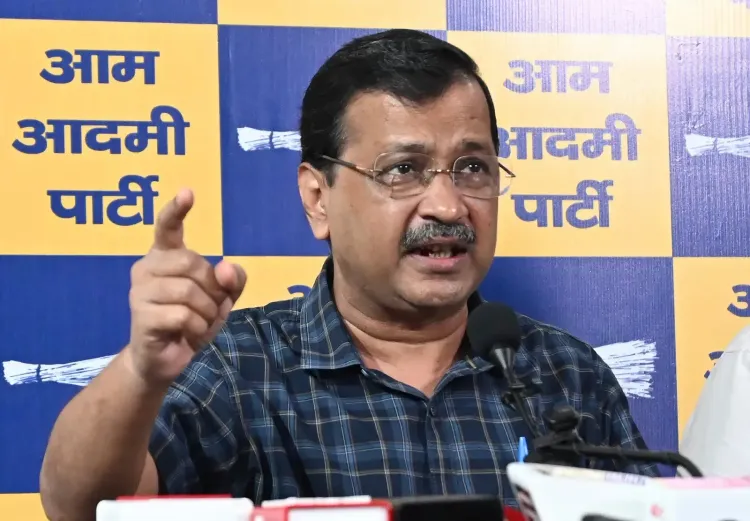
AAP chief Arvind Kejriwal demanded the arrest of CEC Gyanesh Kumar at a press conference on 23 September 2026 .
He alleged the Special Intensive Revision (SIR) — which reportedly deleted names of over 13 crore voters across 30 states — was never formally approved by the full commission.
Kejriwal demanded cancellation of elections in Delhi, Maharashtra, Bihar, West Bengal, Haryana , and Madhya Pradesh held in recent years.
He alleged ERO access to the ERONET portal was blocked, enabling arbitrary additions and deletions from voter rolls.
The ECI has rejected the underlying media report that triggered the controversy.
Kejriwal cited a Supreme Court ruling to argue that no single commissioner — including the CEC — can issue orders unilaterally.
Aam Aadmi Party (AAP) national convener Arvind Kejriwal on Wednesday, 23 September launched a blistering attack on the Election Commission of India (ECI), demanding the arrest of Chief Election Commissioner (CEC) Gyanesh Kumar, the cancellation of elections held across several states in recent years, and the scrapping of the Special Intensive Revision (SIR) of electoral rolls. The broadside followed a media report alleging that the two Election Commissioners had formally objected to several decisions taken by the poll panel, reportedly without their knowledge — claims the ECI has flatly denied.
What Triggered the Controversy
The immediate flashpoint was a report by a leading newspaper claiming that the two Election Commissioners had 'objected on record' to multiple decisions at the poll body, including the alleged blocking of Electoral Registration Officers' (EROs) access to the online portal ERONET. Kejriwal seized on the report to argue that the ECI was being run unilaterally, in violation of its constitutional mandate. The ECI, however, rejected the media report outright, calling it inaccurate.
Kejriwal's Core Allegations
Addressing a press conference in New Delhi, Kejriwal alleged that the SIR process — through which, he claimed, names of over 13 crore people across 30 states were deleted from electoral rolls — was never officially approved by the full commission. 'Special Intensive Revision (SIR), through which names of over 13 crore people across 30 states were deleted, that entire SIR process is illegal because the Election Commission had not officially passed it. All orders related to it are also illegal,' he said.
He further alleged that 'orders and circulars are being issued without the official approval of the Election Commission' and that CEC Gyanesh Kumar had been 'issuing directives at his will' for months without convening formal commission meetings. He argued that the blocking of ERO access to ERONET amounted to adding and deleting voter names arbitrarily — calling it 'a bigger scam than this.'
Demand for Arrests and Re-elections
Kejriwal went further, demanding that Gyanesh Kumar be arrested and prosecuted, and that elections held in Delhi, Maharashtra, Bihar, West Bengal, Haryana, and Madhya Pradesh in recent years be cancelled and rerun. 'We demand that Gyanesh Kumar should be arrested and prosecuted. All the elections held in the last few years, in Delhi, Maharashtra, Bihar, West Bengal, Haryana, Madhya Pradesh, should be cancelled and held again,' he asserted.
The Constitutional Argument
Kejriwal grounded his challenge in a Supreme Court ruling that defines the Election Commission as a three-member body. 'It comprises three members — one Chief Election Commissioner and two Election Commissioners. All three participate in meetings, where decisions are taken either unanimously or by majority. None of the three have the authority to take decisions individually,' he said. He added that the CEC 'only chairs and presides over the meetings and does not have any additional authority,' arguing that solo decision-making by the CEC is constitutionally impermissible.
ECI's Position and What Comes Next
The ECI has denied the newspaper report's claims, but has not, as of this report, issued a detailed public rebuttal addressing each allegation. This episode marks one of the sharpest public attacks on an incumbent CEC in recent memory, and comes amid a broader national debate about the independence and internal functioning of the poll panel. Notably, the controversy arises close on the heels of contentious voter roll revisions that have already drawn criticism from multiple opposition parties. Whether Kejriwal's demands gain traction in courts or parliament will likely shape the next phase of this confrontation.
Point of View
Cancellation of six state elections — are constitutionally near-impossible in practice, but that is not entirely the point. The political objective is to force the Election Commission into a prolonged public defence of its internal processes at a moment when the opposition is already questioning the integrity of voter rolls. The SIR controversy is the real pressure point: if credible evidence emerges that 13 crore deletions proceeded without formal commission approval, that is a structural governance failure, not merely a political dispute. The ECI's flat denial, unaccompanied by a detailed process explanation, leaves a vacuum that opposition narratives will fill. India's democratic credibility rests substantially on the perceived neutrality of its poll body — and that perception is now under active contestation.
NationPress
23 Sept 2026
Frequently Asked Questions
Why is Arvind Kejriwal demanding the arrest of CEC Gyanesh Kumar?
Kejriwal alleges that CEC Gyanesh Kumar has been issuing orders and circulars without convening formal Election Commission meetings or obtaining approval from the other two commissioners, which he calls unconstitutional. He also links this to the SIR process that reportedly deleted over 13 crore names from voter rolls across 30 states without official commission sanction.
What is the Special Intensive Revision (SIR) of electoral rolls?
The Special Intensive Revision (SIR) is a process for updating and revising electoral rolls, including adding new voters and removing ineligible entries. Kejriwal alleges that the latest SIR, which he claims deleted names of over 13 crore people across 30 states, was never formally approved by the full three-member Election Commission and is therefore illegal.
Which elections is Kejriwal demanding be cancelled?
Kejriwal has called for the cancellation and re-holding of elections in Delhi, Maharashtra, Bihar, West Bengal, Haryana, and Madhya Pradesh, held over the past few years, on grounds that the electoral roll revision process underlying them was allegedly unauthorised.
What has the Election Commission said in response?
The Election Commission of India has rejected the media report — which claimed the two Election Commissioners objected on record to decisions taken without their knowledge — calling it inaccurate. The ECI has not, as of this report, issued a detailed point-by-point rebuttal of Kejriwal's specific allegations.
What is the constitutional basis for Kejriwal's argument?
Kejriwal cited a Supreme Court ruling that defines the Election Commission as a collegial three-member body — one Chief Election Commissioner and two Election Commissioners — whose decisions must be taken unanimously or by majority in formal meetings. He argues that the CEC chairs meetings but holds no additional authority to issue unilateral directives.