Rahul Gandhi in Pune: 70 crore women are India's greatest strength
Synopsis
Rahul Gandhi's Pune address was less a political rally and more a generational pitch — declaring 70 crore women India's greatest asset, dismantling Manusmriti ideology, and then, in a moment that stole the event, accepting a tribal student's invitation to visit a ten-day hunger strike in Manjari. The tribal welfare crisis she described — snakebite deaths in Gadchiroli, food transported 80 km and spoiling, mandatory pregnancy tests — put Maharashtra's state government directly in the crosshairs.
Key Takeaways
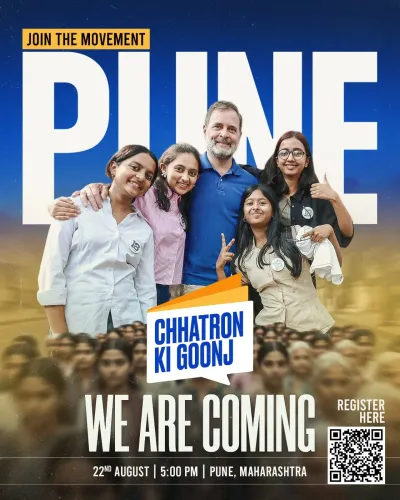
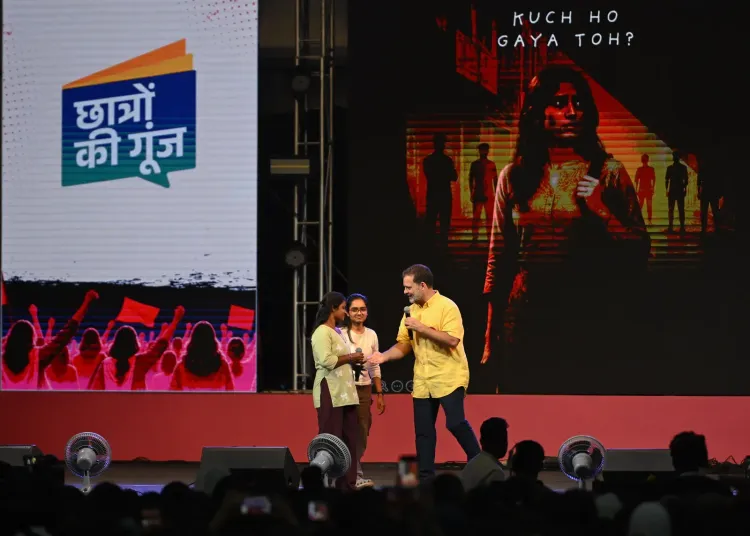
Rahul Gandhi addressed the 'Chatron Ki Gunj' event in Pune on 22 August , the fourth edition of the initiative held under the theme 'Pinjra Toda' (Break the Cage).
Gandhi declared India's 70 crore women the nation's greatest strength, noting they independently own only 8% of property in the country.
He sharply criticised the Manusmriti , calling its prescription that women live for father, husband, and sons 'unacceptable and shameful.' Student Nisha presented a memorandum detailing tribal student grievances — including a ten-day hunger strike in Pune's Manjari , three snakebite deaths in Gadchiroli , and a demand for ₹1 crore compensation per deceased student's family.
Gandhi accepted an invitation to visit the hunger-strike site, pledging his presence would 'build pressure on the administration.' Heavy security was deployed after day-prior clashes between ABVP and NSUI members in Pune; the event concluded without incident.
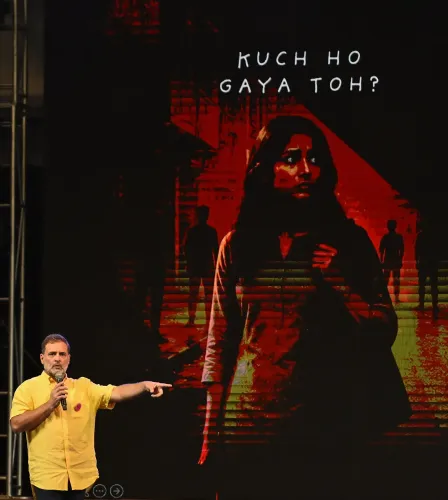
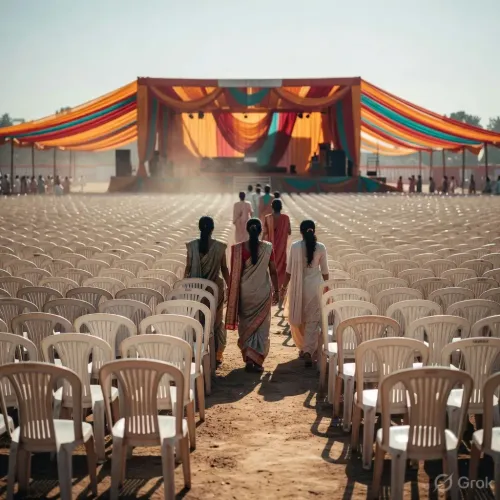
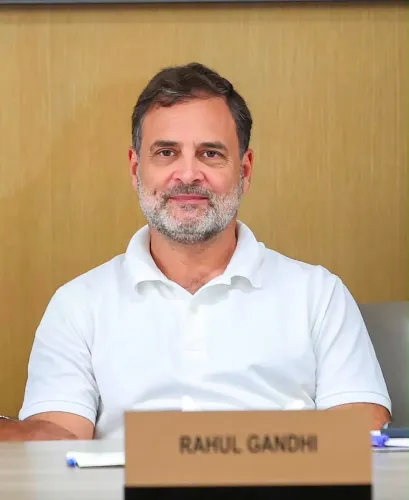
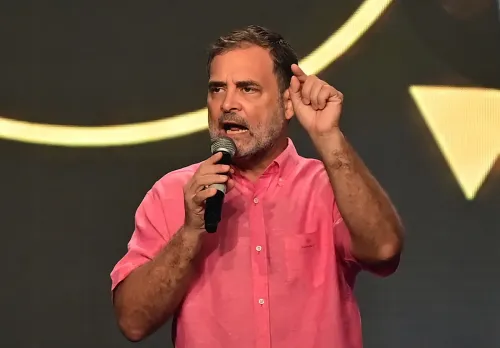
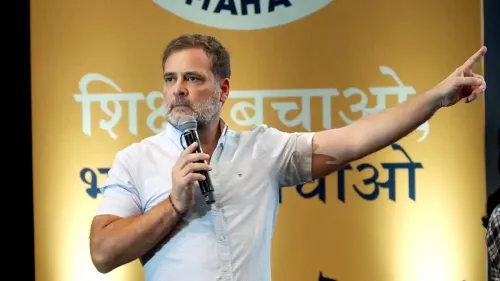
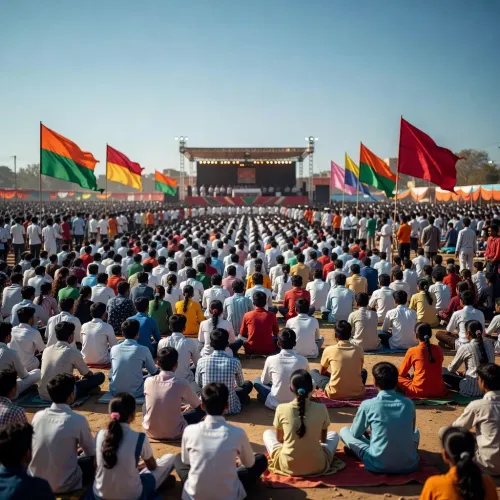
Congress leader and Leader of Opposition in Lok Sabha Rahul Gandhi on 22 August addressed thousands of students at the 'Chatron Ki Gunj' event in Pune, declaring that India's 70 crore women are the nation's single greatest asset and mounting a pointed critique of the Manusmriti's prescriptions on women's roles. The fourth edition of the initiative was held under the theme 'Pinjra Toda' (Break the Cage), drawing large student crowds from across Maharashtra.
Women as the Nation's Core Strength
Opening his address, Gandhi set aside conventional political discourse. 'I have not come here today to speak on politics,' he told the Gen-Z gathering. He argued that while commentators cite the economy, military, or population as India's defining strengths, his position is unambiguous: 'The 70 crore women of India are the nation's biggest strength and asset.'
He elaborated that women inherently carry immense empathy, sensitivity, and resilience — qualities he called indispensable to national progress. He urged young women to assert an identity independent of relational roles. 'You are not dependent on anyone. Your relationships do not define your core identity — you have an individual identity of your own,' he said, while acknowledging that roles such as daughter, wife, and mother carry their own importance.
Notably, Gandhi cited data pointing out that women independently own only eight per cent of property in India — a figure he described as a structural injustice that belies the country's stated commitment to gender equity.
Sharp Critique of the Manusmriti
Gandhi reserved his sharpest words for the Manusmriti, the ancient Brahmanical legal text, arguing that its underlying design is to deny women independence across every stage of life. He noted that the text prescribes that a woman must live for her father in childhood, her husband in youth, and her sons in old age — a framework he called 'unacceptable and shameful.' He argued that the ideology embedded in the text aims to subject women to perpetual external control, foreclosing the possibility of self-reliance.
This comes amid a broader political debate in India over the relevance of ancient texts to contemporary constitutional values — a fault line that Congress and the Bharatiya Janata Party (BJP) have contested sharply in recent electoral cycles.
Tribal Students' Grievances Take Centre Stage
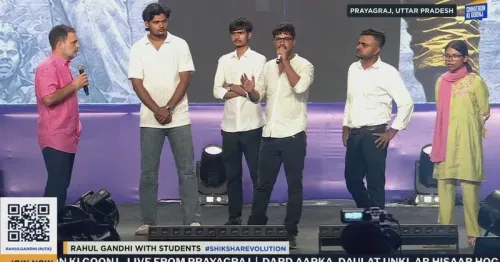
The event's most striking moment came when a student named Nisha — identifying herself as a representative of tribal students — presented a formal memorandum to Gandhi, detailing a crisis in Maharashtra's tribal education system.
Nisha informed Gandhi that tribal students in Pune's Manjari have been on a hunger strike for ten days, with one female student hospitalised due to deteriorating health. She stated that when student representatives approached the Mantralaya, the Tribal Development Minister claimed the matter rested solely with the Chief Minister — a response she called an abdication of responsibility.
Among the specific grievances raised: central kitchens in tribal schools prepare food at one location and transport it 70 to 80 km away, reportedly leading to spoilage and food poisoning incidents. Tribal ashram schools, she said, lack basic facilities including beds and drinking water. Three students recently died from snakebites — identified as Bungarus/Krait species — in Gadchiroli, with three others undergoing hospital treatment. Nisha demanded that the state government provide at least ₹1 crore in compensation to the families of the deceased students.
She also flagged that tribal hostels in Pune are located in distant suburbs such as Manjari and Kondhwa, forcing students to spend nearly four hours daily in transit. She further raised a serious concern about female students from Gadchiroli being subjected to mandatory pregnancy tests upon returning from the Diwali break.
When Gandhi asked why she had not invited him to the protest site, Nisha extended an immediate invitation. Gandhi accepted: 'Invite me to the protest site, and I will come. My presence will build pressure on the administration.'
Security and Political Context
Local authorities deployed heavy security around the venue following clashes the previous day between members of the Akhil Bharatiya Vidyarthi Parishad (ABVP) and the National Students' Union of India (NSUI) in Pune. The event concluded without further disruption.
The 'Chatron Ki Gunj' initiative — organised against the backdrop of recent youth protests in Delhi — was accompanied by senior state Congress leadership. Alongside the student interaction, Gandhi also met with Maharashtra party leaders to review organisational strategies and motivate party cadres.
What Comes Next
Gandhi's acceptance of Nisha's invitation to visit the Manjari protest site puts the spotlight on Maharashtra's tribal welfare infrastructure ahead of a politically sensitive period. Whether his visit materialises — and what administrative response it generates — will be closely watched by student groups and opposition leaders alike.
Point of View
While the Gen-Z format signals Congress's awareness that it is losing the youth narrative. But it was the tribal student Nisha who set the sharper agenda: the conditions she described — food poisoning from 80-km transported meals, snakebite deaths in Gadchiroli ashram schools, mandatory pregnancy tests — are a governance indictment, not a rhetorical point. Gandhi's on-the-spot acceptance of her invitation is a high-stakes commitment; if he visits and the administration responds, it validates the format; if he doesn't, it becomes a symbol of promises made on stage and abandoned after the cameras leave. Maharashtra's ruling coalition would do well to address the tribal welfare grievances before that visit happens.
NationPress
22 Aug 2026
Frequently Asked Questions
What did Rahul Gandhi say about women at the Pune event?
Gandhi declared that India's 70 crore women are the nation's single greatest strength and asset, arguing that women's empathy, sensitivity, and resilience make them indispensable to national progress. He also noted that women independently own only 8% of property in India, calling it a structural injustice.
Why did Rahul Gandhi criticise the Manusmriti in Pune?
Gandhi criticised the Manusmriti for prescribing that women must live for their father in childhood, husband in youth, and sons in old age — a framework he called 'unacceptable and shameful.' He argued the text's underlying design is to deny women independence and subject them to perpetual external control.
What is the 'Chatron Ki Gunj' event and why was it held in Pune?
'Chatron Ki Gunj' is a Congress-organised student engagement initiative; the Pune edition was its fourth instalment, held under the theme 'Pinjra Toda' (Break the Cage). It was organised against the backdrop of recent youth protests in Delhi and drew large student crowds from across Maharashtra.
What tribal student grievances were raised at the Pune event?
A student named Nisha presented a memorandum detailing a ten-day hunger strike by tribal students in Pune's Manjari, citing food poisoning from meals transported 70–80 km, lack of beds and drinking water in ashram schools, three snakebite deaths in Gadchiroli, and mandatory pregnancy tests for female students returning after Diwali. She demanded ₹1 crore in compensation for each deceased student's family.
Did Rahul Gandhi commit to visiting the tribal student protest site?
Yes. After student Nisha invited him to the hunger-strike site in Pune's Manjari, Gandhi accepted on the spot, saying 'My presence will build pressure on the administration.' No date for the visit has been confirmed as yet.