Rahul Gandhi Addresses Iran War and India's Global Role at U Chicago

Synopsis
Congress leader Rahul Gandhi shared his University of Chicago address on 19 November 2026, speaking on the Iran war and India's role in a conflict-reshaping world, raising sharp questions about New Delhi's strategic posture and the future of its Iran ties.
Key Takeaways
Rahul Gandhi shared a recording of his address at the University of Chicago on 19 November 2026 .
The talk was titled 'The Iran War and India's Role in the World', placing India's foreign policy at the centre of the discussion.
India's Chabahar port project with Iran, a key connectivity corridor, is a critical interest at stake in any Middle East conflict.
Gandhi's overseas forum speeches form a pattern of the opposition projecting a foreign-policy alternative to the ruling government's line.
The address may be cited in upcoming parliamentary debates on foreign affairs or draw a response from the Ministry of External Affairs .
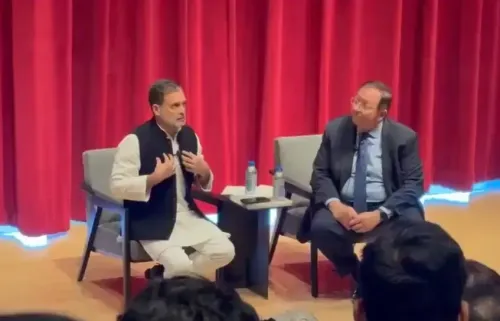
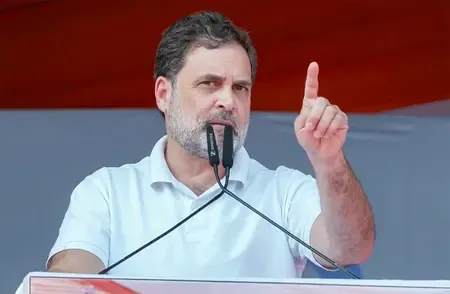
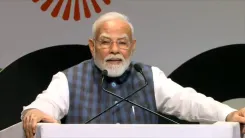
Taking India's foreign-policy debate to one of America's most storied academic stages, Congress leader Rahul Gandhi shared a recording of his address at the University of Chicago on Thursday, 19 November 2026, speaking directly to the question of an Iran war and where India stands in a world being reshaped by conflict.
Gandhi shared the talk under the title 'The Iran War and India's Role in the World', framing it as a moment for India to articulate a clear, principled foreign-policy identity rather than drift on the currents of great-power competition. The choice of venue — a globally recognised research university — signals a deliberate effort to place the opposition's foreign-policy vision before an international intellectual audience, not just a domestic one.India's Iran Ties and the Stakes of a Middle East in Flames
India's relationship with Iran is layered with strategic weight. The Chabahar port project, developed through bilateral agreements going back to the early 2000s, has long been India's gateway to Afghanistan and Central Asia — a connectivity corridor that bypasses Pakistan and anchors New Delhi's presence in the region. Any sustained conflict involving Iran places that investment, and the broader logic of India's westward reach, under acute pressure.
India has historically walked a careful line — energy imports, diaspora ties, and port diplomacy with Tehran on one side; strategic partnerships with Washington, Riyadh, and Tel Aviv on the other. That balancing act, already tested by the Ukraine war, faces a new stress test if the Middle East conflict widens.
Opposition Voices, Global Platforms
Gandhi's appearance fits a pattern: Indian opposition leaders increasingly use international forums — particularly US universities — to present a foreign-policy vision that runs distinct from the government's official line. These engagements allow the Congress leader to speak to global audiences on democracy, strategic autonomy, and India's multi-alignment doctrine without the constraints of parliamentary procedure.
The talk at the University of Chicago is particularly notable given the institution's tradition of rigorous geopolitical debate — a setting that invites precision, not platitudes. That Gandhi chose to share it publicly on X suggests the message is intended for a wide Indian audience as much as for the Chicago lecture hall.
What Parliament May Hear Next
Foreign-policy analysts will now watch whether the arguments made in Chicago resurface during upcoming parliamentary debates on external affairs, or draw a formal response from the Ministry of External Affairs. When an opposition Leader of the Opposition speaks on live conflicts and India's strategic posture at an American university, the government rarely stays silent for long.
India's foreign-policy consensus has rarely been as contested — or as consequential — as it is right now. Gandhi has just made sure that contest is now playing out in Hyde Park, Chicago, as much as in the corridors of Parliament.
Point of View
Using a prestigious academic platform to pressure the government on its Iran calculus at a moment of regional crisis. For India, the stakes are real: Chabahar, energy security, and multi-alignment are all on the table if conflict in the Middle East deepens. The opposition framing this as an India-identity question — not just a bilateral Iran issue — raises the political temperature ahead of any parliamentary foreign-affairs session. It also signals that Congress intends to contest not just economic governance, but India's global posture, as a core electoral argument.
NationPress
19 Nov 2026
Frequently Asked Questions
What did Rahul Gandhi say at the University of Chicago about Iran?
Rahul Gandhi addressed the topic of the Iran war and India's role in the world at the University of Chicago, sharing the talk publicly on 19 November 2026. The specific content of the address is drawn from the event itself; Gandhi framed India's strategic positioning as a central question in a conflict-shaped global order.
Why is India's relationship with Iran important?
India has deep strategic ties with Iran, including the Chabahar port project — a key connectivity corridor to Afghanistan and Central Asia that bypasses Pakistan. India also imports energy from Iran and maintains diplomatic ties that form part of its multi-alignment foreign policy.
What is the Chabahar port project?
The Chabahar port project is a bilateral infrastructure initiative between India and Iran, developed since the early 2000s, that gives India direct maritime access to Afghanistan and Central Asia, reducing dependence on Pakistani overland routes.
Why does Rahul Gandhi speak at overseas universities?
Indian opposition leaders, including Rahul Gandhi, periodically address international forums and universities to present foreign-policy views distinct from the ruling government's official positions, reaching both global audiences and Indian voters through shared recordings.
Will Rahul Gandhi's Iran speech affect Parliament proceedings?
Foreign-policy analysts expect the arguments from the University of Chicago address to be raised in upcoming parliamentary debates on external affairs. It may also prompt a formal response from India's Ministry of External Affairs.