Rahul Gandhi Calls Pralhad Joshi 'Insult to Education System'
Synopsis
Congress leader Rahul Gandhi on July 28 publicly condemned Education Minister Pralhad Joshi, accusing him of defending rapists and calling him an 'insult' to India's education system and its crores of women students, broadening the attack to Prime Minister Modi.
Key Takeaways
On July 28, 2026 , Rahul Gandhi posted a sharp attack naming Pralhad Joshi as an 'insult to our education system.' Gandhi accused Joshi of 'defending rapists,' linking the alleged conduct to his fitness as the minister overseeing crores of women students.
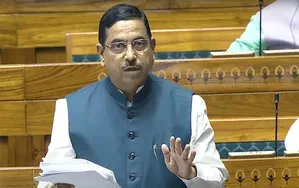
Pralhad Joshi is a BJP MP from Dharwad, Karnataka holding a ministerial position in the central government.
Gandhi extended the attack to PM Narendra Modi , declaring India's women will 'never accept' Modi's education agenda.
The exchange comes during the monsoon session of Parliament , raising the prospect of floor-level demands for ministerial accountability.
The National Education Policy 2020 had prioritised increased female enrolment, making the ministry's credibility on women's safety politically significant.
A sharp political salvo landed on Tuesday, July 28, 2026, when Congress leader and Leader of the Opposition Rahul Gandhi launched a direct attack on Union Education Minister Pralhad Joshi, calling him an 'insult to our education system' and accusing him of defending rapists — a charge that raises immediate questions about the fitness of the man overseeing crores of women students across India's institutions.
The attack and what triggered it
Gandhi's post did not mince words. 'There can be no filthier type of man than one who defends rapists,' he wrote, naming Pralhad Joshi directly and calling him 'an insult to every student' in the system he now oversees. The post accompanied a video, the contents of which the research block flags as unverified — but the political intent was unmistakable: to tie a specific ministerial statement on gender-related crime to the question of institutional credibility.
Pralhad Joshi, a Bharatiya Janata Party MP from Dharwad, Karnataka, has held multiple ministerial portfolios in the Modi government. Gandhi's broadside extended the attack to Prime Minister Narendra Modi himself, declaring that 'India's women will never accept PM Modi's new Education' — framing the minister's alleged remarks not as an individual failing but as a reflection of the government's posture on women's safety.
Why the education angle cuts deep
The stakes of this exchange are not merely rhetorical. India's higher education system enrolls hundreds of millions of students, a significant and growing share of them women — a trend the National Education Policy 2020 explicitly sought to accelerate through multidisciplinary learning and increased female enrolment. Placing a minister accused of defending perpetrators of sexual violence at the head of that system is the precise contradiction Gandhi is weaponising.
Indian opposition leaders have a well-worn playbook here: link a minister's remarks on gender-related crimes to their fitness for portfolios that directly govern women's lives. What makes this iteration sharper is the specificity — a named minister, a named prime minister, and a direct address to women students as a constituency whose verdict Gandhi is invoking.
The monsoon session backdrop
Parliament is in its monsoon session, the traditional arena where opposition charges of this nature get amplified into formal demands — adjournment motions, zero-hour interventions, calls for ministerial accountability. Whether the Ministry of Education issues a rebuttal, and whether Joshi responds directly, will determine whether this remains a social-media exchange or escalates into a floor confrontation.
For now, Gandhi has drawn a clear line: a government that tolerates a minister who defends rapists has forfeited the right to shape the education of India's daughters. That is not a nuanced argument — it is a pressure campaign, and it is already in motion.
Point of View
Then scales it up to Modi to make it about governmental values — a structure designed to force either a defence of Joshi or a distancing that itself becomes a story. The invocation of 'crores of young women' in education institutions is deliberate coalition politics, framing women students as a constituency whose safety is incompatible with the current ministry's leadership. This fits a broader Congress pattern of contesting the BJP's narrative on women's empowerment by highlighting individual ministerial conduct rather than debating policy on its merits. The monsoon session timing maximises parliamentary amplification.
NationPress
28 Jul 2026
Frequently Asked Questions
Why did Rahul Gandhi attack Pralhad Joshi?
Rahul Gandhi accused Pralhad Joshi of defending rapists and called him an insult to India's education system, arguing that a minister with such conduct is unfit to oversee institutions where crores of women study.
Who is Pralhad Joshi?
Pralhad Joshi is a Bharatiya Janata Party politician and Member of Parliament from Dharwad in Karnataka who has held ministerial positions in the central government led by Prime Minister Narendra Modi.
What did Rahul Gandhi say about PM Modi's education policy?
Gandhi declared that 'India's women will never accept PM Modi's new Education,' linking the minister's alleged conduct to the credibility of the government's broader education agenda.
What is the National Education Policy 2020?
The National Education Policy 2020 restructured India's school and higher education framework, emphasising multidisciplinary learning and increased female enrolment across institutions.
Could this controversy reach Parliament?
Yes — with Parliament in its monsoon session, opposition parties typically convert such charges into adjournment motions or zero-hour interventions demanding ministerial accountability on the floor of the House.