BJP accuses Rahul Gandhi of defaming constitutional bodies via fake narratives
Synopsis
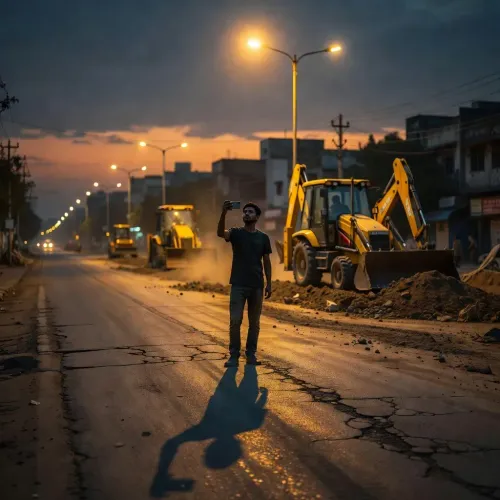
BJP spokesperson Pradeep Bhandari has publicly demanded that Rahul Gandhi explain why he amplified a social media post based on an AI-fabricated video allegedly showing Delhi Police harassing a journalist — and why, even after the video's creator Nadeem Ahmed was arrested, Gandhi has neither deleted the post nor offered any clarification. The episode lays bare how AI-generated content is rapidly becoming a frontline weapon in India's political information wars.
Key Takeaways
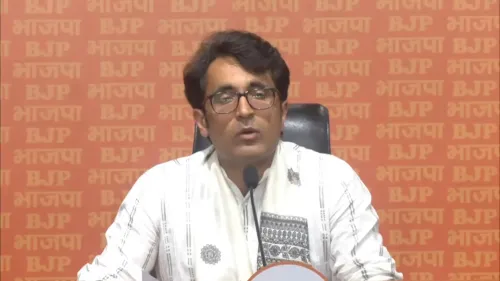
BJP spokesperson Pradeep Bhandari accused Rahul Gandhi of defaming constitutional institutions through 'false narratives' at a press conference on 6 October 2026 in New Delhi .
Gandhi had allegedly shared a post claiming Delhi Police sexually harassed a female journalist; the BJP says the video was AI-generated by content creator Nadeem Ahmed .
Nadeem Ahmed has reportedly been arrested in connection with creating the fabricated video.
Bhandari demanded Gandhi delete the post, offer a public clarification, and questioned whether Congress's IT cell ordered the video's creation.
The Congress had not formally responded to the specific allegations at the time of reporting.
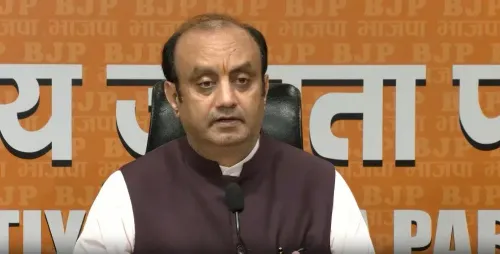
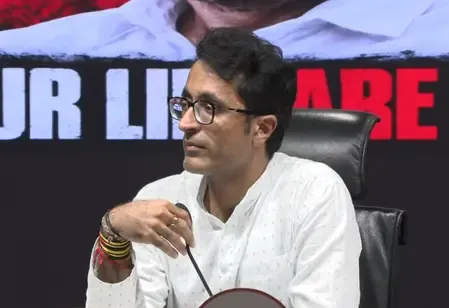
Bharatiya Janata Party (BJP) national spokesperson Pradeep Bhandari on Tuesday, 6 October 2026, launched a sharp attack on Leader of Opposition in Lok Sabha Rahul Gandhi, accusing him of deliberately spreading 'false narratives' to defame India's constitutional institutions. Bhandari made the remarks at a press conference in New Delhi, demanding that Gandhi account for amplifying a social media post that allegedly relied on an AI-generated, fabricated video.
The Fake Video at the Centre of the Row
Bhandari alleged that Gandhi had shared a social media post claiming that the Delhi Police had attempted to sexually harass a female journalist. According to Bhandari, the Delhi Police subsequently held its own press conference, presenting evidence that the video circulating in the post had been generated using artificial intelligence by a content creator identified as Nadeem Ahmed.
'The Congress and its ecosystem attempted to propagate a fake narrative based on it — a deception that has now been exposed. Yet, Rahul Gandhi remains completely silent on this falsehood today,' Bhandari said.
Bhandari confirmed that Nadeem Ahmed has since been arrested in connection with the creation of the allegedly fabricated video.
BJP's Allegations Against the Congress Ecosystem
The BJP spokesperson went further, claiming that the Indian National Congress (INC) operates through a network of 'independent content creators' who push fictitious narratives, which senior party figures — including Gandhi — then amplify across social media platforms.
'The sole agenda of the Congress and its ecosystem is to push a fake narrative via independent content creators, which Rahul Gandhi and the party's ecosystem then attempt to amplify round-the-clock through various social media accounts,' Bhandari alleged.
He questioned whether the order to produce the video originated from Congress's IT cell, and argued that such activity amounted to an attempt to discredit the 'fourth pillar of democracy' — a reference to the free press — by embedding 'paid creators' into public movements.
Questions Directed at Gandhi
Bhandari pressed Gandhi on several specific points: why the original social media post had not been deleted after the video was confirmed as AI-generated; why no public clarification had been offered; and whether the episode constituted 'a grave injustice' to journalists who report responsibly. 'Every individual who believes in this nation's democracy should ask Rahul Gandhi a fundamental question: why is it that when your lies are repeatedly exposed, yet you fail to offer any clarification?' he said.
The BJP leader also claimed that Gandhi's political motivation is not to protect democracy but to 'bring his family back to power,' framing the alleged disinformation campaign as part of a broader effort to 'hijack Indian democracy through fake narratives.'
Context and Background
This is not the first time the BJP and Congress have clashed over the use of social media and digital content in political messaging. Both parties have repeatedly accused each other of running coordinated disinformation operations, and the arrest of individuals allegedly linked to fabricated political videos has become a recurring flashpoint. The Congress party had not issued a formal response to Bhandari's specific allegations at the time of reporting.
With the opposition and treasury benches increasingly battling over narrative control in the digital space, the episode signals an intensifying fight over the credibility of social media-driven political communication ahead of upcoming electoral cycles.
Point of View
The party is attempting to turn a disinformation episode into a sustained accountability narrative against the opposition leader. What is underreported here is that both sides routinely operate through informal digital ecosystems — singling out one party risks obscuring a systemic problem. The more consequential question is whether India has any institutional mechanism to audit AI-generated political content at scale, or whether the only check remains a political rival's press conference.
NationPress
6 Oct 2026
Frequently Asked Questions
What is the BJP-Rahul Gandhi fake video controversy about?
The BJP alleges that Rahul Gandhi amplified a social media post claiming Delhi Police had sexually harassed a female journalist, but the video underpinning the post was subsequently found to be AI-generated and fabricated by a content creator named Nadeem Ahmed. The BJP is demanding Gandhi delete the post and publicly explain why he has not clarified his position even after the video was debunked.
Who is Nadeem Ahmed and why was he arrested?
Nadeem Ahmed is identified by the BJP and Delhi Police as the content creator who allegedly produced the AI-generated video that falsely depicted a Delhi Police officer harassing a journalist. He has reportedly been arrested in connection with creating and circulating the fabricated video.
Has Rahul Gandhi or Congress responded to these allegations?
According to available reports, Rahul Gandhi had not deleted the original social media post or issued a formal public clarification at the time of BJP's press conference. The Congress party had also not formally responded to Bhandari's specific allegations as of the time of reporting.
What does the BJP claim about Congress's role in spreading fake narratives?
BJP spokesperson Pradeep Bhandari alleged that the Congress party operates through a network of independent content creators who produce and distribute false narratives, which senior leaders including Gandhi then amplify via social media — a coordinated effort he described as an attempt to destabilise constitutional institutions and undermine press freedom.
Why does this controversy matter beyond the BJP-Congress rivalry?
The episode highlights the growing use of AI-generated content in Indian political discourse and raises questions about accountability for sharing unverified videos on social media. It also underscores the absence of a regulatory framework to detect and act on AI-fabricated political content before it goes viral.