Trump Signs EO to Cut Diesel Costs for US Farmers
Synopsis
President Trump signed an Executive Order on October 6, 2026, expanding red-dyed diesel access and directing federal tax relief for agricultural users. The White House says the move will save hundreds of millions of dollars for American farmers by cutting fuel costs on farm equipment.
Key Takeaways
President Trump signed an Executive Order on October 6, 2026 targeting diesel affordability for American farmers.
The EO expands access to red-dyed diesel , a cheaper, tax-exempt fuel grade permitted for off-road and agricultural use.
The order also directs federal tax relief specifically for qualifying agricultural diesel users, deepening the cost saving.
The White House projects the combined measures will save hundreds of millions of dollars for the US farm sector.
The action bypasses the legislative calendar, delivering immediate policy effect through executive authority.
The move fits within the Trump administration's broader 'affordable energy' political narrative ahead of the next election cycle.
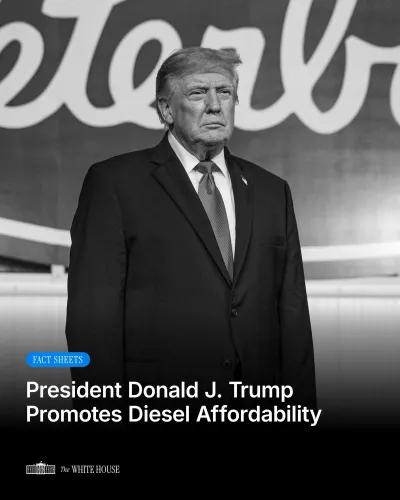
Fuel costs have long been the quiet killer of farm margins — and the White House moved on Tuesday, October 6, 2026, to change that. President Donald Trump signed an Executive Order expanding access to red-dyed diesel and directing federal tax relief specifically targeting agricultural users, with the administration projecting savings of hundreds of millions of dollars for American farmers.
What red-dyed diesel is — and why it matters to farms
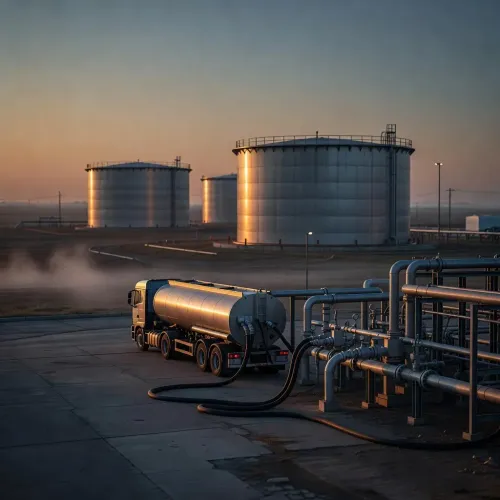
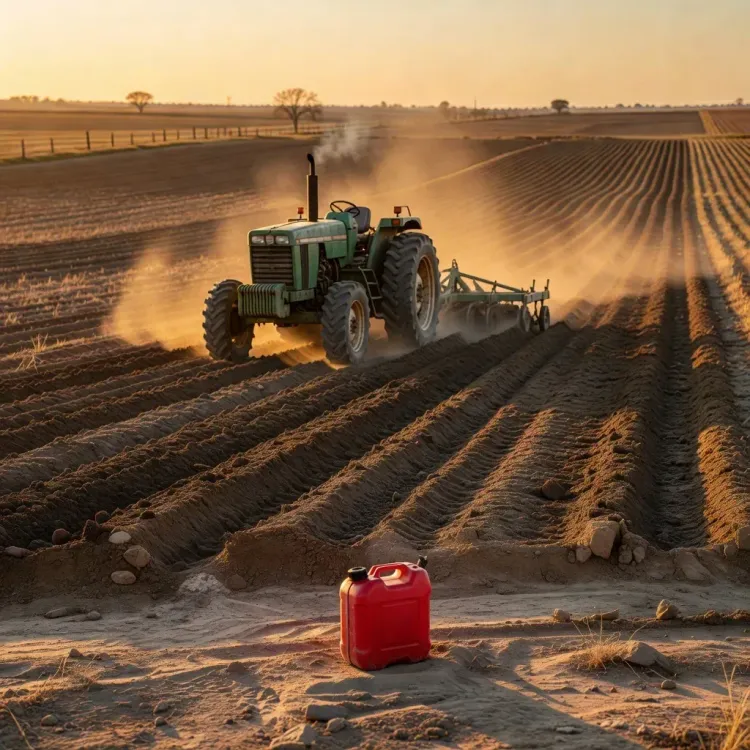
Red-dyed diesel is a tax-exempt grade of diesel fuel that the US Internal Revenue Service permits for off-road use — including farm equipment, generators, and irrigation pumps — but prohibits on public highways. Because it carries no federal road-use tax, it is substantially cheaper than the clear diesel sold at filling stations. Expanding its availability means more farm operations qualify for the lower-cost supply, directly cutting the cost of running tractors, harvesters, and field equipment through planting and harvest seasons.
The White House framed the Executive Order as two-pronged: first, broadening the categories or channels through which red-dyed diesel can be accessed; second, layering on explicit federal tax relief to deepen the discount for qualifying agricultural users. The combined effect, the administration argues, is relief that flows immediately — no waiting for a legislative calendar.
Why diesel prices hit farmers harder than most
Diesel is the oxygen of American agriculture. Every acre tilled, every load hauled to a grain elevator, every irrigation pump that runs through a dry summer burns diesel. When pump prices rise, farm operating costs rise faster than most commodity prices can compensate. The squeeze is sharpest for mid-size and smaller operations that lack the purchasing volume to negotiate bulk-fuel contracts.
The administration's move arrives at a moment when rural energy costs remain a live political nerve. Farm-state legislators have pushed successive administrations for years to widen red-dyed diesel access, arguing that the existing eligibility rules are too narrow and inconsistently enforced. An Executive Order sidesteps the slower legislative route and delivers a visible, immediate signal to agricultural communities.
The 'money back in pockets' framing and what it signals
The White House's language — 'putting more money back in Americans' pockets' — is deliberately kitchen-table in register, connecting an arcane fuel-tax rule to a tangible household-budget story. That framing signals the administration intends to amplify this as a cost-of-living win ahead of the political cycle, positioning the EO alongside a broader 'affordable energy' narrative the Trump administration has championed since taking office.
For Indian observers, the measure is a useful lens on how Washington uses tax-code levers — rather than price controls — to manage agricultural input costs, a policy tool Indian policymakers have themselves debated in the context of subsidised diesel for farm pump sets.
If the savings projections hold, this is one of the lower-friction ways an executive branch can deliver measurable rural relief — not a subsidy, not a loan waiver, but a tax rule redrawn to let farmers keep more of what they earn before the next crop cycle begins.
Point of View
Visible, rural-facing win without waiting on Congress. Red-dyed diesel expansion has been a long-standing ask from farm-state lobbies, and framing it as a cost-of-living measure rather than a sectoral subsidy gives it broader political resonance. The 'hundreds of millions' savings claim will face scrutiny — the real number depends heavily on how widely the expanded eligibility is drawn and how consistently it is enforced. Still, for an administration that has made 'energy dominance' a central identity, delivering cheaper fuel to the people who feed the country is a potent symbolic and substantive marker.
NationPress
7 Oct 2026
Frequently Asked Questions
What is red-dyed diesel and who can use it in the US?
Red-dyed diesel is a tax-exempt grade of diesel fuel designated by the US IRS for off-road use only — including farm tractors, harvesters, irrigation pumps, and generators. It cannot legally be used in vehicles that travel on public highways. Because it carries no federal road-use excise tax, it is cheaper than regular clear diesel sold at petrol stations.
What did Trump's Executive Order on diesel do for farmers?
President Trump's Executive Order, signed on October 6, 2026, expanded the eligibility and access channels for red-dyed diesel and added federal tax relief for agricultural users. The White House says the combined effect will save hundreds of millions of dollars for American farmers by reducing fuel costs on farm equipment.
How much money will US farmers save under Trump's diesel EO?
The White House projects savings of 'hundreds of millions of dollars' for American farmers, though the precise figure will depend on how broadly the expanded eligibility is applied and the specific tax relief amounts set out in the order's implementation rules.
Why is diesel so important to US agriculture?
Diesel powers virtually every major farm operation — tilling, planting, harvesting, hauling, and irrigation. When diesel prices rise, farm operating costs climb sharply, squeezing margins especially for smaller and mid-size farms that cannot negotiate bulk-fuel contracts. Reducing diesel costs has a direct, immediate effect on farm profitability.
Why did Trump use an Executive Order instead of passing a law on diesel tax relief?
An Executive Order allows the President to act immediately without going through Congress, which can take months or years to pass legislation. By using an EO, the Trump administration was able to deliver the policy change on its own timeline, signalling a quick, tangible win for rural and agricultural communities.