Trump rules out US diesel export ban after Europe boosts market supply
Synopsis
Trump has categorically ruled out a US diesel export ban, framing Europe’s move to release more diesel as a diplomatic win. Backed by a G7-IEA commitment to release 100 million barrels over four months, and Trump’s confident prediction that Iran tensions will soon ease, the White House is betting on coordinated multilateral supply over unilateral trade restrictions to cool energy prices.
Key Takeaways
President Trump ruled out a US diesel export ban on 3 October , citing Europe’s commitment to release more diesel into global markets.
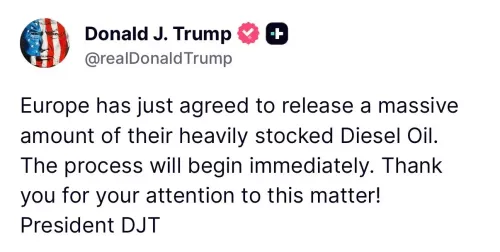
Trump claimed he personally asked European countries to increase diesel supply, calling the response ‘a great thing.’ The G7 agreed to a coordinated IEA release of 100 million barrels of oil and fuel products over four months , with a substantial diesel component in the first 20 days .
The IEA warned diesel supply pressure remains ‘particularly severe,’ even as Middle Eastern crude exports have partly recovered.
Around 325 million barrels of an earlier 400-million-barrel collective action from March had already been released prior to the new commitment.
Trump predicted oil prices would fall sharply once the Iran conflict ends, which he said would happen ‘soon.’
US President Donald Trump on 3 October ruled out any ban on American diesel exports, citing a commitment by European countries to release additional diesel supplies into global markets — a move he said would help push energy prices lower. The announcement came as global oil and refined-product markets remain under strain from Middle East tensions.
What Trump Said
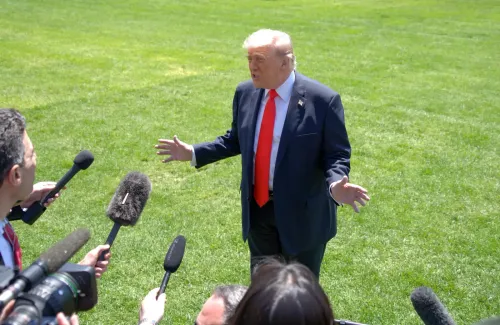
Speaking to reporters at the White House before boarding Marine One, Trump said he had personally requested Europe to make more diesel available. “Europe has a lot of diesel, and they’re gonna be making a major world contribution, and so are we,” he said. “And we’re not gonna be doing the export ban. We’re gonna be doing what we’re supposed to do.”
When pressed later on whether the ban was officially off the table, Trump went further, claiming his administration had never seriously considered it. “No, we were never gonna do it. I don’t think we ever, but basically, Europe was great because they’re putting a lot of diesel oil out there. They have diesel,” he said.
The Iran Link and Oil Price Prediction
Trump tied the expected increase in global supply to the ongoing conflict involving Iran, predicting that oil prices would decline sharply once the situation is resolved. “We’re gonna have a lot of oil very shortly, as soon as Iran ends, which won’t be long,” he said, adding that prices could fall to levels seen at the start of his administration — “maybe even lower.”
He attributed Europe’s ability to contribute to its disproportionately high diesel consumption and stockpiles. “They use diesel disproportionately more than most, and they did a great thing,” Trump noted.
G7 and IEA Coordinated Action
Trump’s remarks followed a significant multilateral move: the Group of Seven (G7) nations on Friday agreed to a coordinated release of 100 million barrels of oil and fuel products over four months through the International Energy Agency (IEA). The programme, the G7 said, would begin immediately and include a substantial release of diesel during the first 20 days.
The IEA noted that pressure on diesel supplies remained “particularly severe.” While Middle Eastern crude exports had recovered significantly, flows of refined products remained constrained. According to the agency, approximately 325 million barrels from an earlier 400-million-barrel collective action announced in March had already been released, helping cover supply shortfalls and reassure global markets.
Context and Market Implications
The diesel export ban had been floated as a potential emergency measure amid fears that tightening global supply chains and Middle East disruptions could trigger a fuel price shock in the United States. Trump’s categorical rejection of the idea, framed as a product of successful diplomacy with European allies, signals Washington’s preference for coordinated multilateral supply releases over unilateral trade restrictions.
Notably, this is not the first time coordinated IEA reserve releases have been deployed — a similar mechanism was used during the early stages of the Russia-Ukraine conflict in 2022. Whether the current release will be sufficient to stabilise markets depends heavily on how quickly Middle East tensions ease and refined-product flows normalise.
Energy analysts will be watching whether the 100-million-barrel G7 commitment translates into measurable relief at the pump, particularly in markets most exposed to diesel price volatility.
Point of View
And Europe’s release was a diplomatic response, not a spontaneous act. The G7-IEA coordinated release is a proven mechanism, but its 2022 precedent showed limited durable impact when the underlying supply disruption persisted. The more consequential variable is Iran: if tensions do not ease on Trump’s optimistic timeline, the ‘100-million-barrel fix’ may prove a stopgap rather than a solution, and the export ban question could return to the table.
NationPress
3 Oct 2026
Frequently Asked Questions
Why did Trump rule out a US diesel export ban?
Trump ruled out the ban after European countries agreed to release additional diesel into global markets, saying the increased supply would help bring energy prices down without restricting American exports. He claimed his administration had never seriously intended to impose such a ban.
What is the G7-IEA 100-million-barrel oil release?
It is a coordinated release of 100 million barrels of oil and fuel products over four months, agreed by G7 nations and administered through the International Energy Agency. The programme began immediately, with a substantial diesel component scheduled for the first 20 days.
How does Iran factor into Trump’s energy price predictions?
Trump linked the current supply tightness to the conflict involving Iran and predicted that oil prices would fall to pre-crisis levels — or even lower — once that situation is resolved. He gave no specific timeline but said resolution was ‘not gonna be long.’
What is the current state of global diesel supplies?
The IEA has described pressure on diesel supplies as ‘particularly severe.’ While Middle Eastern crude exports have partly recovered, flows of refined products, including diesel, remain constrained. Around 325 million barrels of an earlier 400-million-barrel collective action have already been released.
What role is Europe playing in stabilising diesel markets?
European countries agreed to release significant diesel stocks into the global market, a step Trump credited to his direct request. The IEA noted that Europe holds disproportionately high diesel stocks and consumption capacity relative to other regions, giving it a meaningful contribution to make.