CM Yogi Transfers ₹148 Cr Scholarships to 4.60 Lakh UP Students
Synopsis
Uttar Pradesh CM Yogi Adityanath on 3 October 2026 announced the direct transfer of over ₹148 crore in scholarships and fee reimbursements to more than 4.60 lakh low-income pre-matric and post-matric students, invoking the 'double engine government' as the driving force behind the disbursement.
Key Takeaways
₹148 crore-plus transferred directly into bank accounts of over 4.60 lakh students in a single day.
Beneficiaries span pre-matric (Classes 9–10) and post-matric categories from low-income families.
The funds cover both scholarship grants and fee reimbursements , delivered via Direct Benefit Transfer to Aadhaar-linked accounts.
CM Yogi framed the move as a commitment of the 'double engine government' — aligned BJP-led state and Centre.
Average transfer works out to approximately ₹3,200 per student , aimed at covering tuition, examination fees, and related costs.
The timing coincides with active fee-payment and examination-registration deadlines in the UP academic calendar.
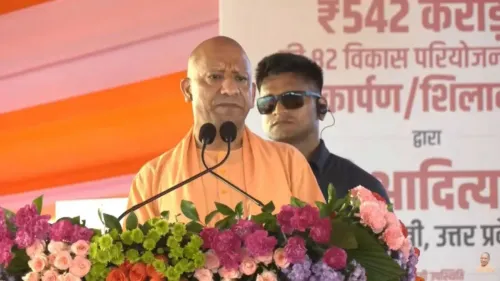
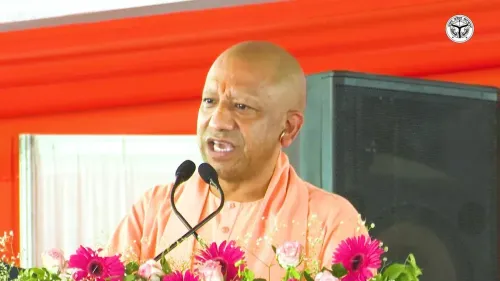
Financial hardship will not stand between a student and their future — that is the promise Uttar Pradesh Chief Minister Yogi Adityanath put into action on Saturday, 3 October 2026, as his government transferred ₹148 crore in scholarships and fee reimbursements directly into the bank accounts of more than 4.60 lakh students from low-income families across the state.
Posting on X, CM Yogi framed the disbursement as the fulfilment of a core commitment: 'Aarthik abhav kisi vidyarthi ki shiksha aur uske sapnon ki raah mein baadha na bane' — 'Let economic deprivation never become an obstacle in a student's path to education and dreams.' The transfer covers students in pre-matriculation classes (Grade 9–10) as well as post-matriculation courses, targeting the precise inflection points where financial pressure most often forces young people to drop out.
Who gets the money — and why these classes matter
The beneficiaries belong to the low-income segment of Uttar Pradesh society, spanning both pre-matric (Classes 9 and 10) and post-matric (Class 11 onwards, including higher education) tiers. These are the grades where continuation rates historically dip sharply, especially for girls and students from marginalised communities. By directing funds at both levels simultaneously, the government is attempting to close the dropout corridor that opens up the moment families face examination fees, uniform costs, or college admission charges.
The disbursement combines two instruments — direct scholarship grants and fee reimbursement — deposited straight into students' bank accounts, bypassing institutional intermediaries. Direct Benefit Transfer architecture is central to the design: it is meant to ensure the money reaches the intended recipient without leakage.
'Double Engine' dividend — Centre and state aligning on education welfare
CM Yogi explicitly invoked the 'double engine government' framing — a term his party uses to describe the alignment between a BJP-governed state and the BJP-led Centre — positioning this scholarship push as a product of that coordination. The scale, ₹148 crore-plus in a single day's transfer, underscores how large the pre-matric and post-matric scholarship architecture has grown in Uttar Pradesh, India's most populous state with roughly 25 crore residents.
Scholarship programmes for students from economically weaker sections are administered through the state's scholarship portal and are linked to Aadhaar-seeded bank accounts, a pipeline that has been progressively expanded over several years to reduce processing delays and fraudulent claims — chronic problems that once plagued earlier manual disbursement systems.
What ₹148 crore means on the ground
Breaking the numbers down: 4.60 lakh students sharing ₹148 crore works out to an average transfer of roughly ₹3,200 per student — enough, in many rural UP districts, to cover a semester's tuition, examination fees, and a portion of transportation costs. For families earning at the margins, that figure is the difference between continuing and quitting.
CM Yogi's post closed on an aspirational note — the funds, he wrote, will provide 'shiksha ko sambal, pratibha ko avsar aur yuva sapnon ko nayi udaan': 'support to education, opportunity to talent, and a new flight to young dreams.' It is the kind of line that doubles as governance communication and political messaging — but the underlying transaction, a direct cash transfer to nearly half a million students, is concrete and verifiable.
With the academic calendar deep into its second term, the timing ensures students have liquidity when fee deadlines and examination registration windows are opening across UP's vast public school and college network. Whether the pipeline delivers without delay to all 4.60 lakh accounts will be the real test of the system's maturity.
Point of View
Technology-mediated direct transfers that are harder to siphon and easier to audit politically. For CM Yogi, the 'double engine' framing is a consistent electoral asset, tying state welfare wins to the BJP's national brand ahead of future assembly cycles. The real governance test, however, lies downstream: whether the scholarship portal's verification and disbursal infrastructure is robust enough to process 4.60 lakh transfers without the delays and rejections that have historically undercut similar schemes in large states. Success here consolidates UP's reputation as a DBT-mature state; failure feeds opposition narratives about announcement-to-delivery gaps.
NationPress
3 Oct 2026
Frequently Asked Questions
How much scholarship money did CM Yogi release on 3 October 2026?
CM Yogi Adityanath announced the transfer of more than ₹148 crore in scholarships and fee reimbursements to over 4.60 lakh low-income students in Uttar Pradesh on 3 October 2026.
Who are the beneficiaries of the UP scholarship transfer in October 2026?
The beneficiaries are students from low-income families enrolled in pre-matriculation classes (Grade 9–10) and post-matriculation courses (Class 11 and above, including higher education) in Uttar Pradesh.
What is the 'double engine government' CM Yogi referred to?
The term 'double engine government' refers to states where both the state government and the central government are led by the BJP, which the party argues enables better alignment of state and central welfare schemes and funding.
How is the UP scholarship money transferred to students?
The funds are deposited directly into students' Aadhaar-linked bank accounts through the Direct Benefit Transfer (DBT) mechanism, bypassing institutional intermediaries to reduce leakage and delays.
What is the average scholarship amount per student in this UP disbursement?
Based on the total of ₹148 crore distributed among over 4.60 lakh students, the average transfer works out to approximately ₹3,200 per student, enough to cover a semester's tuition and examination fees in many parts of rural UP.