Rahul Gandhi Demands Sacking of Election Commissioner Gyanesh Kumar
Synopsis
Congress leader Rahul Gandhi called on PM Modi to remove Election Commissioner Gyanesh Kumar, labelling him 'accused no. 4', as Delhi traders faced a capital locked down by metro shutdowns and sealed roads amid ongoing protests over electoral legitimacy.
Key Takeaways
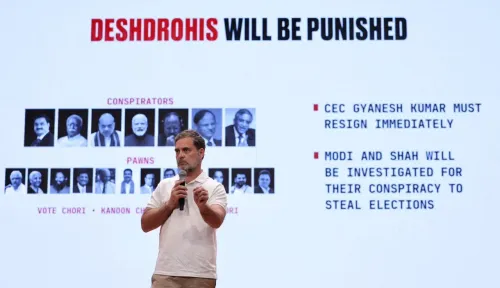
Congress leader Rahul Gandhi publicly demanded PM Modi sack Election Commissioner Gyanesh Kumar , calling him 'accused no.
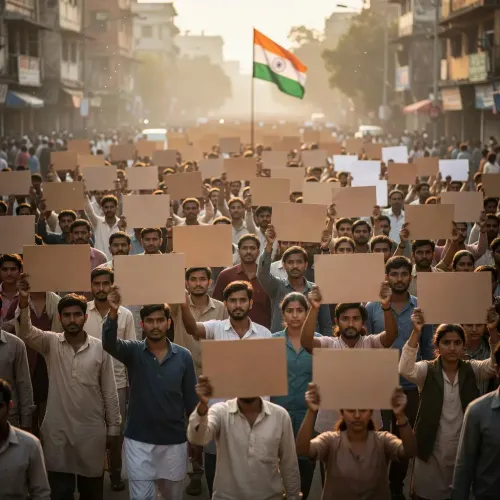
Gandhi addressed Delhi traders directly, linking the capital's lockdown — metro shut, roads sealed — to the opposition's claims of a 'stolen vote'.
Gyanesh Kumar was appointed under the Chief Election Commissioner and other Election Commissioners (Appointment) Act, 2023 , which replaced the earlier selection process that included the Chief Justice of India.
The 2023 law has been consistently criticised by opposition parties as giving the ruling government undue influence over Election Commission appointments.
Gandhi framed the demand as a conditional: the protests, he implied, would continue until Kumar is removed.
Delhi's trading community , economically impacted by the restrictions, is now a focal point in the opposition's campaign against the government's electoral and governance record.
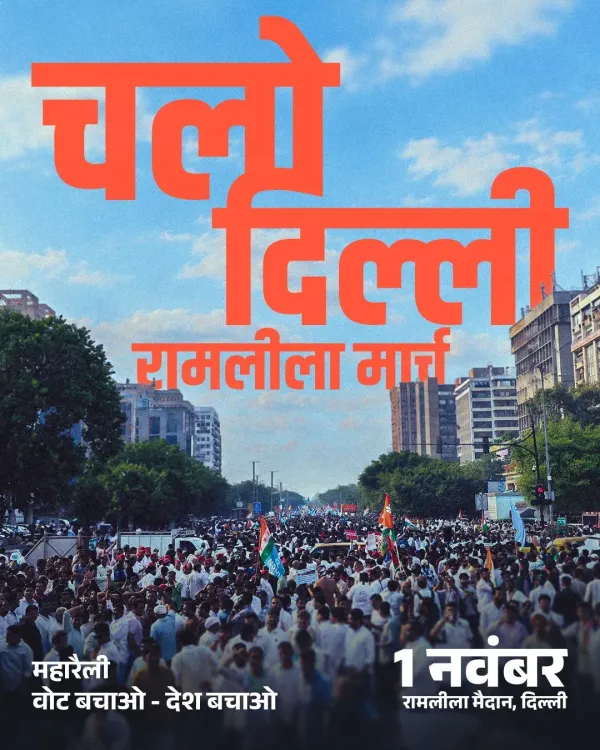
Delhi's traders woke up on Monday, October 26 to a capital on lockdown — metro shut, roads sealed — and Congress leader Rahul Gandhi used that charged moment to fire a direct political demand at Prime Minister Narendra Modi: remove Election Commissioner Gyanesh Kumar, or the protests will not stop.
Gandhi's post addressed Delhi's trading community with a pointed message: 'We love you and hear you.' But the solidarity was a vehicle for a sharper charge — that the government's clampdown on the capital's streets was itself a symptom of a deeper crisis of electoral legitimacy. 'With a stolen vote nothing is safe — your shop, your savings, your children's future,' he wrote, linking the disruption of daily commerce directly to what the opposition calls a compromised election process.
Who Is 'Accused No. 4' Gyanesh Kumar?
Gyanesh Kumar was appointed Election Commissioner of India under the Chief Election Commissioner and other Election Commissioners (Appointment, Conditions of Service and Term of Office) Act, 2023 — a law that itself became a flashpoint of opposition anger. The 2023 legislation replaced an earlier selection process that included the Chief Justice of India in the panel, substituting it with a committee giving the ruling government greater influence over appointments. Opposition parties, including the Congress, have since argued the new law undermines the Election Commission's independence.
Gandhi's labelling of Kumar as 'accused no. 4' is a sharp escalation of that long-running battle — casting an Election Commissioner not as a constitutional authority but as a numbered defendant in what the opposition frames as an assault on India's democratic process. The Congress has demanded his removal, and Gandhi's post makes clear the party intends to tie that demand to street-level discontent among Delhi's traders.
A Capital in Protest: What Shut Delhi Down
The post references metro services being shut and roads sealed across the national capital — restrictions that would directly squeeze the city's dense trading districts. Delhi, home to some of India's largest wholesale and retail markets, is acutely sensitive to any disruption in movement of goods and customers. By addressing traders explicitly, Gandhi is invoking an economically powerful constituency that transcends routine party politics.
Opposition figures have repeatedly pointed to instances of heavy-handed crowd-control during political gatherings in the capital as evidence of what they describe as a government afraid of public scrutiny. Gandhi's framing — that the shutdown is inseparable from questions of electoral fraud — is a deliberate attempt to fuse economic grievance with constitutional outrage into a single political charge.
The Election Commission at the Centre of the Storm
The demand to sack Gyanesh Kumar marks the latest chapter in an extended opposition campaign to contest the legitimacy of both the 2023 appointment law and the commissioners appointed under it. The Supreme Court had earlier weighed in on the selection process, and the law was seen by critics as a direct legislative override of judicial guidance on keeping executive influence out of poll-body appointments.
If the government or the Election Commission issues a formal response to Gandhi's demand, it will almost certainly escalate proceedings in Parliament and potentially trigger fresh legal challenges. The traders of Delhi, caught between a protest-era lockdown and a high-voltage political battle, are now squarely at the centre of India's most consequential institutional argument.
Gandhi's closing line — truncated but unmistakable in intent — is a conditional ultimatum: sack Kumar, and the protests end. The ball, he is telling Modi, is firmly in the government's court.
Point of View
Street protest, and a constitutional argument into one pressure campaign. By addressing traders rather than party workers, he is attempting to broaden the anti-government front beyond the Congress base. The 'accused no. 4' framing is a deliberate criminalisation of an institutional appointment, signalling the opposition's intent to de-legitimise not just the government but the electoral machinery it controls. If this demand gains traction in Parliament or the courts, it could reopen the unresolved debate over the 2023 appointment law — a fight the ruling coalition has so far won legislatively but not politically.
NationPress
26 Oct 2026
Frequently Asked Questions
Why is Rahul Gandhi demanding the sacking of Gyanesh Kumar?
Rahul Gandhi has called for the removal of Election Commissioner Gyanesh Kumar, labelling him 'accused no. 4', as part of the Congress-led opposition's campaign against what it describes as a compromised electoral process. Gandhi tied the demand to protests by Delhi traders and the shutdown of the capital's metro and roads.
Who is Gyanesh Kumar and how was he appointed?
Gyanesh Kumar is an Election Commissioner of India appointed under the Chief Election Commissioner and other Election Commissioners (Appointment, Conditions of Service and Term of Office) Act, 2023. The law replaced an earlier selection process that included the Chief Justice of India on the appointment panel.
What is the controversy around the 2023 Election Commissioner appointment law?
The 2023 law removed the Chief Justice of India from the selection committee for the Chief Election Commissioner and other commissioners, giving the ruling government greater influence. Opposition parties, including the Congress, have argued this undermines the Election Commission's independence.
Why were Delhi's metro and roads shut down?
Rahul Gandhi's post references the Delhi metro being shut and roads sealed during what appears to be a protest situation in the capital. Specific details of the protests are ongoing and developing as of October 26, 2026.
What are Delhi traders demanding in these protests?
Gandhi's post positions Delhi traders as victims of the government's lockdown of the capital, suggesting their economic concerns — shops, savings, and livelihoods — are intertwined with broader opposition demands for electoral accountability and institutional reform.