Rahul Gandhi Demands SC-Monitored Probe Into Student Brutalities
Synopsis
Congress leader Rahul Gandhi has demanded a Supreme Court-monitored high-powered committee to probe alleged brutalities against students, invoking judicial oversight as the credibility standard for any credible inquiry.
Key Takeaways
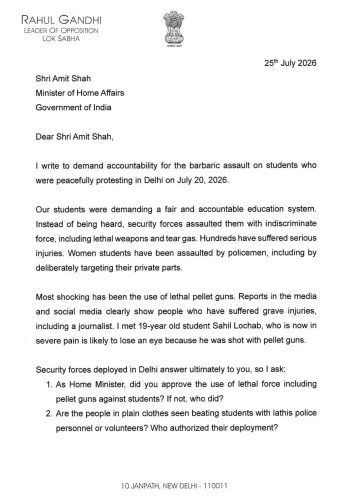
Rahul Gandhi on 30 July 2026 demanded an independent, Supreme Court-monitored high-powered committee to investigate 'brutalities against our students.' The demand specifically invokes the Supreme Court of India as the monitoring authority, signalling a potential judicial petition if the government does not act.
The Supreme Court has previously constituted or supervised independent committees in cases where executive-led probes lacked public credibility.
The call follows a recurring pattern of Indian opposition leaders demanding judicially monitored inquiries after alleged state excesses against student communities.
Key developments to watch include any Supreme Court petition and the government's formal response in Parliament or through affidavits.
A demand for judicial oversight landed on Thursday morning with the weight of a constitutional argument. Congress leader Rahul Gandhi, Leader of the Opposition in the Lok Sabha, called for an independent, Supreme Court-monitored high-powered committee to investigate what he described as 'brutalities against our students' — framing accountability not as a political ask but as a matter of justice.
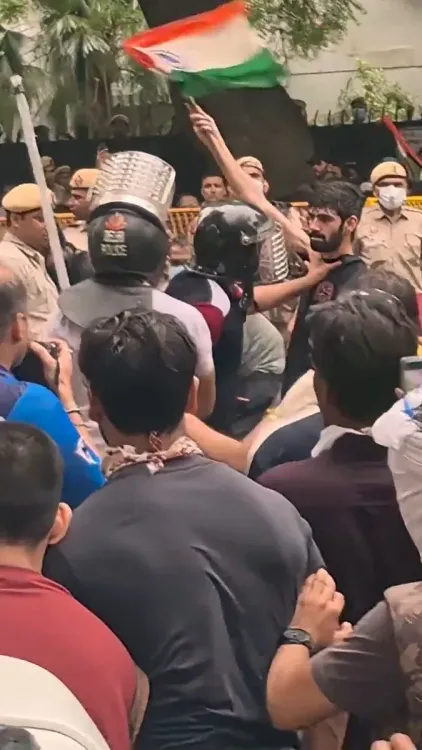
Posting on 30 July 2026, Gandhi wrote: 'Students deserve justice. An independent SC monitored high powered committee must be constituted to probe brutalities against our students.' The post, accompanied by a video, carried no further elaboration — but the demand itself was pointed and specific: not a routine inquiry, not an executive-led panel, but one anchored to the Supreme Court's authority.
Why an SC-Monitored Panel — and Why It Matters
The demand for a judicially overseen committee is not a new instrument in Indian democratic discourse, but it is a significant one. The Supreme Court of India has, on multiple past occasions, constituted or supervised independent committees when allegations of state excess have eroded public confidence in executive-run investigations. The logic is straightforward: when the agency accused of wrongdoing sits within the same chain of command as the investigating agency, judicial oversight becomes the credibility bridge. Gandhi's specific language — 'high powered committee' monitored by the Supreme Court — mirrors the vocabulary of past petitions that have successfully triggered judicial intervention in cases of alleged institutional failure. It is a deliberate framing: less a political slogan, more a legal demand.A Recurring Pattern in Opposition Accountability Demands
This call follows an established pattern in Indian opposition politics. When allegations of police action or administrative excess against student protesters surface, opposition figures have consistently pushed for inquiry mechanisms outside routine executive channels. The argument, repeated across different governments and different campuses, is that internal probes lack the independence to inspire public trust. The Supreme Court has occasionally stepped in to oversee such probes — most notably in cases where the scale of alleged excess or the vulnerability of the affected group made executive self-inquiry untenable. Gandhi's post signals that, if the government does not act, a judicial petition may follow. The next pressure points to watch: whether a petition is filed in the Supreme Court seeking constitution of such a committee, and how the government responds — in Parliament, through affidavits, or through an inquiry of its own design. Students and university communities, named as the central stakeholders, are waiting for both.Point of View
Which raises the stakes for the government's response. The invocation of judicial oversight draws on a well-established playbook: when executive credibility is in question, the Supreme Court becomes the arena where opposition pressure converts into institutional action. This follows a longer arc of India's higher judiciary being drawn into governance gaps, particularly on questions of state force and vulnerable populations. Whether the demand translates into a petition — and whether the Court entertains it — will determine if this remains a political statement or becomes a live constitutional proceeding.
NationPress
30 Jul 2026
Frequently Asked Questions
What did Rahul Gandhi demand regarding students?
Rahul Gandhi demanded the constitution of an independent, Supreme Court-monitored high-powered committee to probe alleged brutalities against students, posting the demand on 30 July 2026 .
What is a Supreme Court monitored committee in India?
A Supreme Court-monitored committee is an independent investigative or oversight panel whose functioning is supervised by the Supreme Court of India, used in cases where executive-led probes are seen as lacking credibility or independence.
Has the Supreme Court of India intervened in student protest cases before?
Yes, the Supreme Court has on multiple past occasions constituted or supervised independent committees when allegations of state excess against protesters or students have raised questions about the impartiality of executive-run investigations.
Why does the opposition demand judicial oversight instead of a government inquiry?
Opposition leaders argue that when the agencies accused of wrongdoing fall within the executive chain of command, only judicial oversight can provide the independence required for a credible investigation — a position Gandhi's post reflects.
What happens next after Rahul Gandhi's demand for an SC-monitored probe?
The key developments to watch are whether a petition is filed in the Supreme Court seeking constitution of such a committee and how the government responds — either in Parliament, through a formal affidavit, or by ordering an inquiry of its own.