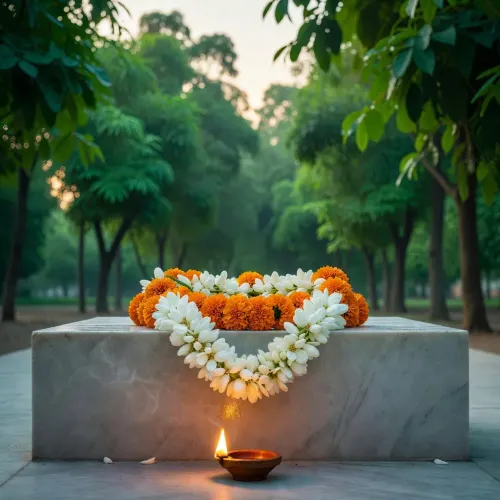
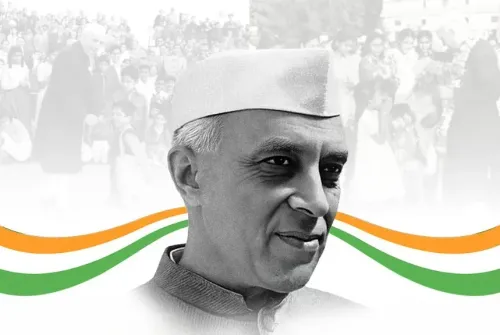
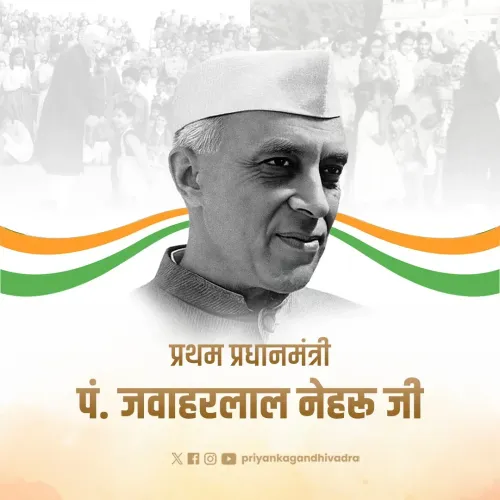
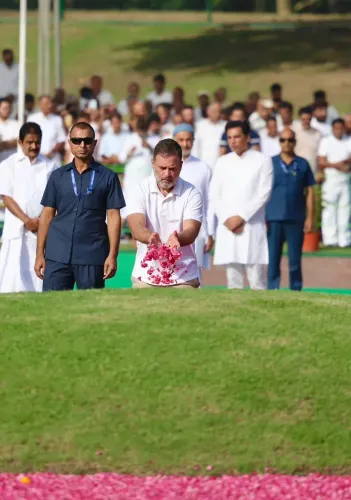
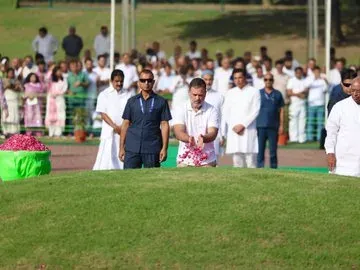
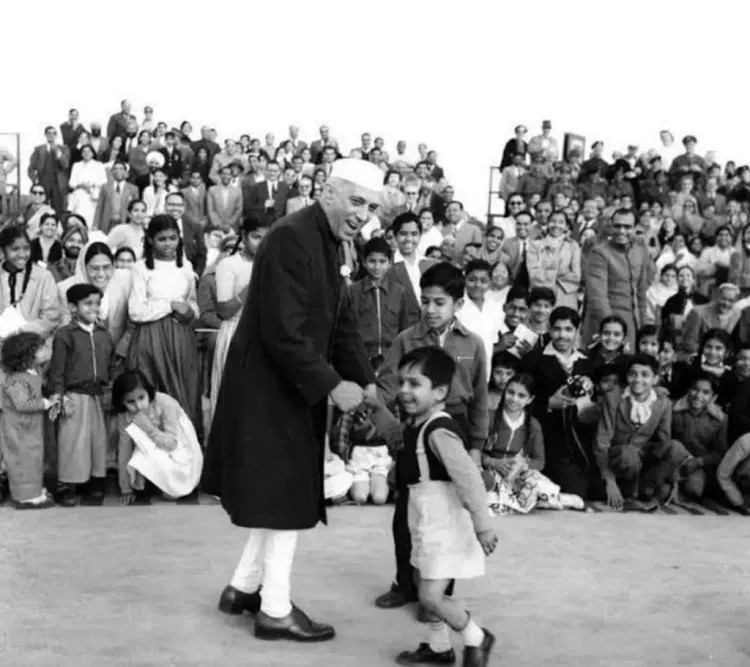
Rahul Gandhi pays tribute to Nehru on his birth anniversary
Synopsis
On Pandit Jawaharlal Nehru's 135th birth anniversary, Congress leader Rahul Gandhi offered tribute on 14 November 2026, framing Nehru's vision — a scientific, diverse and democratic India — as an enduring inspiration and a living political obligation, not mere historical memory.
Key Takeaways
Congress leader Rahul Gandhi posted a Hindi tribute to Pandit Jawaharlal Nehru on his 135th birth anniversary, 14 November 2026 .
Gandhi described independence as 'the starting point of a new journey', not Nehru's final destination.
He invoked Nehru's vision of India as a country defined by diversity as strength, democracy as faith, and equality as its foundation.
Nehru served as India's first Prime Minister from 1947 to 1964 and established foundational institutions including the IITs and Atomic Energy Commission.
Gandhi called striving toward Nehru's vision of a modern, scientific, progressive India 'the truest homage' to him.
14 November is also observed as Children's Day across India.
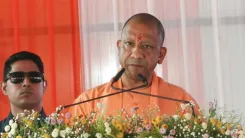
On the 135th birth anniversary of Pandit Jawaharlal Nehru, Congress leader and Leader of the Opposition Rahul Gandhi offered a heartfelt tribute on Saturday, 14 November 2026, invoking Nehru's vision of a modern, scientific and plural India as a living inspiration — not a historical footnote.
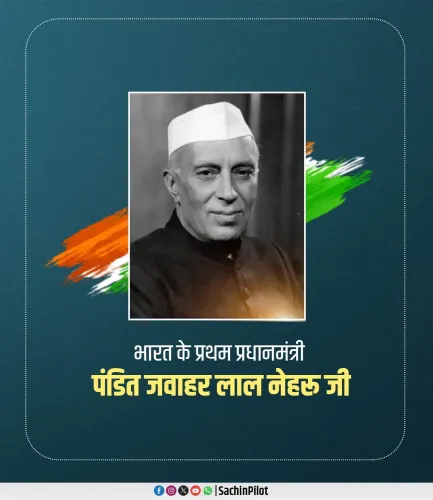
Posting in Hindi, Gandhi wrote: 'हिंद के जवाहर, भारत के प्रथम प्रधानमंत्री पंडित जवाहरलाल नेहरू जी की जयंती पर सादर नमन' — 'Respectful salute to Jawaharlal Nehru, the jewel of Hind and India's first Prime Minister, on his birth anniversary.' The tribute was not a simple act of remembrance. It was a statement of political philosophy.
Freedom as a beginning, not an end
Gandhi framed Nehru's legacy in deliberately forward-facing terms. 'Independence was not his destination — it was the starting point of the country's new journey,' he wrote. 'Swaraj was not power, but the participation of every citizen and the responsibility for the nation's future.' The framing places civic participation, not state authority, at the core of Nehru's self-rule project.
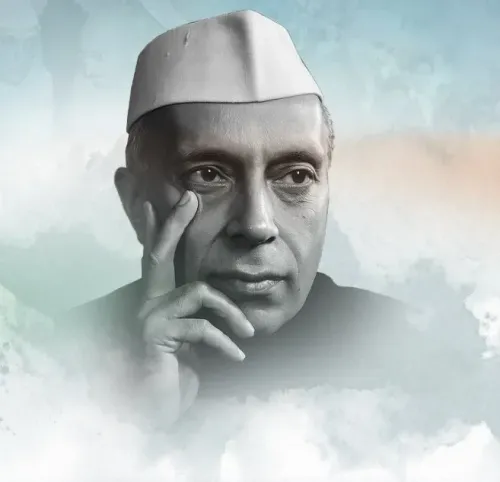
He also invoked Nehru's celebrated conception of India as a civilisational idea: a country defined by its diversity as strength, democracy as faith, and equality as its foundation. The language echoes Nehru's own writing — most famously in 'The Discovery of India' — where he described India not as a fixed territory but as an evolving, plural thought.
Nehru's blueprint for a modern republic
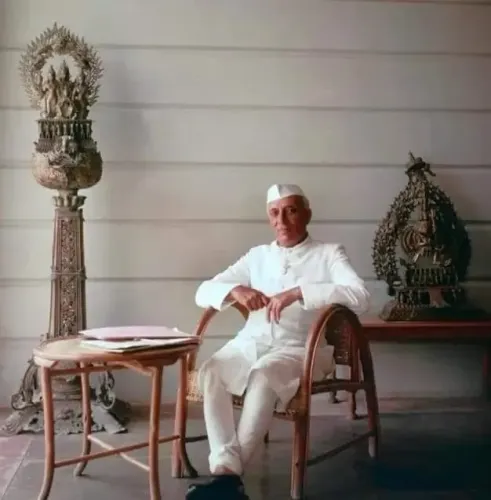
Jawaharlal Nehru served as India's first Prime Minister from 1947 to 1964, the longest tenure of any Prime Minister in the country's history. He steered India through Partition, laid the foundations of parliamentary democracy, championed scientific institutions, and articulated a secular constitutional vision at a moment when both were under acute pressure. His government established the Indian Institutes of Technology, the Atomic Energy Commission, and a network of public-sector undertakings that defined the architecture of independent India's economy.
Gandhi closed his tribute with a call to action: 'Our effort towards the India of that dream is the truest homage to him.' It is a formulation that doubles as a political programme — connecting the Congress party's present agenda to Nehruvian ideals of science, progress and democratic inclusivity.
A ritual with fresh political weight
14 November — also observed as Children's Day across India — draws annual tributes from political leaders of all stripes, though the Congress party's commemorations carry particular weight given Nehru's foundational role in building the organisation and the republic alike. In recent years, the anniversary has also become a moment where competing visions of India's founding ideals are articulated publicly, giving routine commemorative language a sharper contemporary edge.
Nehru's legacy remains one of the most contested and consequential debates in Indian public life. For the Congress, keeping that debate alive — and anchoring it in his original vision of a secular, scientific, diverse republic — is as much a political act as it is a commemorative one.
Point of View
Scientific and participatory democracy. By emphasising 'every citizen's participation' over mere state power, Gandhi reframes Swaraj as a living civic demand rather than a settled constitutional fact. The tribute arrives at a moment when debates over India's founding values remain intensely live in public discourse, making the choice of language — diversity as strength, democracy as faith — a pointed act of positioning as much as remembrance. For the Congress, Nehru's anniversary is an annual opportunity to assert ownership of the republic's ideological origins.
NationPress
14 Nov 2026
Frequently Asked Questions
Why is 14 November celebrated in India?
14 November is the birth anniversary of India's first Prime Minister Pandit Jawaharlal Nehru , and is widely observed as Children's Day across the country, reflecting Nehru's affection for children.
What did Rahul Gandhi say about Jawaharlal Nehru on 14 November 2026?
Rahul Gandhi paid tribute in Hindi, calling Nehru's vision of a modern, scientific and diverse India 'our inspiration today' and said that striving toward that vision is the truest homage to India's first Prime Minister.
What was Jawaharlal Nehru's vision for India?
Jawaharlal Nehru envisioned India as a modern, scientific, secular and democratic republic — a civilisational idea defined by its diversity, with equality and citizen participation at its core, articulated most famously in his book The Discovery of India .
How long did Jawaharlal Nehru serve as Prime Minister of India?
Jawaharlal Nehru served as India's first Prime Minister from 1947 to 1964 — the longest tenure of any Prime Minister in Indian history.
What institutions did Jawaharlal Nehru establish in India?
Under Nehru's leadership, India established the Indian Institutes of Technology (IITs) , the Atomic Energy Commission , and a wide network of public-sector undertakings that formed the backbone of independent India's industrial and scientific infrastructure.