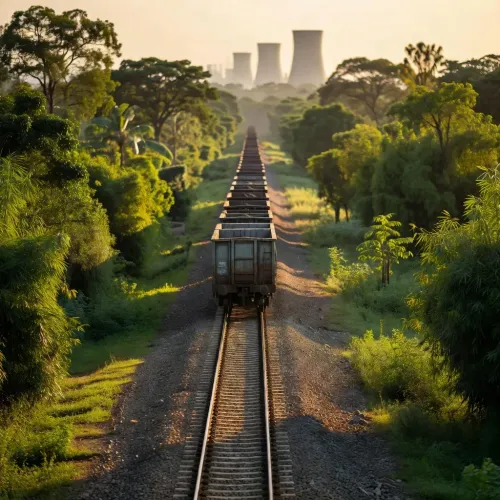
Railways clears ₹755 crore Champa-Korba third line to boost coal corridor capacity
Synopsis
Indian Railways has cleared a ₹755 crore third rail line between Champa and Korba — one of India's most strained coal corridors — as SECL and MCL output is set to nearly double to 450 MTPA. The project will add 5.95 MTPA freight capacity, cut train detention delays, and unlock ₹85 crore in additional annual earnings, making it a critical infrastructure bet on India's coal-powered energy future.
Key Takeaways
Indian Railways approved the Champa-Korba Third Line Project on Tuesday, 16 June , with an outlay of ₹755 crore .
The project covers a 42 km stretch on the South East Central Railway , excluding the already-sanctioned Madwarani-Saragbundia section.
Upon completion, the line will support an additional 5.95 MTPA of freight and 2 extra passenger train pairs daily.
Combined coal output of SECL and MCL is projected to rise from 247 MTPA to nearly 450 MTPA , adding approximately 200 MTPA of new traffic.
The project is expected to generate additional annual net earnings of ₹85 crore and operational savings of ₹1.30 crore by eliminating freight detention delays.
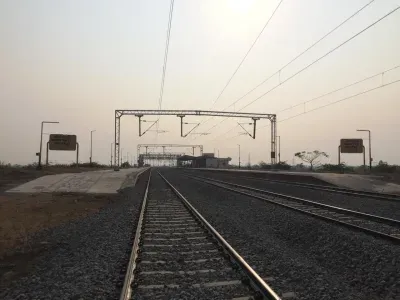
Indian Railways on Tuesday approved the Champa-Korba Third Line Project, a 42 km capacity expansion along the South East Central Railway zone, with a total investment of ₹755 crore. The project will add a third rail line between Champa and Korba — excluding the already-sanctioned Madwarani-Saragbundia section — on one of the country's most freight-intensive coal corridors.
Strategic Importance of the Corridor
Korba, widely referred to as the 'Power Capital of India', is home to a dense cluster of thermal power plants and functions as a critical coal dispatch hub. The Champa-Korba section connects the coalfields of South Eastern Coalfields Limited (SECL) and Mahanadi Coalfields Limited (MCL) to the national rail grid and the Mumbai–Howrah High Density Corridor.
The route currently handles around 10 pairs of passenger trains and nearly 55 pairs of freight trains daily, operating close to saturation. The combined coal production capacity of SECL and MCL stands at approximately 247 million tonnes per annum (MTPA), with projections indicating a surge to nearly 450 MTPA — adding roughly 200 MTPA of additional coal traffic in the coming years.
What the Third Line Will Deliver
Once commissioned, the third line is projected to support an additional freight throughput of 5.95 MTPA and enable two extra passenger train services in each direction daily. The project is expected to generate additional annual net earnings of nearly ₹85 crore — comprising ₹82 crore from freight and ₹3 crore from coaching services.
Freight train detentions, currently averaging around five minutes per direction, are also expected to be eliminated, yielding operational savings of approximately ₹1.30 crore annually. The project falls under Indian Railways' Mission 3000 MT and High-Density Network (HDN) Corridor initiatives, both aimed at scaling freight capacity to meet the country's expanding energy demands.
Broader Infrastructure Push
This approval is part of a sustained effort by Indian Railways to decongest high-traffic freight corridors, particularly those feeding thermal power generation. This comes amid rising pressure on coal logistics as domestic power demand continues to climb. Notably, the Champa-Korba stretch has long been identified as a bottleneck on the eastern coalfield network, and the third line addresses a gap that has constrained both freight velocity and passenger scheduling.
The project is expected to improve operational flexibility across the zone, allowing freight and passenger trains to run without the current conflict-induced delays. Execution timelines and tendering details are yet to be formally announced by the Railways.
Point of View
The logistics network had no choice but to catch up. What this project does not address is the broader question of whether expanding coal freight infrastructure locks in long-term capacity that may conflict with India's own renewable energy transition targets. The ₹85 crore annual earnings projection is modest relative to the ₹755 crore outlay, suggesting the real return is systemic — reduced grid stress from unimpeded coal supply — rather than commercial. Whether Mission 3000 MT timelines hold will depend on how quickly tendering and land clearances move on the ground.
NationPress
19 Sept 2026
Frequently Asked Questions
What is the Champa-Korba Third Line Project approved by Indian Railways?
It is a ₹755 crore project to construct a third railway line along a 42 km stretch between Champa and Korba in the South East Central Railway zone. The project aims to expand freight and passenger capacity on one of India's busiest coal corridors, supporting SECL and MCL coalfield logistics.
Why is the Champa-Korba corridor strategically important?
The corridor connects the coalfields of South Eastern Coalfields Limited and Mahanadi Coalfields Limited to the national rail network and the Mumbai–Howrah High Density Corridor. Korba, known as the 'Power Capital of India', hosts numerous thermal power plants and depends heavily on uninterrupted coal supply via this route.
What capacity additions will the third line enable?
The third line is projected to add 5.95 MTPA of freight movement and enable two additional passenger train pairs daily in each direction. It will also eliminate current freight detention delays of around five minutes per direction, saving an estimated ₹1.30 crore annually.
How much will the project earn for Indian Railways annually?
The project is expected to generate additional annual net earnings of nearly ₹85 crore — ₹82 crore from freight traffic and ₹3 crore from coaching (passenger) services — once fully operational.
Under which Indian Railways programmes does this project fall?
The Champa-Korba Third Line Project is part of Indian Railways' Mission 3000 MT and High-Density Network (HDN) Corridor initiatives, both designed to scale freight capacity and support the country's growing energy infrastructure requirements.