CM Bhajanlal Pushes to Strengthen Rajasthan Dairy Cooperatives
Synopsis
The Chief Minister's Office of Rajasthan has signalled a concerted push by CM Bhajan Lal Sharma's government to strengthen the state's dairy and cooperative sector, building on decades of RCDF-led infrastructure and aiming to raise rural incomes across India's largest state.
Key Takeaways
The Chief Minister's Office of Rajasthan announced on 6 June 2026 that the dairy and cooperative sector is being actively strengthened under CM Bhajan Lal Sharma .
The Rajasthan Cooperative Dairy Federation (RCDF) , established in 1977 , operates the Saras brand and is the apex body for milk procurement and processing in the state.
Rajasthan ranks among India's top five milk-producing states, with a large livestock base supporting widespread dairy livelihoods.
The cooperative dairy model has been a long-standing policy tool across administrations to raise rural incomes and reduce dependence on rain-fed agriculture.
Central schemes such as the Dairy Processing and Infrastructure Development Fund complement state efforts to expand chilling and processing capacity.
Dairy farmers, cooperative societies and ancillary rural workers stand to benefit from improved procurement infrastructure and better price realisation.
The Chief Minister's Office of Rajasthan on Saturday, 6 June 2026, signalled the state government's continued push to strengthen the dairy and cooperative sector across Rajasthan, attributing the drive to Chief Minister Bhajan Lal Sharma.
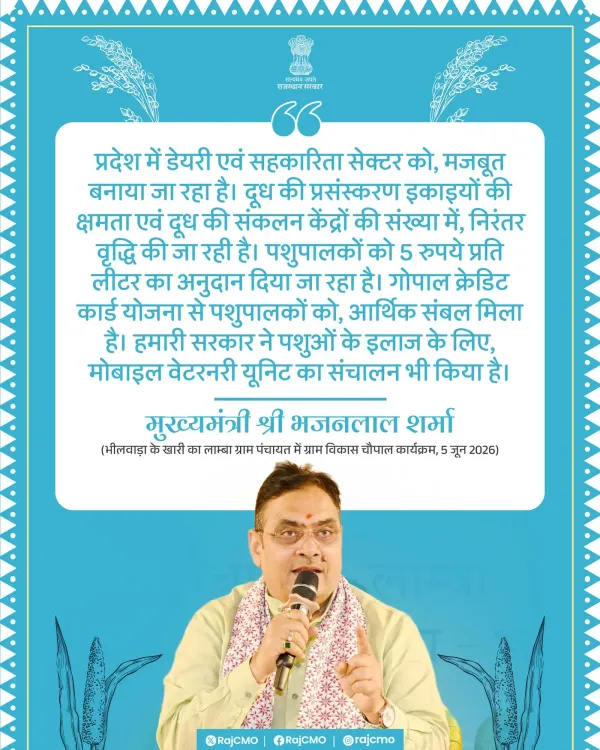
The post, shared under the hashtag #आपणो_अग्रणी_राजस्थान ('Our Leading Rajasthan'), stated: 'The dairy and cooperative sector in the state is being strengthened.' The message was tagged directly to CM Bhajan Lal Sharma's official handle, underlining the administration's ownership of the initiative.
Context
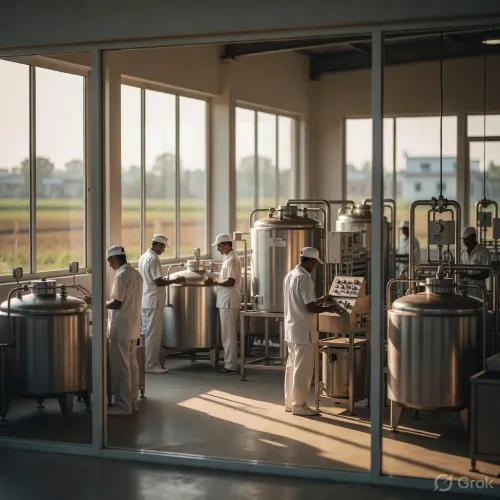
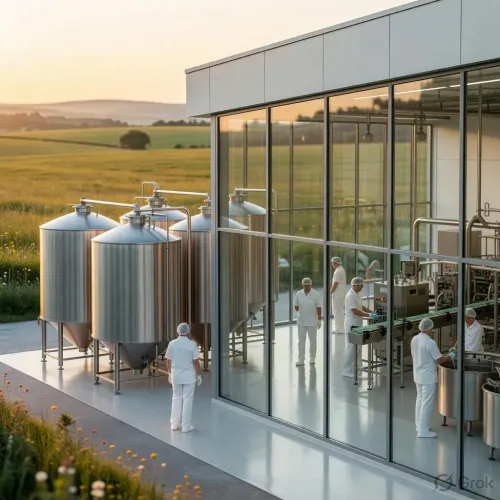
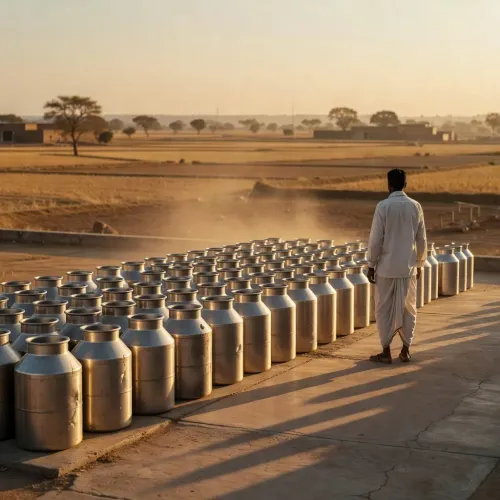
Rajasthan is among India's top five milk-producing states, underpinned by a large livestock base and a network of village-level dairy cooperatives. The state's apex cooperative body, the Rajasthan Cooperative Dairy Federation (RCDF), was established in 1977 on the pattern of the Amul model to organise milk procurement, processing and marketing under the Saras brand. Decades of investment in chilling centres, processing plants and farmer-linked societies have made the cooperative route central to rural livelihoods across the state.Policy Backdrop
Rajasthan governments across administrations have periodically prioritised dairy cooperatives as a tool to raise rural incomes and reduce dependence on rain-fed agriculture. The RCDF has expanded its footprint in partnership with the National Dairy Development Board since the 1980s, scaling up procurement infrastructure district by district. At the central level, schemes such as the Dairy Processing and Infrastructure Development Fund have provided additional capital for upgrading collection, chilling and processing capacity through the cooperative route. The current BJP government, which assumed office in December 2023, has framed agricultural and cooperative sector development as a pillar of its 'leading Rajasthan' agenda.Stakeholders and Impact
The primary beneficiaries of a stronger dairy cooperative network are Rajasthan's dairy farmers and the cooperative societies that aggregate their produce. Improved procurement infrastructure translates directly into better price realisation for milk producers, many of whom operate small or marginal holdings. Cooperative strengthening also supports ancillary livelihoods — fodder suppliers, veterinary service providers and transport operators — across rural districts. For consumers, a robust Saras supply chain helps stabilise retail milk prices and ensures quality standards across the state.What's Next
Attention will now turn to concrete measures that follow this policy signal — including state budget allocations for dairy infrastructure, new targets for milk procurement volumes, and any expansion of processing plant capacity in the current fiscal year. The government's ability to translate the cooperative-strengthening mandate into measurable outcomes for farmers will be closely watched by rural communities and agricultural policy observers alike. A sustained push in this direction could position Rajasthan to climb further in national milk production rankings and deepen the cooperative economy in its vast rural hinterland.Point of View
Reinforcing the Bhajan Lal Sharma government's rural-economy credentials ahead of what are likely to be closely watched budget and procurement decisions. Dairy cooperative strengthening has historically been a cross-party consensus in Rajasthan, but the BJP administration is framing it as part of its 'Aapno Agrani Rajasthan' brand, seeking to associate visible rural gains with the current dispensation. The emphasis on cooperatives — rather than private dairy chains — also aligns with a broader national trend of reviving the cooperative sector as a vehicle for inclusive rural growth. Whether the signal translates into measurable targets for milk procurement or processing capacity will determine its real policy weight.
NationPress
21 Oct 2026
Frequently Asked Questions
What is the Rajasthan government doing for the dairy sector in 2026?
The Chief Minister's Office of Rajasthan announced on 6 June 2026 that the state government under CM Bhajan Lal Sharma is actively working to strengthen the dairy and cooperative sector, continuing a long-standing policy of expanding procurement and processing infrastructure through cooperative bodies like the RCDF.
What is RCDF and the Saras brand in Rajasthan?
The Rajasthan Cooperative Dairy Federation (RCDF), established in 1977, is the state's apex dairy cooperative body. It procures, processes and markets milk and milk products under the Saras brand, operating on the Amul cooperative model across Rajasthan's districts.
Who is Bhajan Lal Sharma and when did he become CM of Rajasthan?
Bhajan Lal Sharma is a BJP leader who was sworn in as Chief Minister of Rajasthan in December 2023 after the party won the state assembly elections.
Why is the dairy cooperative sector important for Rajasthan farmers?
Rajasthan is among India's top five milk-producing states, and dairy cooperatives provide farmers — many with small or marginal holdings — a reliable procurement channel, fair price realisation and access to veterinary and support services, helping reduce dependence on rain-fed agriculture.
What central schemes support dairy infrastructure in Rajasthan?
The Dairy Processing and Infrastructure Development Fund is a key central scheme that provides capital support for upgrading milk collection, chilling and processing capacity through the cooperative route, complementing state government investments in the sector.