Rajasthan Cabinet clears UCC Bill and Tree Protection Bill before polls
Synopsis
Rajasthan's Cabinet has cleared a UCC Bill that would ban polygamy, mandate marriage and live-in registration, and equalise inheritance rights across religions — while keeping tribal customs exempt. The timing, days before the Model Code of Conduct kicks in for local body polls, signals the BJP government's intent to legislate a signature ideological priority before electoral restrictions take hold.
Key Takeaways
The Rajasthan Cabinet approved the UCC Bill and Tree Protection Bill on 13 August , ahead of the Model Code of Conduct for panchayat elections.
The UCC mandates marriage registration within 60 days , bans polygamy, and establishes equal inheritance rights for sons and daughters across religions.
Tribal community customs and traditions are exempt from the proposed UCC.
Non-compliance with registration rules attracts a fine of ₹10,000 ; unauthorised tree felling carries up to ₹1 lakh fine and one year imprisonment.
The Tree Protection Bill prohibits felling of 29 species , including Khejri and Rohida, with mandatory compensatory plantation of 10% more trees than those felled.
Both Bills are to be introduced in the Rajasthan Assembly from 20 August .
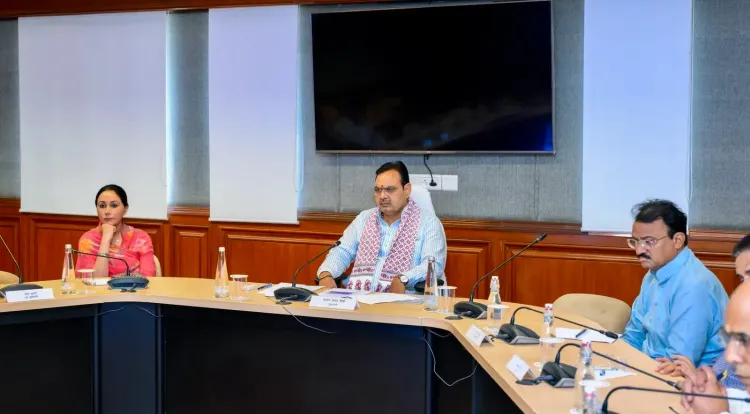
The Rajasthan Cabinet on Thursday, 13 August approved the Uniform Civil Code (UCC) Bill and the Rajasthan Tree Protection Bill, among several key decisions taken ahead of the anticipated imposition of the Model Code of Conduct for the upcoming panchayat and local body elections. Both Bills are scheduled to be tabled in the Rajasthan Assembly during the session commencing 20 August.
What the UCC Bill Proposes
The proposed Uniform Civil Code seeks to bring marriage, divorce, inheritance, maintenance, and live-in relationships under a single, common legal framework — encapsulating what Cabinet Minister Jogaram Patel described as the principle of 'One State, One Law.' Notably, customs and traditions observed by tribal communities have been kept outside the scope of the proposed legislation.
Under the Bill, marriage registration will be mandatory within 60 days of solemnisation. Registration of divorce will also be compulsory, and parties entering or ending a live-in relationship will be required to submit formal information to the authorities. A fine of ₹10,000 has been proposed for failure to comply with registration requirements.
The proposed UCC will prohibit polygamy — marriage to more than one person at a time — across communities. Simultaneously, it will permit remarriage without restrictions that previously applied under certain personal laws. On inheritance, the Bill seeks to establish equal property rights for sons and daughters across religions. It also proposes that a grandson retains rights to ancestral property in cases where his father dies before his grandfather.
Rajasthan Tree Protection Bill: Key Provisions
The Rajasthan Tree Protection Bill prohibits the felling of 29 specified tree species, including Khejri — revered as the Kalp Vriksh — and Rohida, the state tree of Rajasthan. According to Minister Jogaram Patel, the legislation is intended to protect the environment while respecting the sentiments of spiritual seers and environmentalists.
Felling of protected trees may be permitted in special circumstances, subject to prior approval from the competent authority. Unauthorised felling carries a penalty of up to ₹1 lakh and imprisonment of up to one year. The provisions extend to trees on private land as well, with exclusions specified in the legislation.
Any permission to cut a protected tree will be contingent on compensatory plantation: the applicant must plant 10% more trees than the number felled and maintain them. If the applicant is unable to undertake plantation directly, they must deposit a prescribed amount with the government, which will then fund plantation activities.
Promotion Relaxation for Government Employees
The Cabinet also approved a two-year relaxation in the mandatory service or experience period required for promotion of state government employees and officials. While the relaxation had been announced in the state Budget, the necessary notification could not be issued without formal Cabinet approval. Employees who have not availed of this benefit during the last three years will now be eligible, subject to applicable conditions.
Timing and Political Context
The flurry of approvals comes just ahead of the Model Code of Conduct expected to be imposed for the upcoming panchayat and local body elections in Rajasthan. Once the code kicks in, the government's ability to announce major policy decisions becomes significantly curtailed. This makes the Cabinet's pre-election clearances particularly significant — especially the UCC, which has been a long-standing ideological priority for the Bharatiya Janata Party (BJP). Rajasthan would join Uttarakhand as one of the few states to legislate a UCC, should the Assembly pass the Bill.
Point of View
The government loses the political stage. The Rajasthan UCC mirrors Uttarakhand's template but adds the tribal exemption — a pragmatic concession that may blunt opposition from Adivasi communities, yet also invites scrutiny over whether a 'uniform' code is truly uniform. The inheritance equality clause is the Bill's most consequential provision; its real-world impact will depend entirely on enforcement and legal challenge. The Tree Protection Bill, meanwhile, is the quieter but arguably more durable reform — binding even private landowners to compensatory plantation is a structural shift that most states have avoided.
NationPress
27 Sept 2026
Frequently Asked Questions
What does the Rajasthan UCC Bill propose?
The Rajasthan Uniform Civil Code Bill proposes a common legal framework for marriage, divorce, inheritance, maintenance, and live-in relationships across all communities in the state. It bans polygamy, mandates marriage registration within 60 days, and establishes equal inheritance rights for sons and daughters across religions. Tribal community customs are exempt from its provisions.
When will the UCC and Tree Protection Bills be introduced in the Assembly?
Both Bills are scheduled to be introduced in the Rajasthan Assembly during the session beginning 20 August, after receiving Cabinet approval on 13 August.
Which tree species are protected under the Rajasthan Tree Protection Bill?
The Bill prohibits the felling of 29 specified tree species, including Khejri — revered as the Kalp Vriksh — and Rohida, the state tree of Rajasthan. Unauthorised felling attracts a fine of up to ₹1 lakh and imprisonment of up to one year.
Are tribal communities covered under the Rajasthan UCC?
No. The customs and traditions followed by tribal communities have been explicitly kept outside the scope of the proposed Uniform Civil Code, according to the Cabinet's decision.
Why did the Rajasthan Cabinet approve these Bills now?
The approvals were made ahead of the expected imposition of the Model Code of Conduct for upcoming panchayat and local body elections in Rajasthan. Once the code is in effect, the government's ability to announce major policy decisions is significantly restricted.