Rajasthan Cabinet Clears Uniform Civil Code Bill Draft

Synopsis
The Rajasthan cabinet, chaired by CM Bhajanlal Sharma, approved the draft of the Rajasthan Uniform Civil Code Bill-2026 on 13 August 2026, invoking Article 44 of the Constitution. The state becomes the second BJP-governed state after Uttarakhand to formally advance UCC legislation.
Key Takeaways
The Rajasthan cabinet approved the draft of 'The Rajasthan Uniform Civil Code Bill-2026' on 13 August 2026 .
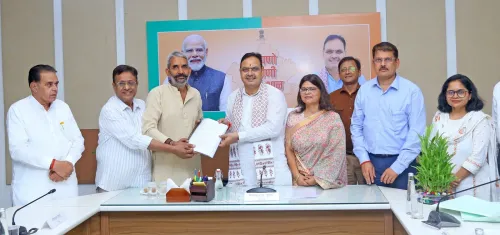
The decision was taken at a meeting chaired by Chief Minister Bhajanlal Sharma of the BJP.
The bill is anchored in Article 44 of the Indian Constitution, a Directive Principle urging a common civil code for all citizens.
A UCC would create uniform laws on marriage, divorce, inheritance, and adoption across all religious communities.
Uttarakhand was the first Indian state to enact a UCC, in February 2024 ; Rajasthan is now the second to advance formal legislation.
The bill draft must next be introduced and debated in the Rajasthan Legislative Assembly .
Rajasthan moved closer to rewriting its personal law landscape on Thursday, 13 August 2026, as the state cabinet — chaired by Chief Minister Bhajanlal Sharma — approved the draft of 'The Rajasthan Uniform Civil Code Bill-2026', invoking the spirit of Article 44 of the Indian Constitution. The decision makes Rajasthan the second BJP-governed state to formally advance UCC legislation, following Uttarakhand's landmark 2024 enactment.
What the cabinet approved — and what Article 44 demands
Article 44, a Directive Principle of State Policy enshrined in the Constitution since 1950, directs the state to 'endeavour to secure for the citizens a Uniform Civil Code throughout the territory of India.' The Rajasthan cabinet's approval of the bill draft is a formal step toward translating that directive into enforceable law. A UCC, once enacted, would replace religion-specific personal laws governing marriage, divorce, inheritance, and adoption with a single common framework applicable to all citizens regardless of faith.
The Chief Minister's Office announced the decision on X, stating the draft was approved 'bharatiya samvidhan ke anuchchhed 44 ki bhavna ke anurup' — 'in consonance with the spirit of Article 44 of the Indian Constitution.'
Uttarakhand blazed the trail; Rajasthan follows
Uttarakhand became the first Indian state to pass a UCC in February 2024, a milestone that gave the BJP a working model and political momentum. Rajasthan's cabinet clearance signals that the party intends to replicate and expand that template across states it governs. CM Bhajanlal Sharma, who took office in December 2023, has now put UCC at the centre of his administration's legislative agenda.
The bill draft must next be introduced and debated in the Rajasthan Legislative Assembly. That floor debate will be the real test — of the bill's specific provisions, of opposition resistance, and of how Rajasthan's religiously diverse communities respond to a code that would override personal law traditions held for generations.
The road into the assembly — and the debates waiting there
Cabinet approval is the beginning, not the end. Legal scholars and civil society groups have historically raised questions about the constitutional interplay between a state-level UCC and central legislative authority, as well as the rights of Scheduled Tribes whose customary laws may intersect with any uniform code. Whether the Rajasthan bill addresses these fault lines will become clear only when the full draft enters public view. What is already clear: the political stakes are high, and the legislative clock is now running.
Point of View
The party insulates itself constitutionally while keeping the political messaging clear. Uttarakhand's 2024 precedent gave the BJP a template; Rajasthan's adoption signals a replicable playbook. The real battleground will be the assembly floor and subsequent legal challenges, where the specifics of the draft — particularly its treatment of tribal customary laws — will determine whether this becomes durable governance or prolonged litigation.
NationPress
28 Sept 2026
Frequently Asked Questions
What is the Rajasthan Uniform Civil Code Bill 2026?
It is a draft legislation approved by the Rajasthan cabinet on 13 August 2026 that seeks to establish a single set of personal laws — covering marriage, divorce, inheritance, and adoption — applicable to all citizens of Rajasthan regardless of religion.
What is Article 44 of the Indian Constitution?
Article 44 is a Directive Principle of State Policy, included in the Constitution since 1950, that directs the state to endeavour to secure a Uniform Civil Code for all citizens across India.
Which was the first Indian state to enact a Uniform Civil Code?
Uttarakhand was the first Indian state to pass a Uniform Civil Code, doing so in February 2024.
Who is Bhajanlal Sharma?
Bhajanlal Sharma is the Chief Minister of Rajasthan, representing the Bharatiya Janata Party. He assumed office in December 2023.
What happens next after the Rajasthan cabinet approved the UCC bill draft?
The bill draft must be introduced and debated in the Rajasthan Legislative Assembly. It could also face public consultations and potential legal challenges before becoming law.