Rajasthan cabinet clears UCC Bill 2026 and tree protection law draft
Synopsis
Rajasthan is moving on two fronts at once — a UCC that mandates marriage registration, bans polygamy, and equalises succession rights for sons and daughters, and a tree protection law that puts 29 species under legal guard with jail terms for illegal felling. Both bills head to the Assembly session, making Rajasthan one of the few states to actively advance UCC legislation after Uttarakhand.
Key Takeaways
Rajasthan Cabinet on 13 August 2026 approved drafts of the UCC Bill-2026 and the Trees (Protection) Bill-2026 .
The UCC mandates marriage registration within 60 days , prohibits polygamy, and grants equal succession rights to sons and daughters.
The UCC will not apply to Scheduled Tribes or communities with constitutionally protected traditional rights.
The tree protection law covers 29 species , including Khejri and Rohida; violations carry up to one year imprisonment or a fine of ₹1 lakh .
Both bills will be introduced in the upcoming Rajasthan Assembly session .
A rural water supply Operation and Maintenance Policy was also cleared by the Cabinet.
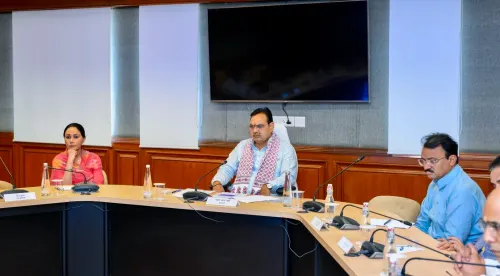
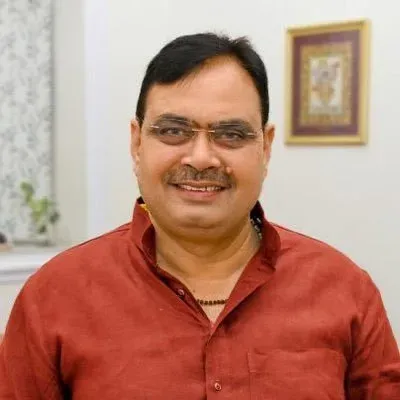
The Rajasthan Cabinet, chaired by Chief Minister Bhajanlal Sharma, on Thursday, 13 August 2026, approved draft legislation for the Rajasthan Uniform Civil Code (UCC) Bill-2026 and the Rajasthan Trees (Protection) Bill-2026, both of which will be tabled in the upcoming Assembly session. The decisions mark a significant legislative push by the Bharatiya Janata Party (BJP)-led state government on two politically consequential fronts — civil law reform and environmental conservation.
What the Uniform Civil Code Bill Proposes
The Rajasthan UCC Bill-2026 seeks to establish a uniform, transparent legal framework governing marriage, divorce, succession, maintenance, and live-in relationships across the state, in keeping with the spirit of Article 44 of the Constitution of India, according to Parliamentary Affairs Minister Jogaram Patel. The draft was prepared on the recommendations of an expert committee headed by retired Supreme Court Justice Ranjana Prakash Desai.
The proposed law will not apply to Scheduled Tribes and communities whose traditional rights are constitutionally protected. It mandates the registration of all marriages within 60 days of solemnisation and prohibits polygamy, while allowing individuals to continue marrying under their own religious customs — including Saptapadi, Nikah, Anand Karaj, and Holy Union.
A marriage will not be rendered invalid solely due to delayed or missed registration. Failure to register, however, may attract a fine of up to ₹10,000, while ignoring a registration notice could lead to a penalty of up to ₹25,000. A Registrar who wilfully delays the process may also face a fine of up to ₹25,000 from the Registrar General.
The Bill provides equal succession rights to sons and daughters. In cases of intestate death — where no will exists — property devolves in a prescribed order across three categories of heirs, starting with the surviving spouse, children, and parents. A child in the womb at the time of a person's death, if subsequently born alive, will carry full rights of succession. If no legal heir is found, the property vests in the government, which also assumes all associated liabilities.
The proposed Code includes a judicial mechanism for dispute resolution and allows courts to declare a marriage void on grounds including consent obtained through force or fraud, impotence, or violation of the Code's provisions. Live-in relationships will require written notification or registration of both commencement and termination, aimed at protecting the rights of both parties.
Tree Protection Bill: 29 Species, One-Year Jail for Violations
The Rajasthan Trees (Protection) Bill-2026 targets the conservation of 29 tree species, including Khejri (the state tree), Rohida (the state flower), and species such as Banyan, Peepal, Lasoda, Tendu, Mahua, Kair, and Chironji. The legislation seeks to regulate felling on non-forest land and establishes accountability for violations.
Under the proposed law, no person may fell or cause the felling of a tree on land they own or possess without prior permission from an authorised authority. Where felling is permitted, a prescribed number of replacement trees must be planted in the same area. Offences are classified as cognisable and bailable, with penalties including imprisonment of up to one year, a fine of up to ₹1 lakh, or both.
The government noted that conservation of these species is expected to benefit the livelihoods of tribal communities and residents of desert regions, while supporting the broader rural economy.
Rural Water Supply Policy Also Cleared
The Cabinet additionally approved an Operation and Maintenance Policy aimed at ensuring sustainable drinking water supply in rural areas, according to Public Health Engineering Minister Kanhaiya Lal. The policy is designed to strengthen infrastructure reliability for rural residents across the state.
Ministers Who Briefed the Media
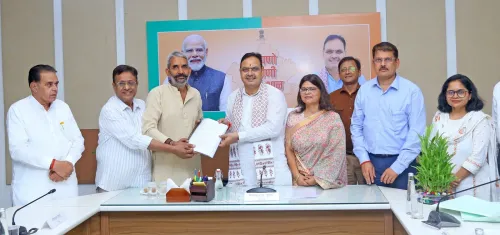
Deputy Chief Minister Premchand Bairwa, Parliamentary Affairs Minister Jogaram Patel, Public Health Engineering Minister Kanhaiya Lal, and Minister of State for Industries and Commerce K.K. Vishnoi addressed the media following the Cabinet meeting. Both the UCC and tree protection bills are expected to be introduced in the upcoming Rajasthan Assembly session.
Point of View
Classifying offences as bailable limits deterrence in a state where illegal felling on agricultural land is routine and enforcement capacity is thin. The real test for both bills is not their passage in the Assembly — the BJP holds a comfortable majority — but implementation: whether marriage registrars are equipped, whether tree felling complaints are actually prosecuted, and whether the UCC's succession provisions survive the inevitable legal challenges from personal law boards.
NationPress
28 Sept 2026
Frequently Asked Questions
What is the Rajasthan Uniform Civil Code Bill 2026?
The Rajasthan UCC Bill-2026 is a draft law approved by the state Cabinet on 13 August 2026 that seeks to create a uniform legal framework for marriage, divorce, succession, maintenance, and live-in relationships in the state. It was drafted on the recommendations of a committee headed by retired Supreme Court Justice Ranjana Prakash Desai and will be introduced in the upcoming Assembly session.
Who is exempt from the Rajasthan UCC Bill?
The proposed law will not apply to Scheduled Tribes and communities whose traditional rights are protected under the Constitution of India. All other residents of Rajasthan would fall under its provisions once enacted.
What are the key provisions of the Rajasthan UCC on marriage and succession?
The Bill mandates registration of all marriages within 60 days of solemnisation and prohibits polygamy, while allowing religious customs to continue. It grants equal succession rights to sons and daughters, and a child in the womb at the time of a person's death — if born alive — holds full inheritance rights.
What does the Rajasthan Trees Protection Bill 2026 cover?
The Bill covers 29 tree species including Khejri, Rohida, Banyan, Peepal, Mahua, and Tendu on non-forest land. It requires prior permission before felling, mandates replacement planting, and prescribes penalties of up to one year in jail or a fine of ₹1 lakh for illegal felling.
When will the Rajasthan UCC and tree protection bills become law?
Both bills have been approved as drafts by the Rajasthan Cabinet and are scheduled to be introduced in the upcoming state Assembly session. They will become law only after passage by the Assembly and receiving the Governor's assent.