Rajasthan Cabinet approves Wage Code 2026, One State-One Election for local polls
Synopsis
In one of its most wide-ranging single-session decisions, the Rajasthan Cabinet on 7 August 2026 approved a new Wage Code mandating biannual salary revisions, cleared simultaneous Panchayati Raj and urban local body elections under a One State-One Election model, and unlocked capital subsidies up to 60% for agro-processing entrepreneurs — a package that reshapes labour, electoral, and agricultural policy in one sitting.
Key Takeaways
The Rajasthan State Wage Code 2026 mandates biannual wage revisions on 1 April and 1 October , caps working hours at 48 per week , and requires mandatory salary slips for all employees.
Panchayati Raj and Urban Local Body elections will be held simultaneously under the 'One State-One Election' framework, first announced in the 2024-25 State Budget .
The Cabinet approved OBC reservation provisions in local body and Panchayati Raj legislation following recommendations by the Rajasthan State OBC Political Representation Commission on 5 August 2026 .
The Agro-Food Processing Policy 2026 offers capital subsidies of 60% (loans up to ₹50 lakh) to 40% (loans above ₹1 crore), capped at ₹1.5 crore ; an extra 5% for women, SC/ST, and FPO applicants.
Mission Hariyalo Rajasthan targets 10 crore saplings planted annually under the newly approved Trees Outside Forests Policy.
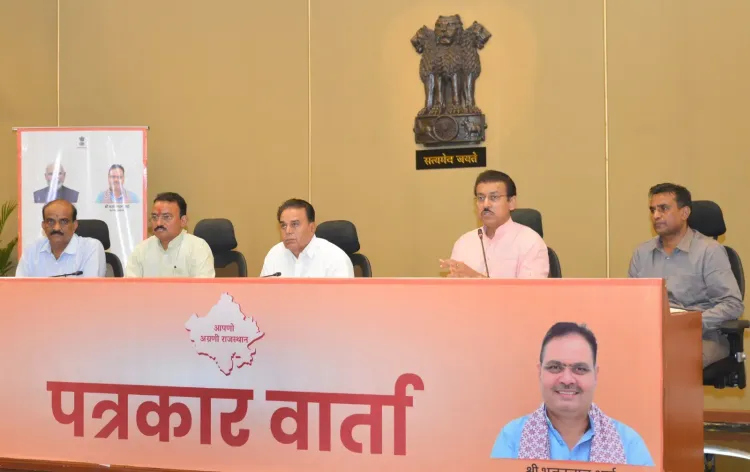
The Rajasthan Cabinet on Friday, 7 August 2026, approved a sweeping set of policy decisions covering labour reform, agro-processing investment, environmental conservation, and electoral consolidation — the most consequential single-session output from the Bhajan Lal Sharma government since it took office. The decisions were announced at a press conference in Jaipur by Deputy Chief Minister Prem Chand Bairwa, Law Minister Jogaram Patel, and Industries and Commerce Minister Colonel Rajyavardhan Singh Rathore.
State Wage Code 2026: Key Labour Reforms
The Cabinet cleared the Rajasthan State Wage Code 2026, introducing what officials described as a scientific mechanism for determining minimum wages. Under the new framework, wages will be revised twice annually — on 1 April and 1 October — providing workers with a predictable earnings cycle. Employers will be mandated to issue salary slips to all employees, and the maximum working week has been capped at 48 hours. Workers must also receive a mandatory 30-minute break after every five consecutive hours of work.
Law Minister Jogaram Patel said the reforms are aimed at improving transparency, ensuring fair wages, and strengthening labour welfare across the state. Separately, the Cabinet extended State Insurance Scheme benefits for government employees through their actual date of retirement. Previously, coverage lapsed on 1 April of the retirement year, leaving workers without insurance for the final months of service — a gap the new provision closes.
One State-One Election for Panchayati Raj and Urban Local Bodies
In a significant electoral reform, the Cabinet approved conducting upcoming Panchayati Raj and Urban Local Body elections simultaneously under the 'One State-One Election' framework. Patel said staggered local polls disrupt development works and impose repeated administrative and financial burdens on the state machinery. Chief Minister Bhajan Lal Sharma had first announced the simultaneous-election model in the 2024-25 State Budget.
The Cabinet also approved recommendations submitted on 5 August 2026 by the Rajasthan State Other Backward Classes (Political Representation) Commission, paving the way for OBC reservation provisions in the Urban Local Bodies Act and the Panchayati Raj Act, alongside existing reservations for Scheduled Castes (SCs) and Scheduled Tribes (STs). The draw of lots for seat reservation across SC, ST, and OBC categories will now begin, marking a prerequisite step before elections can be notified under the new framework.
Agro-Food Processing and Food Park Policies
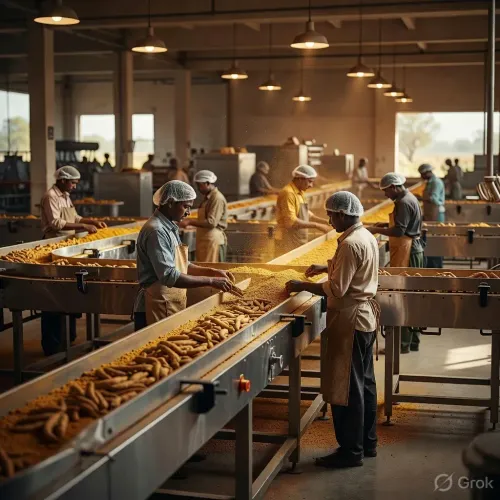
The Cabinet cleared both the Rajasthan Agriculture and Food Processing Policy, 2026 and the Rajasthan Food Park Development Policy, 2026, aimed at attracting private investment into the state's agri-value chain. The policy covers processing industries for fruits and vegetables, spices, grains, oilseeds, pulses, medicinal products, minor forest produce, honey, dairy, and animal feed, as well as infrastructure such as silos and cold storage facilities.
Capital subsidies are structured on a sliding scale: 60% for loans up to ₹50 lakh, 50% for loans between ₹50 lakh and ₹1 crore, and 40% for loans above ₹1 crore, subject to a maximum subsidy of ₹1.5 crore. An additional 5% capital subsidy is available for Farmer Producer Organisations (FPOs), entrepreneurs in Tribal Sub-Plan (TSP) areas, SC/ST entrepreneurs, and women entrepreneurs. Projects will also be eligible for incentives under the Rajasthan Investment Promotion Scheme (RIPS) 2024, including the MSME standard package. A dedicated Shri-Anna Promotion Agency will be established to promote millets. The initiative is expected to generate significant employment, particularly in rural Rajasthan.
Mission Hariyalo Rajasthan: Trees Outside Forests Policy
The Cabinet approved a Trees Outside Forests Policy under the state's Mission Hariyalo Rajasthan initiative. Under the mission, 10 crore saplings will be planted every year, with plantation drives along riverbanks, drains, roadsides, and other non-forest areas. The policy is framed as a long-term environmental sustainability measure to expand green cover outside protected forest zones.
What Comes Next
Implementation timelines for the Wage Code and the agro-processing policies have not yet been specified, though officials indicated that the draw of lots for local-body seat reservation will begin immediately following Cabinet approval. The simultaneous Panchayati Raj and Urban Local Body elections are expected to be notified once the reservation process is complete. Industry bodies and labour groups are expected to respond to the Wage Code in the coming days, as its biannual revision mechanism represents a structural shift from Rajasthan's previous wage-setting model.
Point of View
Electoral consolidation, and agro-investment policy into a single session is politically efficient — but the sequencing raises questions. The One State-One Election model, while fiscally sound on paper, depends entirely on the completion of an OBC reservation draw-of-lots process whose timeline remains undefined; any legal challenge to the reservation formula could delay elections indefinitely. On the Wage Code, the biannual revision mechanism is a genuine structural improvement over ad hoc revisions, but its credibility hinges on enforcement capacity — Rajasthan's labour inspection infrastructure has historically been thin. The agro-processing capital subsidies are generous, but the cap of ₹1.5 crore may be too low to attract mid-to-large food park investors who are the real engine of rural employment. The announcements signal ambition; delivery will require follow-through that past state-level agri-policy cycles have not always provided.
NationPress
22 Sept 2026
Frequently Asked Questions
What is the Rajasthan State Wage Code 2026?
The Rajasthan State Wage Code 2026 is a new labour law approved by the state Cabinet on 7 August 2026 that introduces a scientific mechanism for setting minimum wages. It mandates biannual wage revisions on 1 April and 1 October, caps the working week at 48 hours, requires employers to issue salary slips, and entitles workers to a 30-minute break after every five consecutive hours of work.
What is the 'One State-One Election' model approved by the Rajasthan Cabinet?
Under this model, Panchayati Raj institution elections and Urban Local Body elections will be held simultaneously rather than at different times, reducing repeated administrative and financial burdens on the state. Chief Minister Bhajan Lal Sharma had announced the framework in the 2024-25 State Budget, and the Cabinet formalised it on 7 August 2026.
What OBC reservation changes did the Rajasthan Cabinet approve?
The Cabinet accepted recommendations of the Rajasthan State Other Backward Classes (Political Representation) Commission, submitted on 5 August 2026, to incorporate OBC reservation provisions in the Urban Local Bodies Act and the Panchayati Raj Act alongside existing SC and ST reservations. A draw of lots for seat reservation across all three categories will now proceed.
What subsidies are available under the Rajasthan Agro-Food Processing Policy 2026?
The policy offers capital subsidies of 60% for loans up to ₹50 lakh, 50% for loans between ₹50 lakh and ₹1 crore, and 40% for loans above ₹1 crore, with a maximum subsidy of ₹1.5 crore. An additional 5% subsidy is available for FPOs, SC/ST entrepreneurs, women entrepreneurs, and those in Tribal Sub-Plan areas.
What is Mission Hariyalo Rajasthan?
Mission Hariyalo Rajasthan is the state government's environmental conservation initiative under which 10 crore saplings will be planted annually. The Cabinet's newly approved Trees Outside Forests Policy directs plantation drives along riverbanks, drains, roadsides, and other non-forest areas to expand green cover across the state.