Rajasthan Cabinet Clears 'One State-One Election' for Local Bodies
Synopsis
The Rajasthan Cabinet, chaired by Chief Minister Bhajanlal Sharma, approved a plan on 7 August 2026 to hold all panchayat and urban local body elections simultaneously under a 'One State-One Election' framework, aligning with the BJP's broader electoral reform agenda.
Key Takeaways
The Rajasthan State Cabinet approved 'One State-One Election' for Panchayati Raj and local body elections on 7 August 2026 .
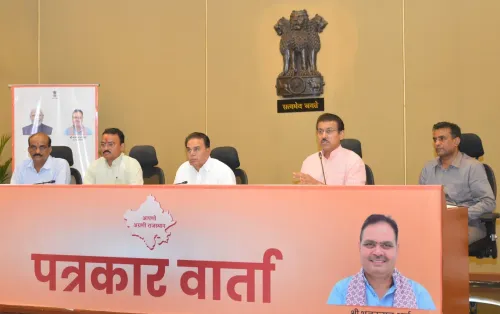
Chief Minister Bhajanlal Sharma chaired the Cabinet meeting at the Chief Minister's Office in Jaipur .
The decision aims to synchronise all gram panchayat, panchayat samiti, zila parishad, municipality, and municipal corporation elections into a single electoral cycle.
The concept mirrors the national 'One Nation-One Election' push examined by a committee under former President Ram Nath Kovind in 2023 .
Rajasthan will likely need legislative amendments to its Panchayati Raj and municipal acts to operationalise the decision.
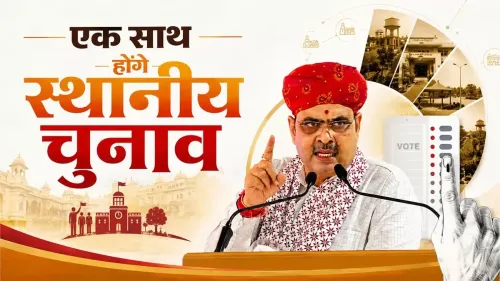
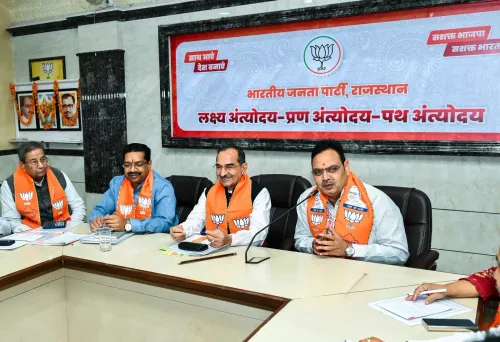
In a move that could redraw the electoral calendar for millions of voters, the Rajasthan State Cabinet on Friday, 7 August 2026 approved a landmark decision to hold all panchayat and urban local body elections simultaneously under the 'One State-One Election' framework — chaired by Chief Minister Bhajanlal Sharma at the Chief Minister's Office in Jaipur.
The Cabinet's resolution, announced by the Chief Minister's Office on X, stated that the meeting chaired by Sharma took 'important decisions' (महत्वपूर्ण निर्णय) relating to conducting Panchayati Raj and local body elections on the concept of 'Vone State-One Election'. The hashtag #आपणो_अग्रणी_राजस्थान — 'Our Leading Rajasthan' — framed the announcement as part of a broader governance vision.
What 'One State-One Election' means for Rajasthan
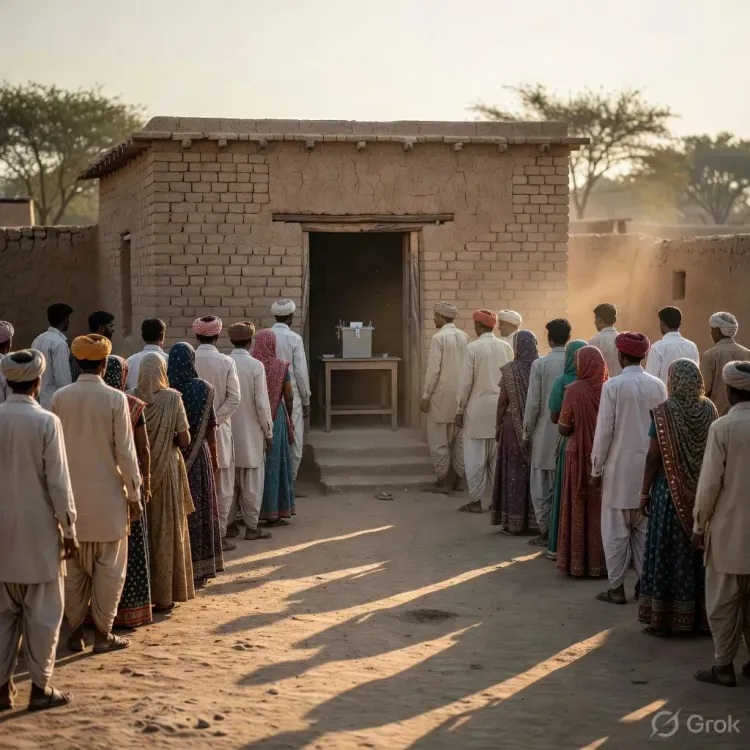
Rajasthan has thousands of gram panchayats, panchayat samitis, zila parishads, municipalities, and municipal corporations — each historically going to polls on separate, staggered schedules. Synchronising all of them into a single electoral cycle would compress what is often a year-long rolling disruption of the Model Code of Conduct into a single window. For voters in rural Rajasthan — a state that stretches from the Thar Desert to the Aravalli hills — it means fewer election cycles interrupting development work.
The concept mirrors the broader 'One Nation-One Election' debate at the national level. In 2023, the Government of India constituted a high-level committee under former President Ram Nath Kovind to examine the feasibility of holding Lok Sabha and state assembly elections simultaneously. Rajasthan's Cabinet decision applies that logic one tier lower — to local self-government bodies constituted under the 73rd Constitutional Amendment Act, 1992.
BJP's pattern of electoral synchronisation
Rajasthan is not alone. Multiple BJP-governed states have explored aligning local body poll schedules to cut administrative expenditure and reduce the frequency of governance disruptions caused by election-mode restrictions. The Sharma government, which assumed office in December 2023, is now among the first to take a formal Cabinet-level decision on the concept for panchayat and municipal elections specifically.
The practical test lies ahead: Rajasthan will likely need to amend its Panchayati Raj Act and municipal legislation to give the synchronisation legal force, and the State Election Commission will need to align ward delimitation and reservation rotation cycles across thousands of bodies simultaneously. Those are not trivial steps.
A single unified poll cycle, if executed cleanly, could save the state exchequer significant resources and give elected local representatives a longer, uninterrupted term to deliver on development promises. Whether Jaipur can navigate the legislative and logistical complexity to make it real — that is the question Rajasthan's voters will be watching.
Point of View
Translating the 'One Nation-One Election' debate from the national stage down to the grassroots tier. For Chief Minister Bhajanlal Sharma — still in his first full year in office — it signals an appetite for structural governance reform beyond routine administration. The real political test will come when the government tables the necessary legislative amendments: opposition parties who argue that staggered elections protect local accountability will have a concrete battleground. If Rajasthan successfully executes a unified local-body poll, it hands the BJP a replicable model; if the logistics falter, it becomes a cautionary tale for other states watching closely.
NationPress
22 Sept 2026
Frequently Asked Questions
What is 'One State-One Election' in Rajasthan?
'One State-One Election' in Rajasthan refers to the Cabinet-approved plan to hold all panchayat and urban local body elections simultaneously in a single electoral cycle, rather than on staggered schedules spread across months or years.
What did the Rajasthan Cabinet decide on 7 August 2026?
The Rajasthan State Cabinet, chaired by Chief Minister Bhajanlal Sharma, approved an important decision to conduct Panchayati Raj and local body elections simultaneously under the 'One State-One Election' concept.
How does Rajasthan's decision relate to One Nation-One Election?
The national 'One Nation-One Election' debate focuses on aligning Lok Sabha and state assembly elections. Rajasthan's decision applies a similar logic to the local government tier — gram panchayats, municipalities, and municipal corporations — under the 73rd Constitutional Amendment framework.
What changes are needed to implement One State-One Election in Rajasthan?
Rajasthan will likely need to amend its Panchayati Raj Act and relevant municipal legislation, and the State Election Commission will need to synchronise ward delimitation and reservation rotation cycles across thousands of local bodies.
Which other states have explored simultaneous local body elections?
Multiple BJP-governed states have explored synchronising local body poll schedules to reduce administrative costs and governance disruptions, though Rajasthan's Cabinet-level formal decision on the concept marks a significant step in that direction.