CM Bhajan Lal clears OBC quota, one-state-one-poll plan
Synopsis
Rajasthan CM Bhajan Lal Sharma's cabinet on 7 August 2026 approved the OBC Political Representation Commission's recommendations to ensure reserved seats in local bodies, and cleared a 'One State-One Election' plan to hold all panchayat and urban local body polls simultaneously, saving state resources.
Key Takeaways
Rajasthan cabinet chaired by CM Bhajan Lal Sharma met on 7 August 2026 and passed two landmark decisions on local governance.
The recommendations of the Rajasthan State OBC (Political Representation) Commission were formally approved, satisfying Supreme Court requirements for empirical data before OBC quotas can be notified in local body elections.
OBC communities will now receive reserved representation in panchayati raj institutions and urban local bodies across Rajasthan.
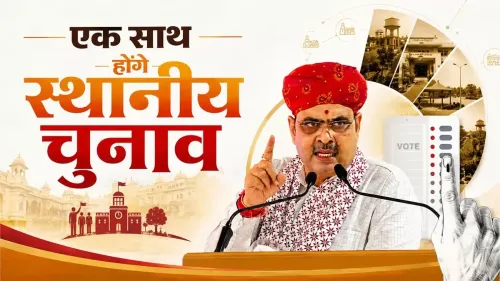
The cabinet also approved the 'One State-One Election' framework, aligning all panchayat and local body polls on a single schedule to reduce expenditure and administrative burden.
The State Election Commission must now issue amended election rules; legal challenges to OBC quota notifications remain a possibility.
The decisions follow a pattern seen in Madhya Pradesh and Uttar Pradesh , where BJP-led governments approved similar OBC commission recommendations in prior years.
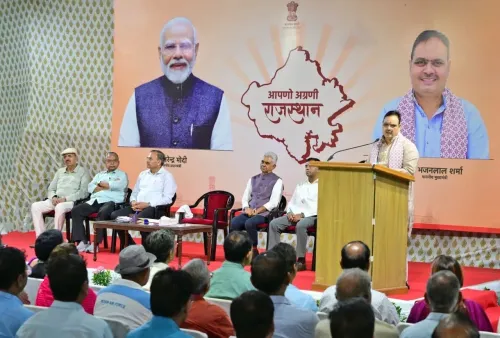
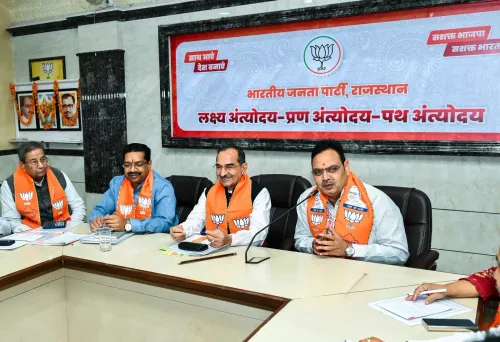
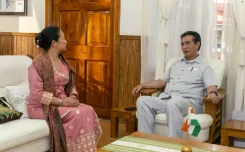
In a twin decision that reshapes how Rajasthan runs its grassroots democracy, Chief Minister Bhajan Lal Sharma chaired a state cabinet meeting on Friday, 7 August 2026 that approved the recommendations of the Rajasthan State Other Backward Class (Political Representation) Commission and simultaneously cleared the path for holding panchayati raj and urban local body elections on a single, unified schedule under the 'One State-One Election' framework.
OBC commission's long-pending recommendations get cabinet stamp
The Rajasthan State OBC (Political Representation) Commission was constituted to do precisely what the Supreme Court has demanded of states since the early 2010s: gather empirical, triple-test data before any OBC reservation can be notified in local body elections. Without that evidence, courts have repeatedly struck down such quotas as constitutionally infirm. By formally accepting the commission's findings, the Sharma cabinet clears the judicial bar that had stalled OBC reservations in panchayats and municipalities.
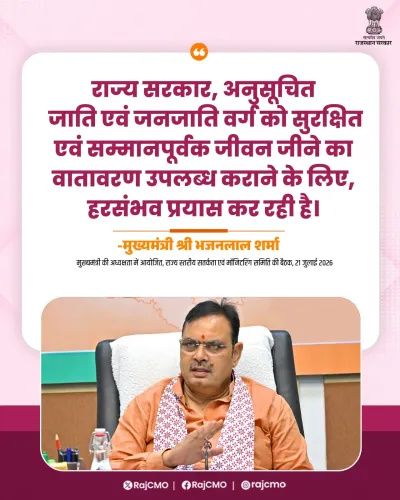
The Chief Minister framed the decision in human terms: 'hamare pichde varg ke bhai-bahnon ko panchayati raj va sthaniya nikaayon mein uchit pratinidhitva milega' — 'our backward-class brothers and sisters will get fair representation in panchayati raj and local bodies.' For OBC communities that make up a substantial share of Rajasthan's electorate, the cabinet nod translates into reserved seats at the ward and gram panchayat level, a change with direct, concrete consequences for who holds power in villages and towns.
Similar OBC commission recommendations have been approved in Madhya Pradesh and Uttar Pradesh in preceding years, placing Rajasthan within a broader pattern of BJP-governed states working to satisfy judicial requirements while expanding OBC political presence in local governance.
One State-One Election: saving resources, synchronising ballots
The second decision — aligning all panchayati raj and local body polls under a single election cycle — carries a fiscal rationale the cabinet was explicit about: massive savings in state resources. Staggered local elections drain the state machinery of money, personnel, and administrative bandwidth year after year. A consolidated poll calendar compresses that cost into a single exercise.
The move mirrors national-level conversations about reducing election-related expenditure across India's multi-tiered democratic calendar. For Rajasthan, a state with 33 districts, hundreds of urban local bodies, and thousands of gram panchayats, the logistical and financial argument for synchronisation is substantial.
The State Election Commission will now need to issue amended election rules and a revised schedule — and those notifications are the next pressure point. Any legal challenge to the OBC quota notifications, a common occurrence in this policy space, could further complicate the timeline.
Two decisions, one cabinet meeting — and Rajasthan's local democracy now looks structurally different than it did this morning.
Point of View
The Sharma government insulates its reservation policy from the judicial challenges that have repeatedly derailed similar moves in other states. Pairing it with the 'One State-One Election' announcement gives the BJP a fiscal-efficiency narrative alongside the social-justice one — a combination designed to appeal across voter segments. The move deepens Rajasthan's alignment with the BJP's national template of OBC outreach through institutional channels rather than ad-hoc quota announcements. The real test will be whether the State Election Commission can operationalise both changes before any court stay intervenes.
NationPress
22 Sept 2026
Frequently Asked Questions
What did the Rajasthan cabinet decide on 7 August 2026?
The Rajasthan cabinet approved the recommendations of the State OBC (Political Representation) Commission, ensuring reserved seats for OBC communities in panchayati raj and local bodies, and also cleared the 'One State-One Election' plan to hold all local body polls simultaneously.
What is the Rajasthan OBC Political Representation Commission?
It is a state body constituted to collect empirical data and recommend measures for improving OBC political representation in local body elections, a step required by Supreme Court rulings before OBC reservations can be legally notified.
What is 'One State-One Election' in Rajasthan?
'One State-One Election' is Rajasthan's initiative to align panchayati raj and urban local body elections on a single, unified schedule, reducing the cost and administrative burden of holding staggered polls across the state.
How does this affect OBC communities in Rajasthan?
OBC communities will now be entitled to reserved seats in gram panchayats and urban local bodies, giving them guaranteed political representation at the grassroots level for the first time under a judicially compliant framework.
Can the OBC reservation in Rajasthan local bodies be challenged in court?
Yes. Legal challenges to OBC quota notifications in local body elections are common across India. The commission's empirical data is intended to satisfy the Supreme Court's triple-test requirement, but affected parties can still approach courts after the State Election Commission issues amended rules.