CM Bhajan Lal Credits 'One State, One Election' for Smoother Rajasthan Civic Polls
Synopsis
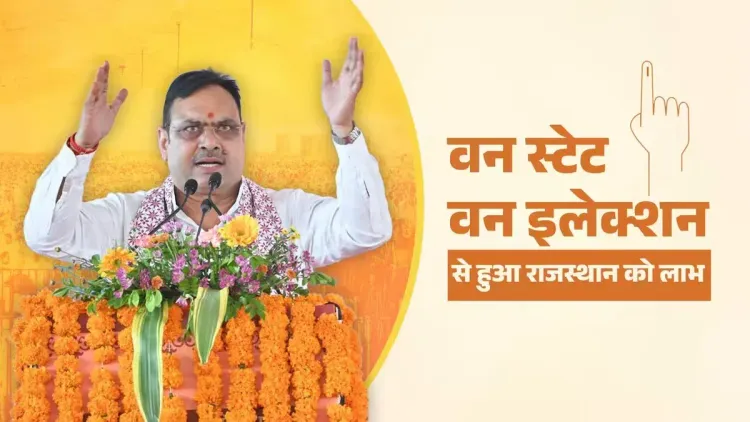
Rajasthan CM Bhajan Lal Sharma credited the 'One State, One Election' framework for making the state's municipal elections more streamlined and said voter support signals a continued mandate for development and good governance.
Key Takeaways
CM Bhajan Lal Sharma posted on September 25, 2026 citing 'One State, One Election' as having streamlined Rajasthan 's civic body election process.
He interpreted public support in the municipal polls as a mandate for continued development and good governance in the state.
BJP has championed synchronized elections across multiple governance levels since its 2014 national manifesto.
Sharma took office as Chief Minister in December 2023 following the party's assembly election victory in Rajasthan.
BJP-governed states have increasingly used local body poll outcomes to validate state-level governance agendas.
A state-level experiment in electoral synchronization could inform broader national-level constitutional discussions on simultaneous elections.
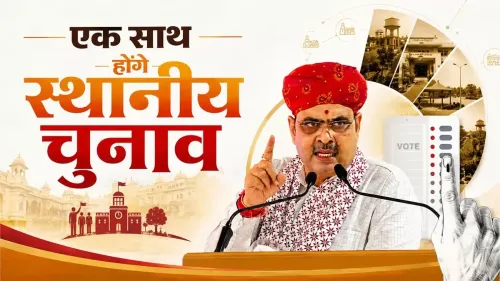
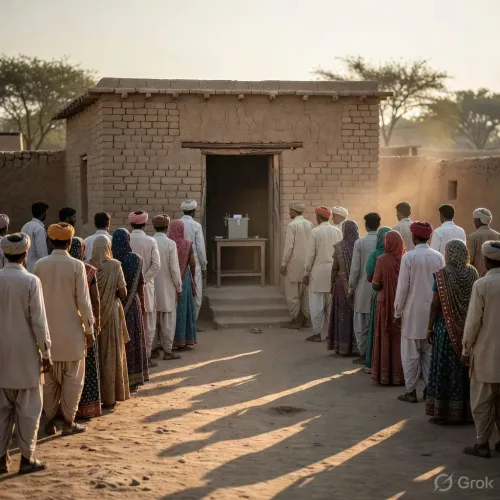
A synchronized electoral calendar is quietly reshaping how Rajasthan conducts its civic democracy — and Chief Minister Bhajan Lal Sharma is making the case that voters have already delivered their verdict on the experiment. On Friday, September 25, 2026, Sharma pointed to the recently concluded municipal body elections as proof that the 'One State, One Election' model is delivering on its promise of administrative efficiency and public confidence.
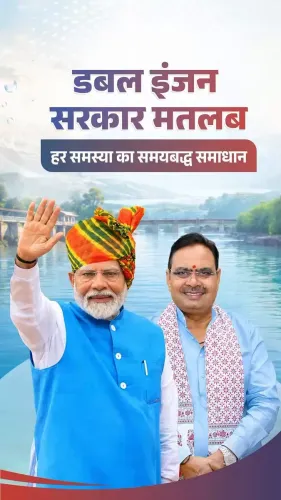
Posting under the hashtag #SevaSankalpAbhiyan, Sharma wrote that the 'One State, One Election' arrangement has made the process of civic elections in Rajasthan more streamlined. He added that public support in the municipal polls has made it clear that 'Rajasthan wants to move forward with continuous momentum of development and good governance.'
'One State, One Election' — What Rajasthan Is Actually Doing
The principle behind the model is straightforward: align the timing of local body elections with the broader electoral cycle to reduce the frequency of election-mode disruptions to governance. BJP has championed simultaneous elections at multiple levels since its 2014 national manifesto, framing it as a fiscal and administrative efficiency measure. Rajasthan's application of the concept to its municipal and civic tier is a state-level implementation of that long-standing ideological commitment.
When Bhajan Lal Sharma took charge as Chief Minister in December 2023 following the party's assembly election victory, rationalizing governance cycles was among the administrative reform signals the government sent early. Synchronizing local body polls with the state electoral calendar fits that frame — fewer standalone election windows mean fewer periods where the administrative machinery is diverted from developmental work.
Municipal Polls as a Confidence Vote on Development
The Chief Minister's framing is pointed: the results of the civic body elections are not just a local mandate but a referendum on the direction of the state. By invoking public support in municipal polls, Sharma is signalling that urban voters — who elect councillors and mayors — are endorsing the BJP government's governance agenda, not merely choosing local representatives.
This narrative has broader strategic weight. BJP-governed states have increasingly used local body election outcomes to validate state-level policy choices, framing civic mandates as continuations of the assembly verdict. Rajasthan, with its historically volatile electoral cycles that have swung between Congress and BJP almost every five years, is a particularly high-stakes testing ground for this approach.
The Bigger Picture: Synchronized Elections on India's Agenda
The debate over simultaneous elections — popularly discussed as 'One Nation, One Election' at the national level — has been a recurring feature of Indian political discourse. The logic of reducing costs, minimising the Model Code of Conduct's drag on governance, and giving elected governments longer stretches of uninterrupted administrative time has found both champions and critics across party lines.
A state-level experiment like Rajasthan's provides the kind of on-the-ground data that national-level constitutional discussions will eventually need. Whether Rajasthan's municipal election experience is cited in future legislative or constitutional deliberations on electoral synchronization will be worth watching closely.
For now, the Chief Minister's message is direct: the calendar reform worked, the voters approved, and Rajasthan is moving. The question is whether other states — and eventually Parliament — are paying attention.
Point of View
One Election' push at the Centre. Rajasthan's historically swingy electoral record makes it a meaningful test case: if synchronized polls produce measurable governance continuity here, the argument for national replication gets harder to dismiss. The post's hashtag, #SevaSankalpAbhiyan, also suggests the framing is part of a coordinated outreach campaign rather than a standalone comment.
NationPress
25 Sept 2026
Frequently Asked Questions
What is 'One State, One Election' in Rajasthan?
'One State, One Election' refers to the synchronization of municipal and civic body election timings with the broader state electoral cycle in Rajasthan, aimed at reducing governance disruption and administrative costs. CM Bhajan Lal Sharma credited this model for making the recent municipal polls more streamlined.
Who is Bhajan Lal Sharma and when did he become CM?
Bhajan Lal Sharma is the Chief Minister of Rajasthan and a BJP leader who assumed office in December 2023 after the party won the state assembly elections.
What is the difference between 'One State One Election' and 'One Nation One Election'?
'One Nation, One Election' is a national-level proposal to synchronize Lok Sabha and all state assembly elections simultaneously, whereas 'One State, One Election' as used in Rajasthan refers to aligning local body and municipal polls with the state electoral cycle — a narrower, state-administered version of the same principle.
What did CM Bhajan Lal Sharma say about Rajasthan municipal election results?
Sharma said public support in the municipal polls made it clear that Rajasthan wants to move forward with continuous momentum of development and good governance, interpreting the civic election outcome as a broader endorsement of his government's agenda.
What is the #SevaSankalpAbhiyan hashtag about?
The hashtag #SevaSankalpAbhiyan appears to be a BJP-linked outreach or governance campaign used by Rajasthan leaders to frame public communication around service and development commitments, though specific campaign details were not available.