CM Bhajan Lal credits nikay poll mandate to double-engine govt
Synopsis
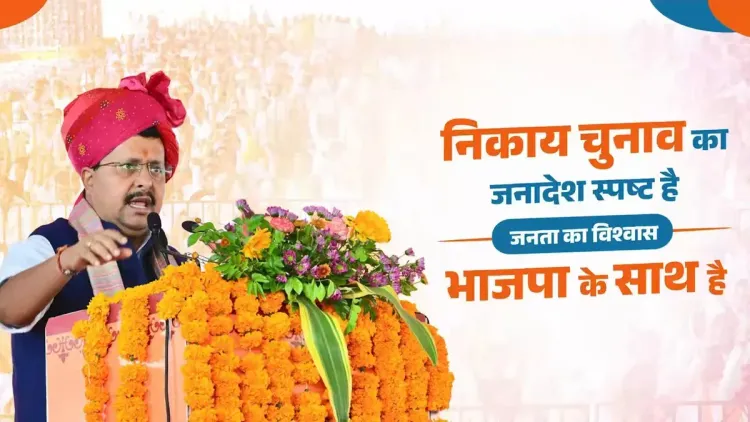
Rajasthan CM Bhajan Lal Sharma hailed the BJP's municipal election mandate on 25 September 2026 as a public endorsement of PM Modi's double-engine government model, citing welfare-focused policies and the #SevaSankalpAbhiyan outreach drive.
Key Takeaways
Rajasthan Chief Minister Bhajan Lal Sharma credited the BJP's urban local body (nikay) election mandate to PM Modi's leadership and double-engine governance.
The 'double-engine government' narrative rests on policy synergy between the BJP-led central and Rajasthan state governments, in place since December 2023 .
The post invoked #SevaSankalpAbhiyan , a BJP voter-connect and welfare outreach campaign, signalling a structured approach beyond election-day messaging.
Municipal elections in Rajasthan test ground-level delivery on civic issues — water, roads, sanitation — making them a direct referendum on local governance.
CM Sharma also cited continuous efforts toward welfare and development of every section of society as having strengthened voter trust.
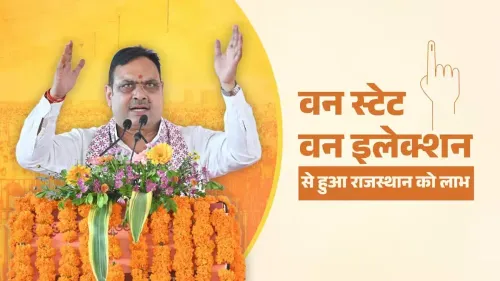
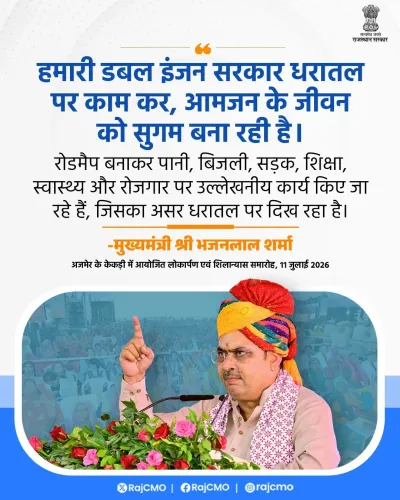
Urban voters across Rajasthan have spoken — and Rajasthan Chief Minister Bhajan Lal Sharma says the message is unambiguous: the public stands firmly behind the double-engine government's pro-people agenda. Reacting to the results of the state's municipal body elections on Friday, 25 September 2026, the Chief Minister attributed the BJP's performance to the welfare-oriented policies pursued under Prime Minister Narendra Modi's guidance and the Rajasthan government's ground-level outreach.
What the Chief Minister said — and what he meant
Posting in Hindi on X, CM Sharma wrote: 'Nikay chunavon mein mila janadesha... janata ke vishwas ka pratik hai' — 'The mandate received in the municipal elections is a symbol of the people's trust in the public-welfare policies of the double-engine government, guided by respected Prime Minister Shri Narendra Modi.' He added that continuous efforts toward the welfare and development of every section of society have further strengthened that trust. The post was tagged #SevaSankalpAbhiyan and quoted the BJP's national president.
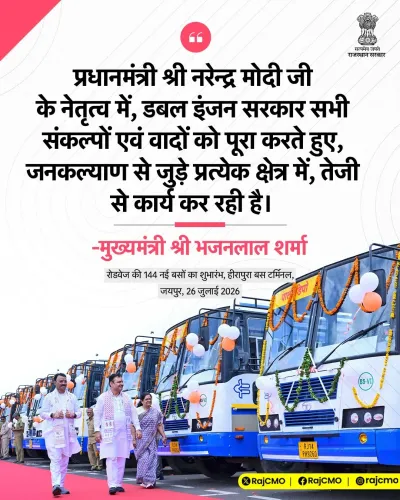
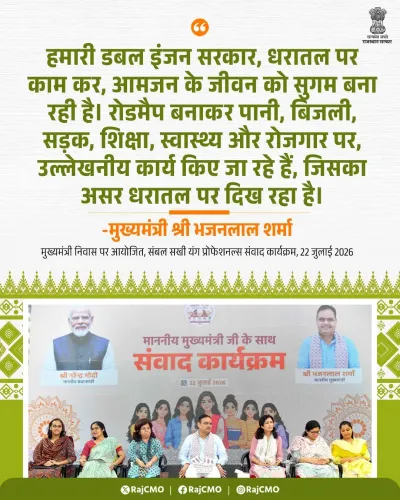
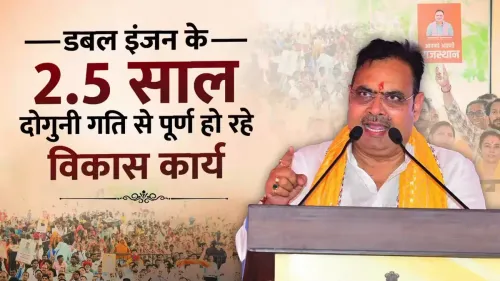
The 'double-engine government' framing is a signature BJP construct: when the same party governs both at the centre and in a state, the argument runs that policy delivery is faster, welfare funds flow without friction, and accountability is shared. It is a narrative Bhajan Lal Sharma has leaned on consistently since taking office in December 2023 following the BJP's decisive win in the Rajasthan Legislative Assembly elections.
Seva Sankalp Abhiyan and the voter-connect strategy
The hashtag #SevaSankalpAbhiyan signals something beyond a routine victory post. The campaign represents a structured BJP outreach effort designed to maintain direct contact with voters between election cycles — turning welfare scheme delivery into a political conversation. Local body elections, with their hyper-local stakes around roads, drainage, water supply and civic amenities, are the sharpest test of whether that outreach lands at the street level. A favourable municipal mandate, the CM's framing suggests, is proof it does.
The pattern is consistent with how BJP state leaders have responded to municipal wins elsewhere in India — crediting the synergy between central schemes and state implementation rather than local candidate strength alone. It reinforces the party's larger narrative that PM Modi's welfare architecture — from housing missions to urban infrastructure grants — is what moves urban voters.
What comes next for Rajasthan's urban agenda
With a fresh mandate in hand across municipal bodies, the Sharma government now faces the practical question: what does delivery look like on the ground? Watch for announcements on urban development schemes, smart-city initiatives, and civic infrastructure projects in the weeks ahead. The real test of any electoral mandate, after all, is not the night it is won — it is the morning the work resumes.
Point of View
Routing voter approval upward to the Prime Minister and the double-engine framework. For CM Bhajan Lal Sharma, it serves a dual purpose — consolidating his own political standing in Rajasthan while reinforcing the central party's narrative ahead of any future electoral cycle. The invocation of #SevaSankalpAbhiyan is notable because it frames welfare delivery not just as governance but as an ongoing political conversation, blurring the line between administration and campaign. Whether the municipal mandate translates into accelerated urban infrastructure spending will determine whether the rhetoric holds its ground.
NationPress
25 Sept 2026
Frequently Asked Questions
What are Rajasthan nikay chunav results 2026?
Rajasthan held urban local body (nikay) elections in 2026, with Chief Minister Bhajan Lal Sharma stating on 25 September 2026 that the BJP received a favourable public mandate, though specific seat tallies and margins were not detailed in his post.
What is the double-engine government model in Rajasthan?
The double-engine government model refers to the BJP governing both at the national level under PM Narendra Modi and at the Rajasthan state level under CM Bhajan Lal Sharma, with the argument that this alignment speeds up policy delivery and welfare scheme implementation.
Who is Bhajan Lal Sharma?
Bhajan Lal Sharma is the Chief Minister of Rajasthan, a BJP leader who took office in December 2023 after the party's victory in the Rajasthan Legislative Assembly elections.
What is Seva Sankalp Abhiyan?
Seva Sankalp Abhiyan is a BJP outreach campaign aimed at maintaining direct voter connect between elections by highlighting welfare scheme delivery at the grassroots level across states including Rajasthan.
Why does BJP credit municipal election wins to PM Modi?
The BJP consistently attributes local and state-level electoral victories to PM Modi's leadership and central welfare schemes as part of its double-engine governance narrative, which links central policy design with state-level implementation for political messaging.