Rajasthan to pioneer 'One State-One Election' initiative: SEC
Synopsis
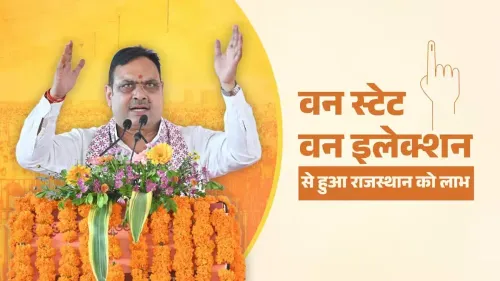
Rajasthan — the birthplace of India's Panchayati Raj system — is now positioning itself as the first state to hold simultaneous elections for all urban local bodies and Panchayati Raj institutions under a 'One State-One Election' framework. State Election Commissioner Rajeshwar Singh's announcement signals a potentially significant shift in how grassroots democracy is administered, with implications for cost, continuity, and electoral efficiency.
Key Takeaways
State Election Commissioner Rajeshwar Singh announced on 11 August that Rajasthan will pioneer the 'One State-One Election' initiative.
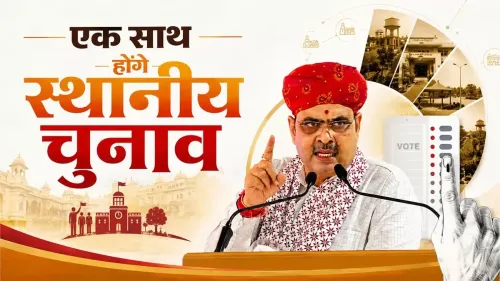
The plan involves holding simultaneous elections for all urban local bodies and Panchayati Raj institutions in a single electoral cycle.
The initiative aims to reduce election-related expenditure, ensure administrative continuity, and speed up development scheme implementation.
Rajasthan holds the distinction of being the birthplace of India's Panchayati Raj system , with the first institutions established in Nagaur in 1959 .
Electoral Literacy Clubs are being repositioned as 'Laboratories of Democracy' to boost youth voter engagement across colleges.
Rajasthan is set to become the first state in India to implement the 'One State-One Election' initiative, State Election Commissioner (SEC) Rajeshwar Singh announced on Tuesday, 11 August. Singh made the declaration while addressing Electoral Literacy Club (ELC) officials and college principals via video conference from the NIC meeting hall at the Government Secretariat in Jaipur, underscoring the state's ambition to lead a landmark shift in how local body elections are conducted.
What the Initiative Entails
The 'One State-One Election' plan envisages holding simultaneous elections for all urban local bodies and Panchayati Raj institutions across Rajasthan in a single electoral cycle. According to Singh, the move is designed to make the electoral process simpler, more efficient, and transparent. The initiative is expected to promote administrative continuity, optimise resources, reduce election-related expenditure, and facilitate faster implementation of development schemes.
Rajasthan's Historical Connection to Panchayati Raj
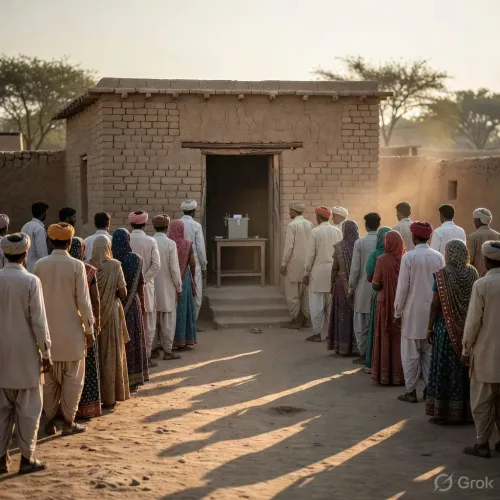
Singh highlighted that Rajasthan carries a unique distinction — it is widely regarded as the birthplace of the Panchayati Raj system in India. This historical legacy, he argued, makes it fitting for the state to now pioneer simultaneous local-body elections. The first Panchayati Raj institutions in independent India were inaugurated in Rajasthan's Nagaur district in 1959, giving the state a foundational role in grassroots democracy.
Focus on Youth and Electoral Literacy
The video conference, which brought together SVEEP nodal officers from various districts, Chief Executive Officers of Zila Parishads, college principals, and ELC officials, centred on deepening youth engagement in the democratic process. Singh urged young voters to ensure their names appear on the electoral roll and to cast votes free from rumours, inducements, or external pressure. He also called on youth to motivate their families and communities to participate actively.
The programme emphasised transforming Electoral Literacy Clubs into 'Laboratories of Democracy' through mock polls, role-playing exercises, quizzes, essay-writing competitions, poetry recitations, poster and rangoli contests, slogan competitions, and voter-awareness rallies. Singh encouraged institutions to deploy creative mediums such as street plays and voting-themed songs, particularly around occasions like Independence Day, to amplify the message of electoral participation.
Social Media and Community Outreach
The State Election Commission urged ELC officials and young voters to share photographs and videos of electoral-literacy activities on social media, tagging the Commission's official handles. A QR code linking to the Commission's social media platforms was distributed to ELC officials and college principals. The session concluded with participants taking a pledge to become informed voters and active contributors to the democratic process.
With simultaneous local-body elections still a novel concept at the state level, Rajasthan's move will be closely watched as a potential template for other states considering similar electoral consolidation.
Point of View
Focused on local bodies rather than legislative assemblies, is a strategically safer proving ground. What the SEC's announcement does not yet clarify is the legal and logistical architecture: how terms of differently-timed bodies will be harmonised, and whether the Election Commission of India's coordination will be required. Rajasthan's Panchayati Raj legacy lends symbolic weight, but the real test will be execution — particularly in a state with a large number of gram panchayats spread across difficult terrain. If it works, it becomes a blueprint; if it falters on implementation, it risks becoming another headline reform that stalled at the pilot stage.
NationPress
25 Sept 2026
Frequently Asked Questions
What is the 'One State-One Election' initiative in Rajasthan?
It is a proposed electoral reform in which all urban local body and Panchayati Raj institution elections across Rajasthan would be held simultaneously in a single cycle, rather than at staggered intervals. State Election Commissioner Rajeshwar Singh announced the initiative on 11 August, describing it as a step toward a simpler, more efficient, and transparent electoral process.
Why is Rajasthan considered the right state to pioneer this initiative?
Rajasthan is regarded as the birthplace of India's Panchayati Raj system — the country's first Panchayati Raj institutions were established in Nagaur district in 1959. The SEC argued this historical legacy makes Rajasthan a fitting state to lead the next major evolution in grassroots democratic governance.
What are the expected benefits of simultaneous local-body elections?
According to the State Election Commission, the initiative is expected to promote administrative continuity, optimise government resources, reduce election-related expenditure, and facilitate faster implementation of development schemes by minimising the frequency of the Model Code of Conduct coming into force.
What role are Electoral Literacy Clubs playing in this effort?
Electoral Literacy Clubs in Rajasthan colleges are being repositioned as 'Laboratories of Democracy,' tasked with running mock polls, quizzes, role-playing exercises, essay competitions, and voter-awareness rallies. The SEC has urged institutions to use creative formats like street plays and voting-themed songs to engage young voters.
Who participated in the 11 August video conference on this initiative?
The video conference, held from the NIC meeting hall at the Government Secretariat in Jaipur, was attended by SVEEP nodal officers from various districts, Chief Executive Officers of Zila Parishads, college principals, and Electoral Literacy Club officials from across Rajasthan.