Rajnath Singh links One Nation One Election to Shekhawat's vision
Synopsis
At a statue unveiling in Jodhpur, Defence Minister Rajnath Singh traced 'One Nation, One Election' — India's most contested electoral reform — back to the democratic thinking of former Vice President Bhairon Singh Shekhawat, giving the policy a historical and ideological anchor that goes well beyond its current parliamentary debate.
Key Takeaways
Rajnath Singh credited former Vice President Bhairon Singh Shekhawat with the early conceptual roots of 'One Nation, One Election' at a statue unveiling in Jodhpur on Thursday .
Singh said Shekhawat believed simultaneous elections would save time and resources while ensuring continuity in development work.
Rural water supply in Rajasthan expanded from 11.68 lakh households in 2019 to over 60 lakh households by March 2025 .
Chief Minister Bhajanlal Sharma described Shekhawat as 'Dharti Putra' and credited him with landmark reforms in water conservation, fiscal discipline, and rural development.
Singh linked Shekhawat's legacy to that of former PM Atal Bihari Vajpayee , citing shared values of dialogue-based politics and governance ethics.
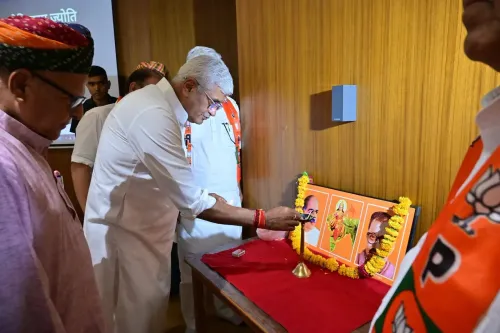
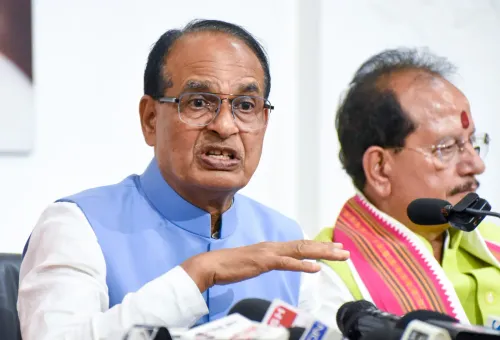
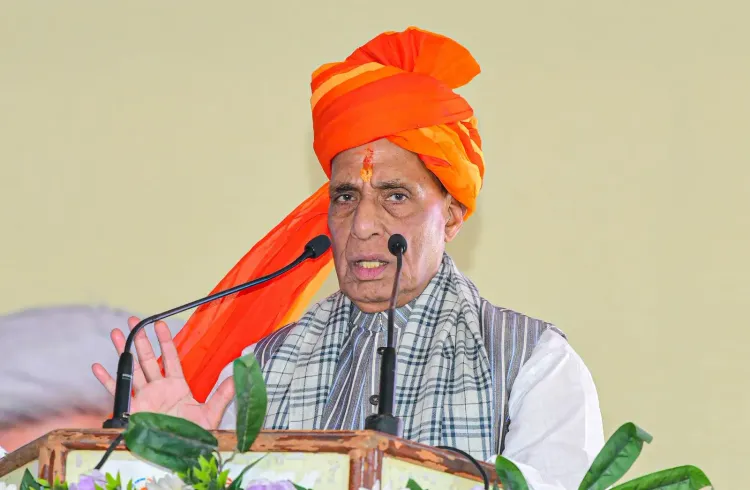
Union Defence Minister Rajnath Singh on Thursday attributed the early conceptual roots of 'One Nation, One Election' to former Vice President Bhairon Singh Shekhawat, saying the late leader had long believed that simultaneous elections would conserve time and resources while sustaining continuity in development work. Singh was speaking at the unveiling of a statue of Shekhawat in Jodhpur, Rajasthan.
Key Remarks by Rajnath Singh
Singh said the idea of holding all elections simultaneously — now a central policy proposal of the present government — had its philosophical foundations in Shekhawat's democratic thinking. He noted that the concept has since evolved into a major subject of national debate. The Defence Minister described Shekhawat as 'a living symbol of democratic values and the politics of public service,' crediting his Antyodaya approach — aimed at uplifting the last person in society — with earning international recognition.
Singh also recalled Shekhawat's steadfast commitment to democratic norms during the Emergency and his contributions as Chairman of the Rajya Sabha, where he is credited with establishing new parliamentary traditions. He said Shekhawat's rise from a modest farming background to the office of Vice President of India remains an inspiration for millions.
Development Benchmarks Cited
Highlighting Rajasthan's development trajectory, Singh pointed to a significant expansion in rural water supply — from approximately 11.68 lakh households in 2019 to more than 60 lakh households by March 2025. He said Chief Minister Bhajanlal Sharma is carrying forward Shekhawat's grassroots development philosophy by actively reaching out to villages.
Singh also referenced the 1998 Pokhran nuclear tests, noting that Rajasthan had once again played a historic role in demonstrating India's strategic strength. He drew a direct line between Shekhawat's governance legacy and former Prime Minister Atal Bihari Vajpayee, saying the two together strengthened democratic values, dialogue-based politics, and governance ethics.
Chief Minister Bhajanlal Sharma's Tribute
Chief Minister Bhajanlal Sharma described Shekhawat as a guardian of democratic norms, a voice for the poor, and a symbol of ethical politics. He said Shekhawat — popularly known as 'Dharti Putra' (Son of the Soil) — consistently worked for farmers, labourers, and the most marginalised sections of society, giving practical shape to Pandit Deendayal Upadhyaya's philosophy of Antyodaya.
Sharma credited Shekhawat with landmark decisions spanning administrative reforms, fiscal discipline, water conservation, rural development, education, healthcare, and social welfare. He said Shekhawat's belief that politics must bring dignity and hope to the last person in society remained as relevant as ever.
Legacy and Significance
Shekhawat's journey from a farming family to the highest constitutional offices of the land is widely cited within the Bharatiya Janata Party (BJP) as a model of integrity and public service. The statue unveiling in Jodhpur marks a formal public commemoration of that legacy. As the debate around simultaneous elections intensifies at the national level, Singh's remarks signal a deliberate effort to ground the policy in a broader ideological and historical lineage — connecting a contemporary electoral reform to the thinking of a revered regional statesman.
Point of View
One Election' is a calculated move — it roots a deeply contested reform in the moral authority of a widely respected regional statesman, making it harder for critics to frame the proposal as purely partisan. Yet the historical claim deserves scrutiny: Shekhawat's reported views on simultaneous elections were never formalised into policy during his tenure, and attributing conceptual ownership posthumously is a rhetorical device as much as a historical one. The Jodhpur event also served a secondary purpose — reinforcing the BJP's Rajasthan narrative ahead of continued political consolidation under Chief Minister Sharma. The rural water supply figures cited, if accurate, are genuinely significant, but their selective presentation at a political commemoration invites independent verification.
NationPress
19 Sept 2026
Frequently Asked Questions
What did Rajnath Singh say about 'One Nation, One Election' at the Jodhpur event?
Rajnath Singh said the concept of 'One Nation, One Election' had its early conceptual roots in the thinking of former Vice President Bhairon Singh Shekhawat, who believed simultaneous elections would save time and resources while ensuring continuity in development work. Singh made these remarks at the unveiling of Shekhawat's statue in Jodhpur on Thursday.
Who was Bhairon Singh Shekhawat?
Bhairon Singh Shekhawat was a former Vice President of India and a senior BJP leader from Rajasthan, popularly known as 'Dharti Putra' (Son of the Soil). He rose from a farming background to serve as Chief Minister of Rajasthan multiple times and later as Chairman of the Rajya Sabha before becoming Vice President.
What development figures did Rajnath Singh cite for Rajasthan?
Singh highlighted that rural water supply in Rajasthan had expanded from approximately 11.68 lakh households in 2019 to more than 60 lakh households by March 2025, attributing the progress to the governance philosophy inspired by Shekhawat's legacy.
What is the Antyodaya philosophy associated with Shekhawat?
Antyodaya, rooted in the thinking of Pandit Deendayal Upadhyaya, aims to prioritise the welfare of the last and most marginalised person in society. Both Singh and Chief Minister Bhajanlal Sharma credited Shekhawat with giving this philosophy practical shape through his administrative and social welfare decisions.
What was the occasion for Rajnath Singh's speech in Jodhpur?
Singh was addressing the unveiling ceremony of a statue of the late former Vice President Bhairon Singh Shekhawat in Jodhpur, Rajasthan, on Thursday. Chief Minister Bhajanlal Sharma also spoke at the event, paying tribute to Shekhawat's legacy.