Gadkari Addresses MARG 2026 Urban Conference in Delhi

Synopsis
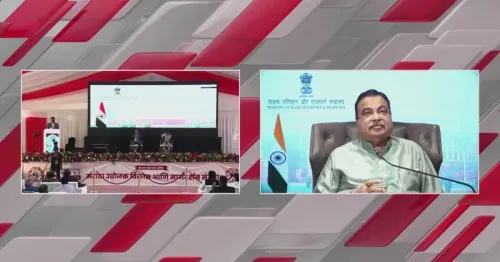
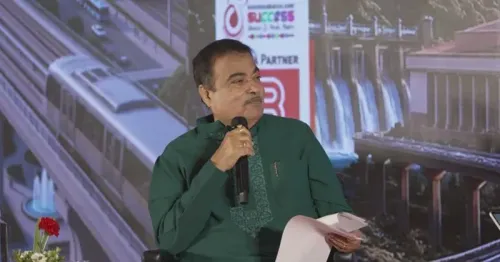
Union Road Transport Minister Nitin Gadkari addressed MARG 2026 in New Delhi on 4 November 2026, a conference jointly organised by economic think tank NCAER and urban governance non-profit Janaagraha, spotlighting the intersection of infrastructure policy and city planning.
Key Takeaways
Nitin Gadkari addressed MARG 2026 in New Delhi on 4 November 2026 .
The conference was jointly organised by NCAER (est.
1956 ) and Jana Urban Space (Janaagraha) .
Janaagraha is a Bengaluru -based non-profit focused on urban governance and civic participation.
The event brings together economic research and grassroots urban advocacy in a single platform.
No specific policy announcements from the address have been confirmed in available records.
Urban governance and mobility landed at the centre of policy discourse in New Delhi on Wednesday, 4 November 2026, as Union Road Transport and Highways Minister Nitin Gadkari took the stage at MARG 2026 — a conference jointly organised by the National Council of Applied Economic Research (NCAER) and Jana Urban Space (Janaagraha).
Who Convened MARG 2026 — and Why It Matters
NCAER, India's oldest independent economic think tank founded in 1956, and Janaagraha, the Bengaluru-based non-profit that has spent decades pushing for stronger urban governance and civic participation, are rarely in the same room as a senior infrastructure minister. Their joint convening of MARG 2026 signals an intent to bridge the gap between economic research, grassroots urban advocacy, and high-level policy execution.
Gadkari's presence at the conference underscores the intersection of road infrastructure and city planning — two domains that have historically operated in separate silos but increasingly converge as Indian cities grapple with congestion, last-mile connectivity, and rapid urbanisation.
The Broader Conversation on Indian Cities
Union ministers addressing research-led urban forums is a well-established practice, but the composition of this particular platform — a macro-economic think tank alongside a civic-space NGO — gives MARG 2026 a distinctive flavour. Where NCAER brings data and economic modelling, Janaagraha brings ground-level governance diagnostics, creating conditions for sharper, more accountable policy dialogue.
India's urban infrastructure challenge is vast: over 500 million people are expected to live in cities by the mid-2030s, and the pressure on roads, transit corridors, and municipal systems is mounting every year. A transport minister engaging directly with researchers and urban practitioners — however briefly — keeps the feedback loop between field reality and ministerial vision alive.
Any policy briefs or published proceedings emerging from MARG 2026 will be worth watching for their influence on future urban mobility frameworks.
Point of View
Ministerial engagement lends credibility and potential policy traction to their research. The event reflects a growing recognition that India's infrastructure ambitions cannot be realised without addressing the urban governance deficit that slows project execution and reduces citizen utility.
NationPress
4 Nov 2026
Frequently Asked Questions
Who is Nitin Gadkari?
Nitin Gadkari is India's Union Minister of Road Transport and Highways and a senior BJP leader who previously served as the party's national president.
What does Janaagraha do?
Janaagraha is a Bengaluru-based non-profit organisation that works on improving urban governance, civic participation, and spatial planning in Indian cities.
Did Gadkari announce any new scheme at MARG 2026?
No specific policy announcements from the address have been confirmed in available public records at this time.