Rajasthan CM Bhajan Lal: 1.78 Lakh Govt Jobs Filled in 2.5 Years

Synopsis
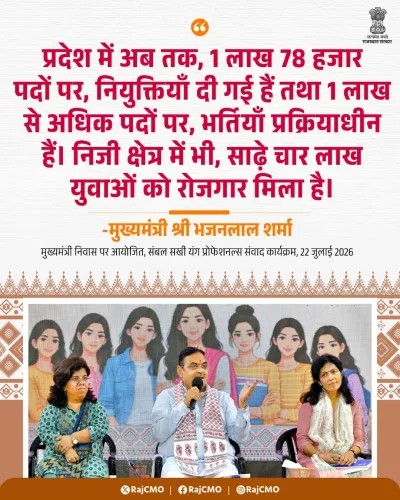
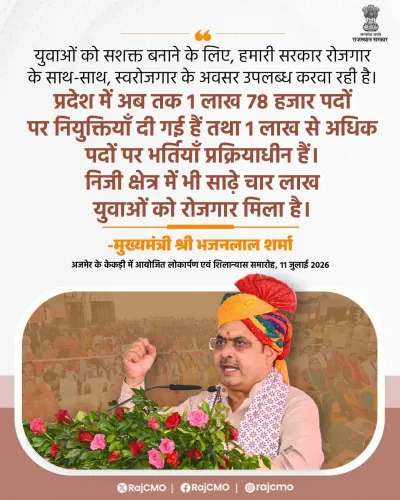
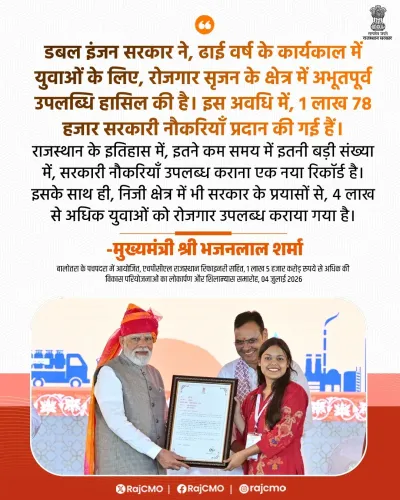
The Chief Minister's Office of Rajasthan announced on July 28, 2026, that the Bhajan Lal Sharma-led BJP government has filled more than 1.78 lakh government positions in two and a half years, framing the figure as a landmark in its youth employment agenda.
Key Takeaways
The Rajasthan CMO announced on July 28, 2026 that over 1,78,000 government jobs have been filled in the past two and a half years .
Chief Minister Bhajan Lal Sharma has led the BJP government in Rajasthan since December 2023 , following the party's assembly election victory.
Recruitment in Rajasthan is channelled primarily through RPSC and RSMSSB , covering police, education, health, and administration.
The state has historically faced recruitment delays, paper leak controversies, and legal challenges across administrations.
The post carries the hashtag #आपणो_अग्रणी_राजस्थान ('Our Forward Rajasthan'), signalling a broader governance branding effort.
Independent verification of the cumulative appointment figure through official audit remains a key watch point.
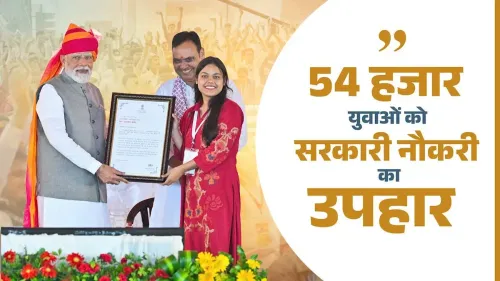
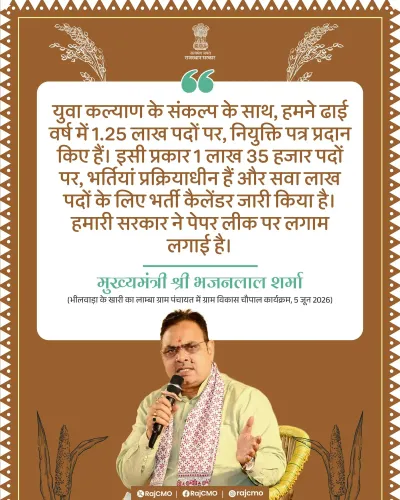
Over 1.78 lakh government jobs filled in just two and a half years — that is the headline number the Chief Minister's Office of Rajasthan put on record on Tuesday, July 28, 2026, crediting Chief Minister Bhajan Lal Sharma's administration with turning the long-deferred dreams of young job-seekers into appointment letters.
The CMO's post, tagged to @BhajanlalBjp and carrying the hashtag #आपणो_अग्रणी_राजस्थान ('Our Forward Rajasthan'), states: 'राज्य सरकार ने विगत ढाई वर्षों में, 1 लाख 78 हजार से अधिक युवाओं के सरकारी नौकरी के सपने को, साकार किया है' — 'In the past two and a half years, the state government has fulfilled the dream of government employment for more than 1 lakh 78 thousand youth.'
The vacancy backlog Bhajan Lal inherited
Bhajan Lal Sharma took office in December 2023 after the BJP's victory in the Rajasthan assembly elections, inheriting a recruitment pipeline long clogged by delays, exam-calendar gaps, and legal challenges that had accumulated across administrations. Bodies like the Rajasthan Public Service Commission (RPSC) and the Rajasthan Staff Selection Board (RSMSSB) are the primary channels through which the state fills posts in police, education, health, and administration — and both had pending recruitment cycles when the new government assumed charge.
Rajasthan's job-aspirant population is among the largest in India, with hundreds of thousands of candidates competing for limited posts in each recruitment cycle. The pressure to demonstrate movement on vacancies is, accordingly, one of the sharpest political tests any state government faces.
What the 1.78 lakh figure represents
State governments across India routinely publish cumulative hiring tallies as a signal of administrative momentum. The figure of more than 1,78,000 appointments — as stated by the CMO — spans multiple departments and recruitment boards over the approximately 30-month window since the BJP government took office. The specific breakdown by department or cadre has not been detailed in the post itself.
Recruitment statistics of this scale, when verified through official appointment orders and joining reports, carry real weight: each number behind the aggregate is a candidate who cleared an exam, survived a waiting period, and received a posting. Whether the full pipeline — from notification to joining — is captured in the figure is a question that audit and parliamentary scrutiny typically settle over time.
Eyes on RPSC and RSMSSB calendars next
The political signal is clear: the Sharma government wants youth employment front and centre of its governance narrative as it crosses the halfway mark of its term. What follows will be watched closely — new vacancy notifications from RPSC and RSMSSB, the pace of pending result declarations, and whether independent audits corroborate the cumulative appointment count.
For now, the number is on the record. The next test is whether the pipeline keeps moving at the same pace — or faster.
Point of View
Where exam-calendar delays and paper leaks have historically eroded voter trust, a large recruitment number is both a governance credential and a pre-emptive counter-narrative. Indian state governments have increasingly used social media to own the jobs story before opposition parties can frame it as a failure. The figure of 1.78 lakh, if borne out by official appointment records, would represent a meaningful acceleration over historical recruitment rates — but the lack of a departmental breakdown leaves room for scrutiny. The real test of this narrative will come when RPSC and RSMSSB calendars for the next cycle are published, and when audit bodies weigh in on whether 'appointments made' translates fully into 'personnel on duty.'
NationPress
29 Jul 2026
Frequently Asked Questions
How many government jobs has the Rajasthan government filled under Bhajan Lal Sharma?
According to the Chief Minister's Office of Rajasthan, more than 1,78,000 government posts have been filled in the two and a half years since the BJP government took office in December 2023.
When did Bhajan Lal Sharma become Chief Minister of Rajasthan?
Bhajan Lal Sharma was sworn in as Chief Minister of Rajasthan in December 2023 after the BJP won the state assembly elections.
Which bodies handle government recruitment in Rajasthan?
The two primary recruitment bodies are the Rajasthan Public Service Commission (RPSC) and the Rajasthan Staff Selection Board (RSMSSB) , which fill posts across police, education, health, and administration.
What is the hashtag #आपणो_अग्रणी_राजस्थान about?
The hashtag translates to 'Our Forward Rajasthan' and is used by the Rajasthan CMO to brand the state government's governance and development initiatives on social media.
Has Rajasthan faced recruitment controversies in the past?
Yes. Rajasthan has historically seen recruitment delays, paper leak controversies, and legal challenges under multiple administrations, making timely and transparent hiring a politically sensitive issue in the state.