Rajasthan CM Bhajanlal Launches 100-Week Anti-Drug Youth Campaign
Synopsis
The Chief Minister's Office of Rajasthan has announced the 'Nasha Mukt Yuva for Viksit Bharat Sankalp Abhiyan', a 100-week nationwide people's movement against youth drug abuse, aligning the state with the central Nasha Mukt Bharat Abhiyan and the Viksit Bharat 2047 vision.
Key Takeaways
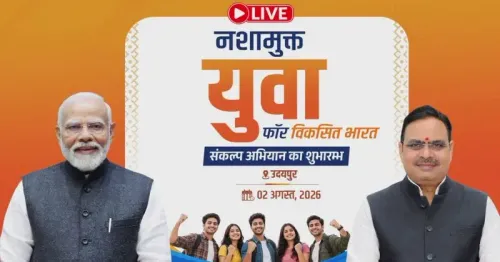
The Chief Minister's Office of Rajasthan announced the 'Nasha Mukt Yuva for Viksit Bharat Sankalp Abhiyan' on 3 August 2026 .
The campaign is designed to run for 100 weeks as a nationwide jan andolan (people's movement) driven by public participation.
It builds on the Nasha Mukt Bharat Abhiyan , launched nationally in 2020 by the Ministry of Social Justice and Empowerment.
Chief Minister Bhajanlal Sharma has led Rajasthan since December 2023 following the BJP's state election victory.
The campaign is framed within the Viksit Bharat 2047 vision, treating drug-free youth as a human capital priority.
District-level rollout and participation metrics will be the key indicators of the campaign's on-ground impact.
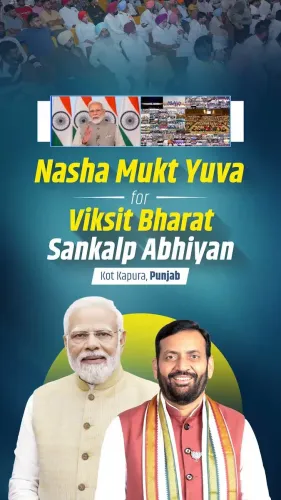
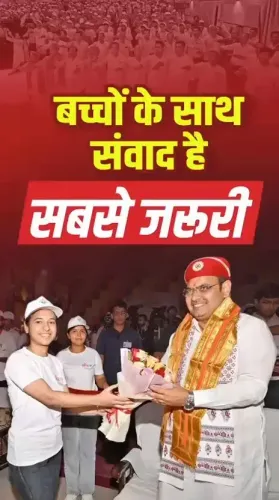
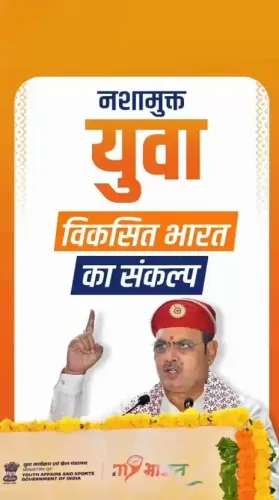
A hundred weeks. That is the runway Rajasthan Chief Minister Bhajanlal Sharma and the Chief Minister's Office of Rajasthan have committed to as the state formally anchors itself to a sweeping national movement against substance abuse among youth — the 'Nasha Mukt Yuva for Viksit Bharat Sankalp Abhiyan' ('Drug-Free Youth for Developed India Resolve Campaign').
The campaign, announced on 3 August 2026, is framed not as a government programme but as a nationwide jan andolan — a people's movement — to be driven through mass public participation over the coming 100 weeks. The hashtag #AapnoAgraniRajasthan ('Our Leading Rajasthan') signals the state's intent to position itself at the front of this national push.
Roots in the National Nasha Mukt Bharat Abhiyan
This is not Rajasthan acting alone. The campaign builds directly on the Nasha Mukt Bharat Abhiyan, launched in 2020 by the Ministry of Social Justice and Empowerment as a structured national effort to combat drug and substance abuse, with a particular focus on vulnerable youth populations. State governments across India have periodically aligned local drives with this central framework — Rajasthan's current initiative follows that well-worn path of centre-state coordination on public health.
What distinguishes this iteration is the explicit 100-week commitment and the 'Sankalp' (resolve) framing — language borrowed from the broader Viksit Bharat 2047 vision, which treats a healthy, drug-free youth demographic as foundational human capital for India's development goals.
Bhajanlal's Rajasthan and the Viksit Bharat Frame
Chief Minister Bhajanlal Sharma, who took office in December 2023 following the BJP's assembly election victory in Rajasthan, has consistently sought to align state governance with central BJP priorities. Plugging into a nationally branded anti-drug campaign — and doing so with a two-year runway — fits a pattern of using social welfare drives to demonstrate administrative momentum and grassroots reach.
The jan andolan framing also carries political weight: it invites community ownership, making the campaign harder to dismiss as a top-down directive and easier to sustain across district-level rollouts.
Whether Rajasthan's participation translates into measurable outcomes — district enrolment numbers, de-addiction centre reach, school and college coverage — will be the real test over those hundred weeks. The clock has started.
Point of View
District elections, and institutional reviews, keeping the campaign politically relevant. For Chief Minister Bhajanlal Sharma, still consolidating his administration's identity, anchoring to a Viksit Bharat narrative offers a ready-made policy vocabulary. The real test is whether the jan andolan framing produces genuine community mobilisation or remains a well-packaged announcement.
NationPress
3 Aug 2026
Frequently Asked Questions
What is the Nasha Mukt Yuva for Viksit Bharat Sankalp Abhiyan?
It is a nationwide anti-drug campaign announced by the Rajasthan Chief Minister's Office, designed to run for 100 weeks as a public participation movement aimed at making youth drug-free in support of India's Viksit Bharat 2047 development vision.
Who launched the Sankalp Abhiyan in Rajasthan?
The campaign was announced by the Chief Minister's Office of Rajasthan, associated with Chief Minister Bhajanlal Sharma, on 3 August 2026.
How long will the Nasha Mukt Yuva Sankalp Abhiyan run?
The campaign is planned to run for 100 weeks, driven through community and public participation across the country.
What is the Nasha Mukt Bharat Abhiyan and how is it related?
The Nasha Mukt Bharat Abhiyan is a national programme launched in 2020 by the Ministry of Social Justice and Empowerment to combat substance abuse among youth. The Rajasthan Sankalp Abhiyan builds on this existing national framework.
What is the Viksit Bharat 2047 vision mentioned in the campaign?
Viksit Bharat 2047 is India's national development goal to become a fully developed nation by 2047, the centenary of independence, with healthy and productive youth demographics considered a key pillar of that ambition.