Rajasthan CM Bhajanlal Sharma: Zero Tolerance for Crime

Synopsis
The Rajasthan Chief Minister's Office, citing CM Bhajanlal Sharma, declared the state government operates on zero tolerance toward criminals and sensitivity toward ordinary citizens — reinforcing the BJP administration's core law-and-order identity ahead of Independence Day 2026.
Key Takeaways
The Rajasthan CMO posted on 14 August 2026 , reaffirming a dual governance policy: zero tolerance for criminals and sensitivity toward common citizens.
Chief Minister Bhajanlal Sharma has championed strict anti-crime action since taking office in December 2023 .
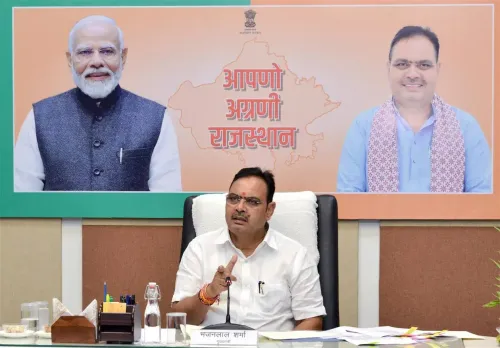
The message was tagged #आपणो_अग्रणी_राजस्थान , linking law and order to the state's broader development narrative.
The BJP-led Rajasthan government has consistently framed public security as a top governance priority since the 2023 assembly election victory.
Upcoming crime statistics and policing directives will be the key indicators of whether the stated policy translates into measurable outcomes.
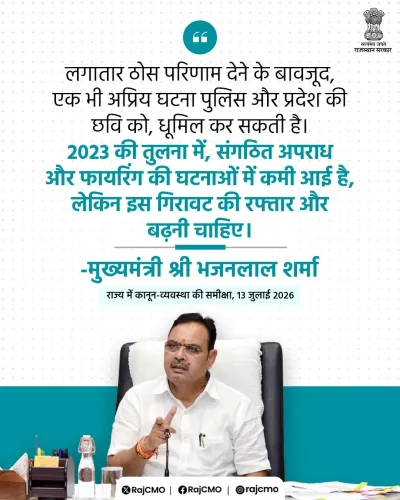
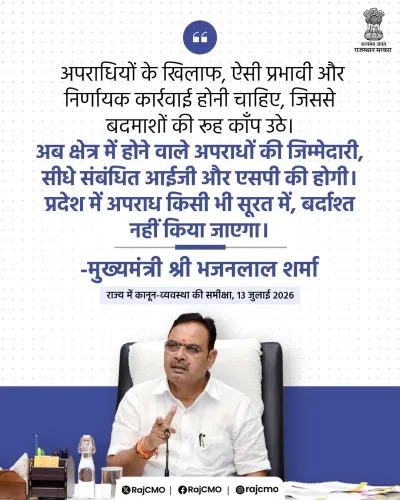
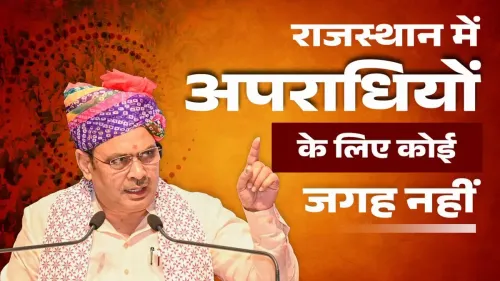
Criminals beware, citizens take note — the Rajasthan government has drawn a sharp line between those who break the law and those who need its protection. On 14 August 2026, the Chief Minister's Office of Rajasthan reaffirmed the state administration's dual-track governance doctrine: uncompromising action against criminals, paired with genuine sensitivity toward ordinary citizens.
The post, attributed to Chief Minister Bhajanlal Sharma, stated in Hindi: 'राज्य सरकार अपराधियों के प्रति, जीरो टॉलरेंस और आमजन के प्रति संवेदनशीलता की नीति से काम कर रही है' — 'The state government is working with a policy of zero tolerance towards criminals and sensitivity towards the common people.' The message was tagged with the campaign hashtag #आपणो_अग्रणी_राजस्थान (Our Leading Rajasthan), framing law and order as a cornerstone of the state's development identity.
Bhajanlal Sharma's law-and-order mandate since December 2023
Bhajanlal Sharma took charge as Chief Minister of Rajasthan in December 2023, following the Bharatiya Janata Party's decisive win in the state assembly elections. From day one, the administration publicly committed to strict action against criminal elements — a priority that has consistently featured in official messaging and state policy framing ever since.
The zero-tolerance posture is not new to BJP-governed states. Across India, BJP administrations have repeatedly anchored their public security narrative around firm anti-crime stances while simultaneously projecting a welfare-oriented face toward voters. Rajasthan's CMO messaging follows that recognisable playbook — but on the eve of Independence Day, its timing carries additional symbolic weight.
What the 'sensitivity toward common people' framing signals
The deliberate pairing of toughness with empathy is a studied political choice. It positions the state not merely as a punitive force but as a protector — telling citizens that the same government cracking down on criminals is also listening to them. This dual messaging is designed to resonate broadly: with those who demand safer streets and with those who fear heavy-handed policing.
Rajasthan's law-enforcement agencies and upcoming assembly sessions will be the real test. Crime statistics, new policing directives, and any legislative proposals on public safety will reveal whether the rhetoric is backed by measurable action on the ground.
Point of View
' the government is attempting to neutralise the perception of heavy-handed policing — a criticism that has dogged similar campaigns elsewhere. The real political test will come when Rajasthan's crime data for 2025-26 enters the public domain, at which point the rhetoric will be measured against reality. Until then, this remains a statement of intent rather than a record of achievement.
NationPress
14 Aug 2026
Frequently Asked Questions
What is Rajasthan's zero tolerance policy against criminals?
The Rajasthan government, under Chief Minister Bhajanlal Sharma, has declared a zero-tolerance stance toward criminal activity, meaning strict and swift law-enforcement action with no leniency, while simultaneously emphasising sensitivity and responsiveness toward ordinary citizens.
Who is Bhajanlal Sharma and when did he become Rajasthan CM?
Bhajanlal Sharma is the Chief Minister of Rajasthan from the Bharatiya Janata Party. He assumed office in December 2023 after the BJP won the Rajasthan assembly elections.
What does #आपणो_अग्रणी_राजस्थान mean?
The hashtag translates to 'Our Leading Rajasthan' in English. The Rajasthan government uses it to promote its governance agenda and development vision across official social media channels.
How has the BJP government in Rajasthan approached law and order since 2023?
Since taking office in December 2023, the Bhajanlal Sharma-led BJP government has publicly committed to strict action against criminals as a top governance priority, framing public safety as central to the state's progress.
What should citizens watch for to assess Rajasthan's anti-crime claims?
The clearest indicators will be Rajasthan's official crime statistics, new policing directives issued by the state, and any public-safety legislation introduced in upcoming assembly sessions.