Rajasthan CM disburses ₹267 cr to 6.6 lakh girls
Synopsis
Rajasthan's CMO announced ₹267 crore disbursed to over 6.6 lakh girl students under two state schemes — Gargi Puraskar Yojana and Balika Protsahan Puraskar Yojana — aimed at reducing dropout rates and boosting female literacy.
Key Takeaways
₹109 crore disbursed to 3 lakh 63 thousand girls under Gargi Puraskar Yojana , which rewards academic merit. ₹158 crore distributed to over 3 lakh girls under Balika Protsahan Puraskar Yojana , which incentivises families to educate daughters.
Combined outlay of ₹267 crore across both schemes in this disbursement cycle.
Total beneficiaries: more than 6.6 lakh girl students across Rajasthan.
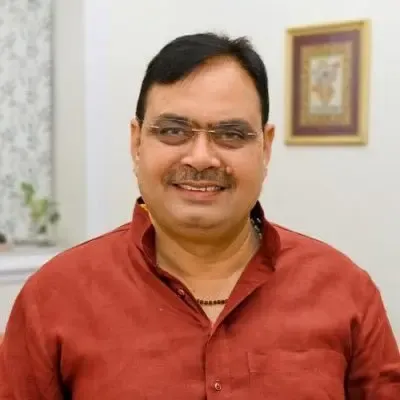
Chief Minister Bhajan Lal Sharma (BJP), in office since December 2023, was tagged in the official announcement.
Rajasthan has maintained direct cash-transfer incentives for girls' education for over a decade across successive governments.
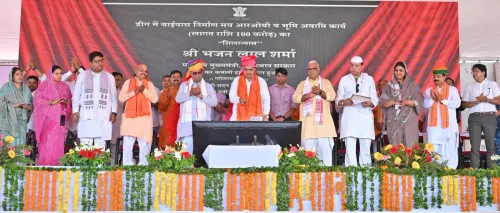
More than six lakh sixty thousand girl students across Rajasthan are waking up to fresh financial support today — a combined ₹267 crore channelled directly to them under two state schemes designed to keep girls in school and out of dropout statistics. The Chief Minister's Office of Rajasthan announced the disbursements on Wednesday, 4 November 2026, tagging Chief Minister Bhajan Lal Sharma in the post.
Two schemes, one mission: girls stay in classrooms
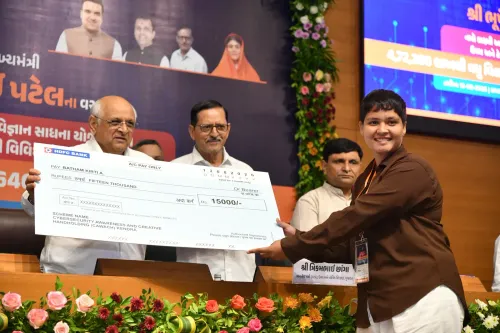
The announcement breaks the numbers into two clean tranches. Under the Gargi Puraskar Yojana, 3 lakh 63 thousand girl students received ₹109 crore in merit-based cash awards. The scheme rewards academic performance and is explicitly designed to push meritorious girls past the thresholds where dropout pressure is sharpest — typically at the Class 10 and Class 12 levels.
Alongside it, the Balika Protsahan Puraskar Yojana reached over 3 lakh beneficiaries with ₹158 crore in incentives. Where Gargi targets merit, this sister scheme targets motivation — nudging families, especially in rural and semi-urban belts, to treat daughters' education as an investment worth making. Together the two programmes put cash in the hands of girls at precisely the moments when economic pressure can pull them away from school.
A decade of direct cash transfers in Rajasthan's gender playbook
Rajasthan has run targeted girl-child incentive programmes for well over a decade, making direct financial transfers a signature tool across successive administrations. The logic has held across political changes: when a family sees money arrive because a daughter attended school and cleared examinations, the calculus around girls' education shifts. CM Bhajan Lal Sharma, in office since December 2023, has continued and scaled these disbursements under the BJP government's banner of 'Aapno Agrani Rajasthan' ('Our Leading Rajasthan').
The combined outlay of ₹267 crore in a single announcement signals that beneficiary reach is growing — a point the state government is clearly keen to amplify heading into future budget cycles, where scheme-wise utilisation reports and revised targets will come under scrutiny.
What ₹267 crore means on the ground
Put simply: an average payout of roughly ₹4,000 per beneficiary across the two schemes — not a fortune, but enough to cover tuition fees, books, or examination costs that often tilt a family's decision. In a state where female literacy still trails the national average in several districts, that margin matters. The scale — 6.6 lakh girls in a single disbursement cycle — also underscores that these are not token gestures but mass-infrastructure programmes embedded in the state's education budget.
Comparable girl-child incentive schemes run in several other Indian states, but Rajasthan's combination of a merit-award track and a broad-access incentive track in parallel gives it a two-pronged architecture that policy analysts have pointed to as a replicable model.
With the state budget session on the horizon, all eyes now turn to whether beneficiary targets will be raised further — and whether the per-student award amounts get revised upward to match inflation.
Point of View
One access-linked — reflects a mature, layered approach to tackling female dropout rather than a single-point intervention. For CM Bhajan Lal Sharma, publicising a combined ₹267 crore outflow to 6.6 lakh beneficiaries serves both a governance and a political narrative: competent scheme delivery under the 'Aapno Agrani Rajasthan' brand. The broader pattern is significant — when successive state governments of different parties sustain and scale the same programmes, it signals that the evidence base for direct cash transfers in girls' education has become politically unchallengeable in Rajasthan. The real test ahead is whether disbursement volumes are matched by learning outcome improvements and actual retention data, which the state's budget session should ideally place on the table.
NationPress
4 Nov 2026
Frequently Asked Questions
What is Gargi Puraskar Yojana in Rajasthan?
Gargi Puraskar Yojana is a Rajasthan government scheme that provides cash awards to meritorious girl students — particularly at the Class 10 and Class 12 levels — to encourage them to continue their education rather than drop out.
What is Balika Protsahan Puraskar Yojana?
Balika Protsahan Puraskar Yojana is a Rajasthan state scheme that offers financial incentives to families to educate their daughters, targeting school enrolment and retention especially in rural and semi-urban areas.
How much money was distributed under Gargi Puraskar Yojana in 2026?
Under Gargi Puraskar Yojana, ₹109 crore was distributed to 3 lakh 63 thousand girl students, as announced by the Rajasthan Chief Minister's Office on 4 November 2026.
How many girls benefited from Balika Protsahan Puraskar Yojana?
Over 3 lakh girls received ₹158 crore under Balika Protsahan Puraskar Yojana in the disbursement announced by the Rajasthan CMO on 4 November 2026.
Who is the Chief Minister of Rajasthan in 2026?
Bhajan Lal Sharma of the BJP is the Chief Minister of Rajasthan, having taken office in December 2023.