CM Bhajan Lal transfers ₹89 cr to Rajasthan women on Independence Day
Synopsis
Rajasthan CM Bhajan Lal Sharma transferred over ₹89 crore via DBT to Anganwadi and ASHA workers on Independence Day, launched the Kishori Balika Yojana for adolescent girls, and announced a 10% honorarium hike for ASHA Sahayoginis at a Jaipur event ahead of Rakshabandhan.
Key Takeaways
More than ₹89 crore transferred via DBT to women beneficiaries — including Anganwadi workers and women entrepreneurs — at RIC, Jaipur on 15 August 2026 .
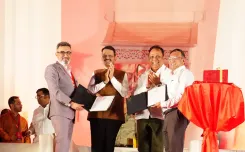
Physical cheques distributed to beneficiaries of the Nari Shakti Udyam Protsahan Yojana for women's entrepreneurship support.
The Kishori Balika Yojana , a new state scheme for adolescent girls, was formally launched at the event.
A 10% increase in monthly honorarium for ASHA Sahayogini workers across Rajasthan was announced.
Deputy Chief Minister Diya Kumari and other elected representatives attended alongside a large number of Anganwadi workers.
The event was timed to coincide with Independence Day and the upcoming Rakshabandhan festival.
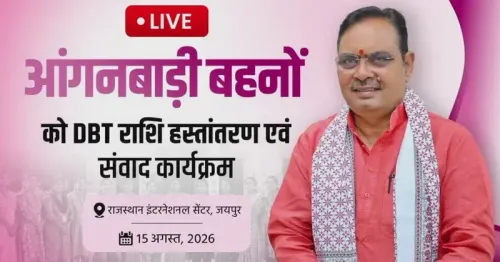
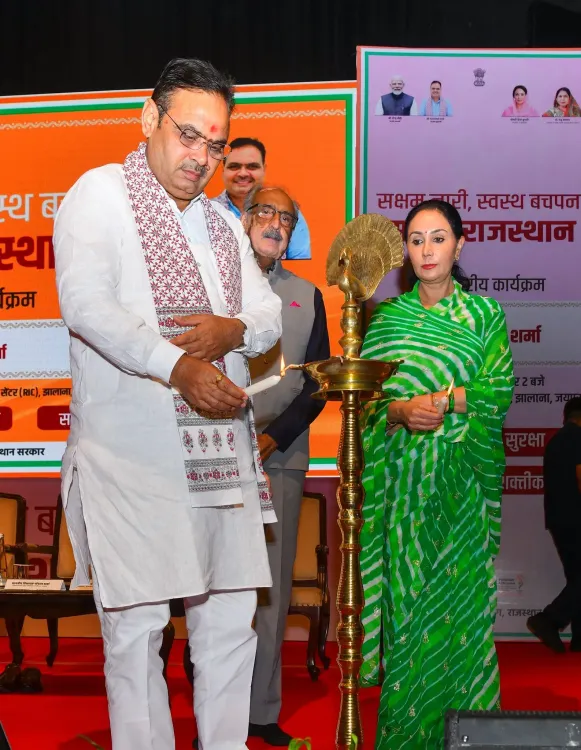
On Independence Day, 15 August 2026, Rajasthan Chief Minister Bhajan Lal Sharma transferred more than ₹89 crore directly into the accounts of women beneficiaries — Anganwadi workers, ASHA Sahayoginis, and women entrepreneurs — at a ceremony held at the Rajasthan International Centre (RIC), Jaipur, weaving a Rakshabandhan tribute into a concrete welfare push.
₹89 crore in a single DBT push — who gets what
The direct benefit transfer (DBT) covered women beneficiaries across multiple state schemes, with physical cheques also handed to recipients of the Nari Shakti Udyam Protsahan Yojana — Rajasthan's flagship programme for women entrepreneurs. DBT has become the state's preferred disbursement rail, cutting out middlemen and ensuring funds land before the festival. The ₹89-crore figure makes this one of the larger single-event women's welfare transfers the state has announced in recent memory.
Kishori Balika Yojana: a new scheme for adolescent girls
CM Sharma also formally launched the Kishori Balika Yojana, a new state initiative targeting adolescent girls' welfare and development. Eligibility criteria and coverage numbers are yet to be made public, and the scheme's rollout details will be closely watched in the months ahead. The launch fits a pattern of state governments pairing high-visibility welfare events with new scheme announcements — locking in political symbolism alongside administrative action.
ASHA workers get a 10% honorarium hike
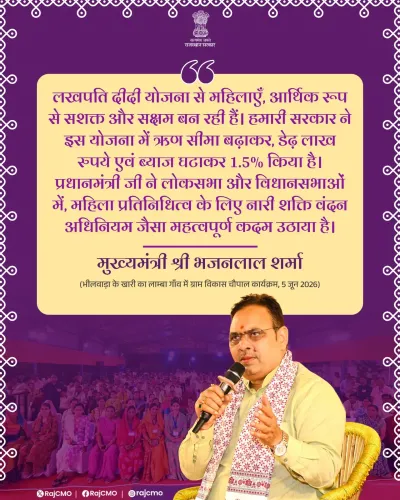
The announcement that drew perhaps the loudest response in the hall: a 10 per cent increase in the monthly honorarium for ASHA Sahayogini workers across Rajasthan. ASHA workers are the last-mile connectors of India's public health architecture — tracking pregnancies, escorting mothers to hospitals, reporting disease outbreaks — yet their pay has long lagged their workload. CM Sharma framed their contribution as 'samaj ke swasth evam sashakt bhavishy ki mazboot neenv' — 'the strong foundation of society's healthy and empowered future.' The hike will require a corresponding state budget revision; the exact fiscal outlay has not yet been specified.
Rakshabandhan as political backdrop
Deputy Chief Minister Diya Kumari shared the stage alongside elected representatives and a large gathering of Anganwadi workers. The Rakshabandhan timing was deliberate: the festival's brother-sister bond gave the government a ready emotional frame to present welfare spending as an act of care rather than routine administration. Indian state governments — across party lines — have long scheduled DBT events around major festivals, but the scale of this transfer and the simultaneous scheme launch give the occasion more than ceremonial weight. The question now is whether the Kishori Balika Yojana and the ASHA honorarium revision translate into sustained budget lines or remain headline moments.
Point of View
Consolidating the loyalty of frontline women workers — a numerically significant and politically mobilisable constituency — ahead of future electoral cycles is an evident strategic thread. The ASHA honorarium revision, however modest, also responds to a national pressure point: frontline health workers have repeatedly agitated for better pay, and state-level hikes signal responsiveness. Whether these measures translate into durable budget commitments or remain one-time announcements will be the real test of intent.
NationPress
30 Sept 2026
Frequently Asked Questions
What is the Kishori Balika Yojana launched by Rajasthan CM Bhajan Lal Sharma?
The Kishori Balika Yojana is a newly launched Rajasthan state scheme aimed at the welfare and development of adolescent girls. It was formally inaugurated by CM Bhajan Lal Sharma at the RIC, Jaipur on 15 August 2026. Detailed eligibility criteria and coverage numbers are yet to be announced.
How much money was transferred via DBT to women in Rajasthan on 15 August 2026?
More than ₹89 crore was transferred directly into the bank accounts of women beneficiaries — including Anganwadi workers and recipients of the Nari Shakti Udyam Protsahan Yojana — through the Direct Benefit Transfer (DBT) mechanism at the Jaipur event.
What is the ASHA Sahayogini honorarium hike announced in Rajasthan?
CM Bhajan Lal Sharma announced a 10% increase in the monthly honorarium paid to ASHA Sahayogini workers across Rajasthan. ASHA workers are community health volunteers who serve as the frontline link between rural populations and the public health system.
What is the Nari Shakti Udyam Protsahan Yojana in Rajasthan?
The Nari Shakti Udyam Protsahan Yojana is a Rajasthan state scheme that provides financial support — including direct cheques — to women beneficiaries to promote entrepreneurship and economic self-reliance among women.
Who attended the Rakshabandhan welfare event in Jaipur with CM Bhajan Lal Sharma?
Deputy Chief Minister Diya Kumari, other elected representatives, and a large number of Anganwadi workers attended the event held at the Rajasthan International Centre (RIC) in Jaipur on Independence Day, 15 August 2026.