CM Bhajan Lal Launches DBT Transfer for Anganwadi Workers in Jaipur
Synopsis
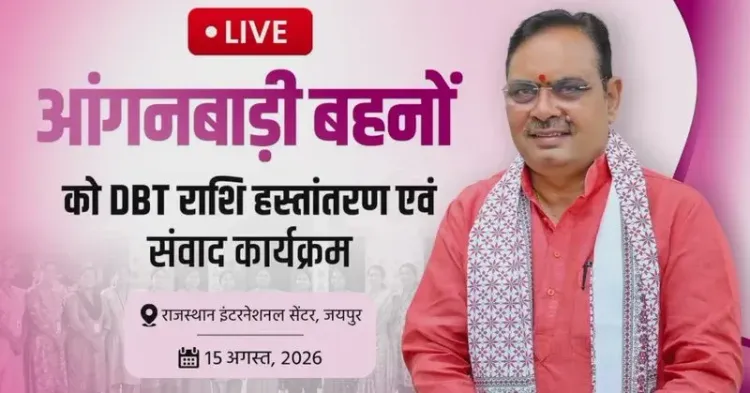
Rajasthan CM Bhajan Lal Sharma on Independence Day 2026 transferred DBT honoraria directly to Anganwadi workers at a Jaipur event, reinforcing the state's push for leakage-free, digitised welfare delivery to frontline women workers under the ICDS scheme.
Key Takeaways
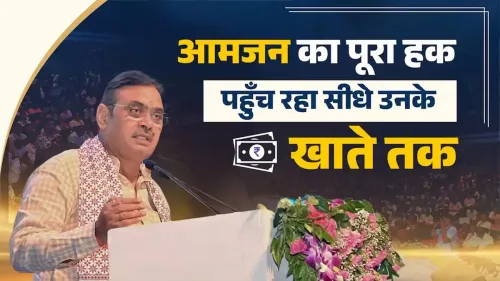
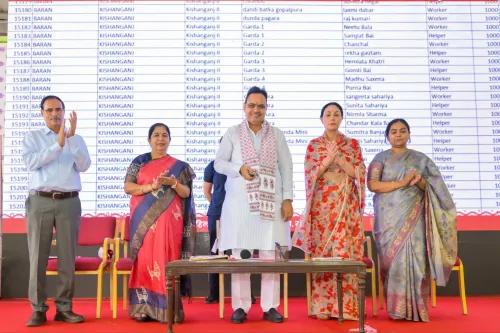
CM Bhajan Lal Sharma held a live DBT transfer and dialogue event for Anganwadi workers in Jaipur on 15 August 2026 .
Anganwadi workers are frontline women under the Integrated Child Development Services (ICDS) programme, launched nationally in 1975 .
The Direct Benefit Transfer system routes payments directly to beneficiaries' bank accounts, eliminating intermediary leakages.
The DBT architecture was scaled nationally from 2013–14 and now covers most central and state welfare schemes.
The 'संवाद कार्यक्रम' (dialogue programme) format allowed CM Sharma to engage directly with workers beyond a ceremonial transfer.
Future watch: possible honorarium revision in the state budget and district-level DBT rollouts across Rajasthan.
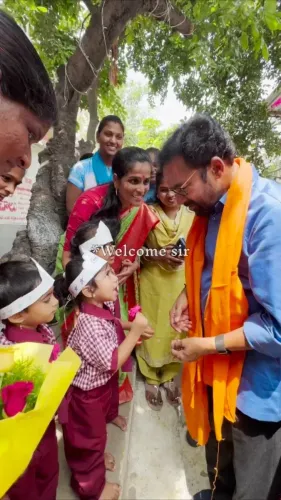
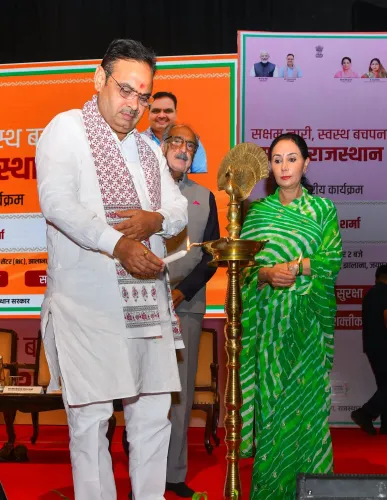
On Independence Day, 15 August 2026, Rajasthan Chief Minister Bhajan Lal Sharma presided over a live event in Jaipur to transfer Direct Benefit Transfer (DBT) honoraria directly into the bank accounts of the state's Anganwadi workers — the frontline women who run nutrition and early-childhood centres across every district of Rajasthan.
Anganwadi Workers and the DBT Promise
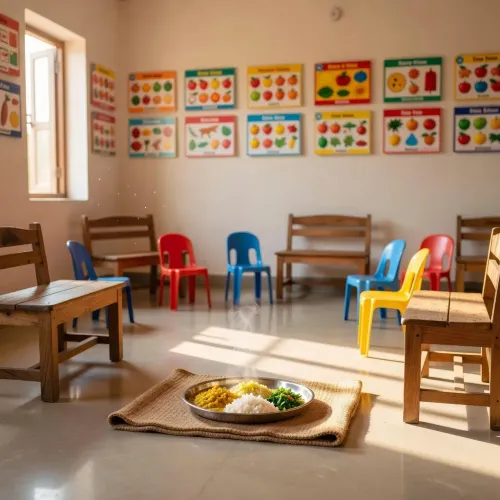
Anganwadi workers — addressed by CM Sharma as 'Anganwadi behnen' (Anganwadi sisters) — are the backbone of the Integrated Child Development Services (ICDS), a national programme launched in 1975 to fight child malnutrition and support maternal health through a network of community centres. Despite decades of service, their honoraria have historically been prone to delays and intermediary leakages. The shift to DBT is designed to eliminate both.
The Direct Benefit Transfer architecture, scaled nationally from 2013–14 beginning with LPG subsidies, now underpins most central and state welfare payouts. By routing funds straight to verified bank accounts, it removes the middleman and gives workers immediate, auditable access to their earnings.
Independence Day as a Deliberate Stage
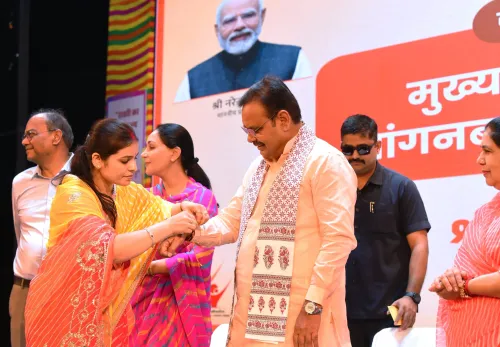
Holding the event on 15 August was not incidental. The Rajasthan BJP government has consistently framed digitised, leakage-free welfare delivery as a governance reform, and anchoring it to Independence Day amplifies that message — positioning the transfer as both a policy milestone and a symbolic act of economic empowerment for women workers. The 'संवाद कार्यक्रम' (dialogue programme) component signals that the event went beyond a cheque-distribution ceremony: CM Sharma engaged directly with Anganwadi workers, a format the state has used to surface ground-level grievances and announce incremental policy adjustments.
What Comes Next for Rajasthan's Frontline Workforce
The immediate question is whether this event marks a one-time transfer or the beginning of a regularised DBT cycle for Anganwadi honoraria across all of Rajasthan's districts. Observers will also watch the state's next budget session for any upward revision of the honorarium itself — a demand that Anganwadi worker unions have pressed for years. A parallel rollout of similar DBT events in other divisions of the state would signal a systemic shift rather than a capital-city showcase.
For the women who staff these centres — often the first point of contact for a malnourished child or an expectant mother in rural Rajasthan — the direct credit is more than administrative tidiness. It is recognition, on the nation's founding anniversary, that their labour has a guaranteed, unmediated value.
Point of View
Long-standing grievance about payment delays and leakages. The 'dialogue' format is the more interesting variable: if it surfaces concrete demands around honorarium revision, it could pressure the state to move on a politically sensitive fiscal decision ahead of the next budget cycle. The broader pattern here is a state government trying to convert administrative reform into a durable electoral asset among women voters.
NationPress
30 Sept 2026
Frequently Asked Questions
What is DBT for Anganwadi workers in Rajasthan?
DBT, or Direct Benefit Transfer, routes Anganwadi workers' honoraria directly into their bank accounts, bypassing intermediaries and ensuring timely, verifiable payments. Rajasthan CM Bhajan Lal Sharma formalised this transfer at a Jaipur event on 15 August 2026.
Who are Anganwadi workers and what do they do?
Anganwadi workers are frontline women employed under the central government's Integrated Child Development Services (ICDS) scheme, launched in 1975. They deliver nutrition support, basic healthcare, and preschool education at community centres across India.
What is the ICDS scheme in India?
The Integrated Child Development Services (ICDS) is a national programme launched in 1975 to combat child malnutrition and support maternal and child health through a network of Anganwadi centres staffed by frontline women workers.
How does the Direct Benefit Transfer system work in India?
DBT transfers government welfare payments directly into beneficiaries' verified bank accounts, eliminating middlemen and reducing leakages. It was scaled nationally from 2013–14, starting with LPG subsidies, and now covers most central and state welfare schemes.
Will Anganwadi honorarium be revised in Rajasthan?
No official revision has been announced. Observers are watching the Rajasthan state budget for any upward revision of Anganwadi honoraria, a longstanding demand from worker unions. The 15 August 2026 DBT event may build momentum for that decision.