Rajasthan CM Office: 5,646 PACS Computerised in Phase One
Synopsis
The Chief Minister's Office of Rajasthan announced on 7 July 2026 that 5,646 Primary Agricultural Credit Societies have been digitised as e-PACS in Phase One of the state's computerisation drive, advancing the national cooperative modernisation agenda under CM Bhajanlal Sharma.
Key Takeaways
5,646 PACS have been converted to e-PACS in Phase One of Rajasthan's computerisation campaign, as announced on 7 July 2026 .
The drive aligns with the Union Cabinet's June 2022 approval of a Rs 2,516 crore scheme to computerise 63,000 PACS nationwide over five years.
The Ministry of Cooperation , set up in July 2021 , is the nodal body overseeing the national e-PACS rollout.
The e-PACS platform is designed to integrate with NABARD systems for seamless refinance flow and credit monitoring.
The announcement was tagged to CM Bhajanlal Sharma under the state's #आपणो_अग्रणी_राजस्थान governance branding.
Phase II targets, hardware funding, and rural connectivity allocations in 2026-27 will determine the programme's full reach.
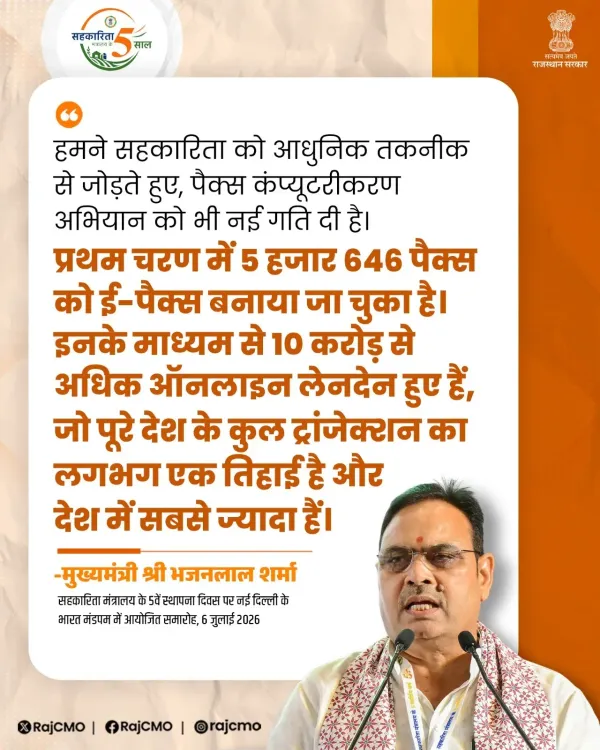
The Chief Minister's Office of Rajasthan announced on Tuesday, 7 July 2026 that the state has converted 5,646 Primary Agricultural Credit Societies (PACS) into digital e-PACS units under the first phase of its PACS computerisation drive, linking cooperative reform with modern technology.
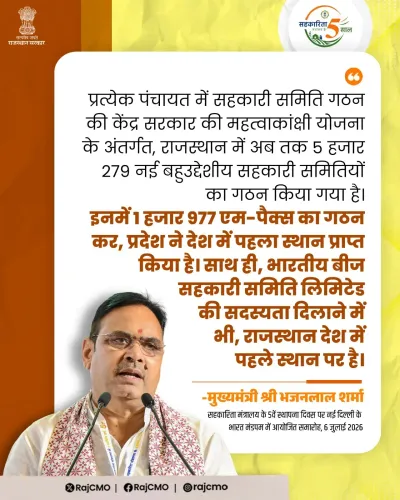
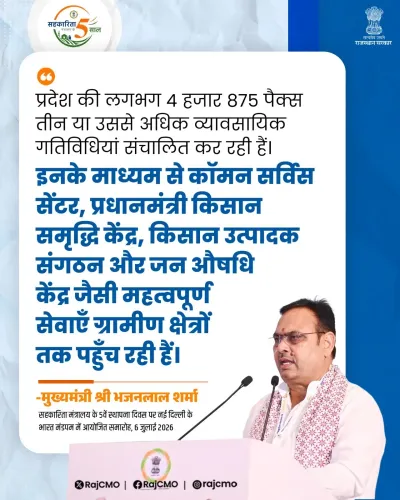
The post, attributed to Chief Minister Bhajanlal Sharma's office and tagged to @BhajanlalBjp, stated in Hindi: 'हमने सहकारिता को आधुनिक तकनीक से जोड़ते हुए, पैक्स कंप्यूटरीकरण अभियान को भी नई गति दी है' — ('We have connected cooperatives with modern technology and given new momentum to the PACS computerisation campaign'). The announcement carried the hashtag #आपणो_अग्रणी_राजस्थान (Our Leading Rajasthan), a branding phrase the Sharma government has used for its governance outreach.
Context
PACS are the foundational tier of India's rural cooperative credit structure, operating at the village level to provide short-term crop loans and agricultural inputs to farmers. Digitising these bodies is considered essential to reducing leakages, improving loan disbursal speed, and enabling real-time audit trails. Rajasthan has a large agrarian economy with a substantial network of such societies spread across its districts.
Policy Backdrop
The state's push sits within a broader national framework. In June 2022, the Union Cabinet approved a central sector scheme for the computerisation of 63,000 PACS across India, with a total outlay of Rs 2,516 crore over five years. The scheme is administered by the Ministry of Cooperation, established in July 2021, which aims to link primary societies with higher-tier cooperative banks through a common accounting and enterprise resource planning (ERP) platform.
Rajasthan's Phase-I milestone of 5,646 e-PACS places it among states actively implementing the central scheme. Similar drives have been reported in Maharashtra, Gujarat, and Madhya Pradesh under the same national programme.
Stakeholders and Impact
The primary beneficiaries are farmers and rural cooperative members across Rajasthan's villages, who stand to gain faster access to credit, digital record-keeping of transactions, and reduced dependence on manual, paper-based processes. The e-PACS platform is designed to integrate with NABARD (National Bank for Agriculture and Rural Development) systems, enabling better flow of refinance and monitoring of credit portfolios.
For the Bhajanlal Sharma government, the announcement reinforces its cooperative-sector credentials ahead of ongoing rural outreach. The BJP-led administration, in office since December 2023, has positioned cooperative modernisation as a key plank of its agricultural governance agenda.
What's Next
Attention will now turn to the rollout of Phase II targets — specifically how many of the remaining PACS in Rajasthan will be brought under the e-PACS umbrella and on what timeline. Integration with NABARD's software infrastructure and state budget allocations for hardware and rural connectivity in 2026-27 will be closely watched as indicators of the programme's depth and sustainability.
Point of View
516 crore national programme does the heavy lifting, while the state claims the optics of modernisation. For the Bhajanlal Sharma administration, cooperative reform is a relatively low-risk, high-visibility domain: it signals pro-farmer intent without requiring large state fiscal commitments. The framing under #आपणो_अग्रणी_राजस्थान also reveals a deliberate effort to build a governance brand ahead of future electoral cycles. The real test will be whether Phase II integration with NABARD systems translates into measurable improvements in farmer credit access, or remains a digitisation exercise on paper.
NationPress
7 Jul 2026
Frequently Asked Questions
What is e-PACS and how does it help farmers in Rajasthan?
e-PACS refers to digitised Primary Agricultural Credit Societies that operate on a common ERP and accounting platform. For farmers, this means faster loan processing, digital transaction records, and reduced paperwork at the village cooperative level.
How many PACS have been computerised in Rajasthan so far?
According to the Chief Minister's Office of Rajasthan, 5,646 PACS have been converted to e-PACS in the first phase of the state's computerisation campaign as of July 2026.
What is the national PACS computerisation scheme?
The Union Cabinet approved a central sector scheme in June 2022 to computerise 63,000 PACS across India with an outlay of Rs 2,516 crore over five years, administered by the Ministry of Cooperation .
Who is overseeing cooperative reforms in Rajasthan?
Chief Minister Bhajanlal Sharma , who has led the BJP government in Rajasthan since December 2023 , is the political head overseeing cooperative modernisation in the state.
What comes after Phase One of Rajasthan's PACS computerisation?
Phase Two will focus on bringing additional PACS under the e-PACS platform, with key milestones including integration with NABARD software and state budget allocations for hardware and rural connectivity in 2026-27 .