Rajasthan CM Office Inaugurates 21 Projects Worth Rs 47 Cr in Udaipur
Synopsis
The Chief Minister's Office of Rajasthan announced the inauguration of 21 infrastructure projects worth over Rs 47 crore for Udaipur district on 3 August 2026, continuing the Bhajan Lal Sharma government's pattern of district-level development delivery drives since the 2023 BJP election win.
Key Takeaways
21 infrastructure projects were inaugurated for residents of Udaipur district on 3 August 2026 .
Total outlay exceeds Rs 47 crore , averaging roughly Rs 2.2 crore per project .
The announcement was made by the Chief Minister's Office of Rajasthan , tagging CM Bhajan Lal Sharma .
The projects were framed under the #आपणो_अग्रणी_राजस्थान ('Our Leading Rajasthan') development brand.
Cluster inaugurations have been a recurring feature of the BJP government's administrative strategy since the 2023 Rajasthan assembly elections .
Udaipur is a key tourism and cultural hub in southern Rajasthan and a continued focus of state development spending.
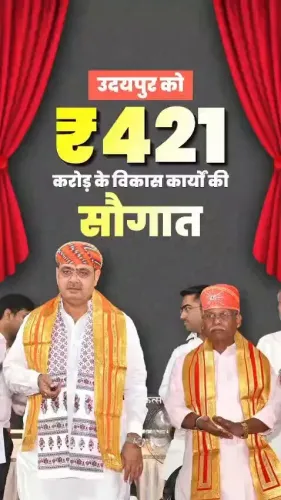
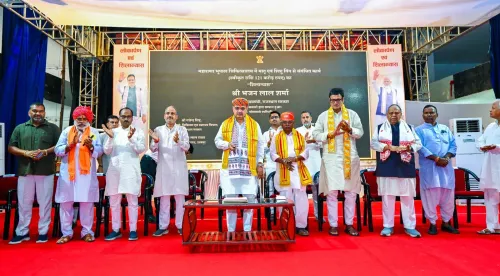
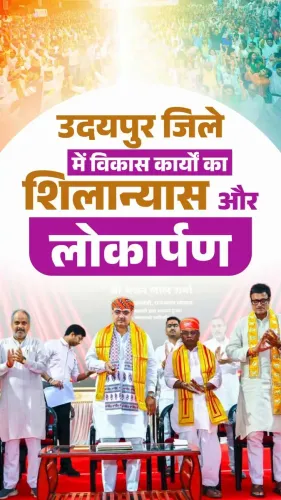
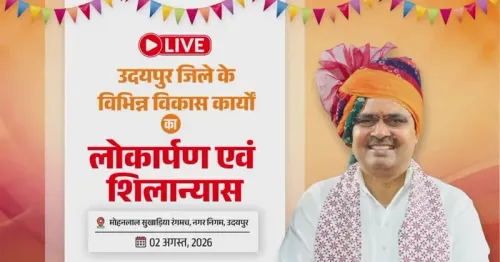
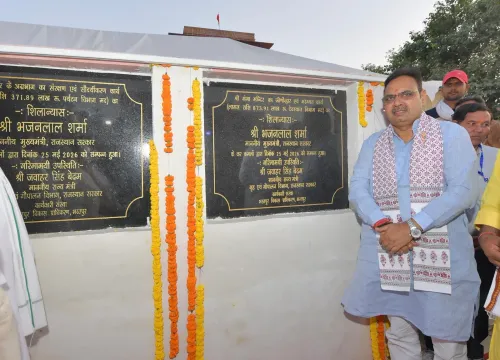
Twenty-one infrastructure projects, together worth more than Rs 47 crore, were inaugurated for the residents of Udaipur district on Monday, 3 August 2026 — a cluster delivery that signals the Bhajan Lal Sharma-led Rajasthan government's continued push to channel state funds into district-level civic works.
The Chief Minister's Office announced the inaugurations on X, tagging Chief Minister Bhajan Lal Sharma and using the hashtag #आपणो_अग्रणी_राजस्थान ('Our Leading Rajasthan') — the BJP government's development branding for the state. The post described the projects as being for aamjan — the common people — of Udaipur district.
Udaipur's Rs 47 Crore Infrastructure Push
Udaipur, a major tourism and cultural hub in southern Rajasthan, has been a recurring focus of the state government's district-level development drives since the BJP swept to power after the 2023 assembly elections. The 21 projects inaugurated Monday span civic infrastructure funded from the state budget, though specific project-by-project breakdowns were not detailed in the official post.
At over Rs 47 crore across 21 projects, the average outlay per project stands at roughly Rs 2.2 crore — consistent with the scale of local civic and infrastructure works such as roads, drainage, community halls, and water supply upgrades that typically feature in such district-level inaugurations by Rajasthan's current administration.
A Pattern of District-Level Delivery Events
The Sharma government has made cluster inaugurations a signature of its administrative communication — grouping multiple local projects under a single high-visibility announcement to demonstrate delivery momentum. These events serve a dual purpose: accelerating on-ground spending and building a visible record ahead of future electoral cycles.
Udaipur's place on this circuit reflects both its political weight and its infrastructure needs as a fast-growing tourism economy that demands roads, civic amenities, and public utilities to keep pace with visitor footfall and a growing urban population.
The watch now is whether project utilisation reports and completion timelines follow — the gap between inauguration and functional delivery is where district-level schemes are most often tested.
Point of View
District-level delivery optics — packaging multiple smaller works into a single high-profile moment. For Udaipur, a tourism-driven economy with rising civic demands, the Rs 47 crore outlay is meaningful but modest in scale. The broader pattern points to the administration building a delivery narrative ahead of future electoral cycles, with the hashtag 'Our Leading Rajasthan' doing double duty as both a development slogan and a political brand. The real test will be whether these inaugurations translate into functional, completed infrastructure rather than ribbon-cutting milestones.
NationPress
3 Aug 2026
Frequently Asked Questions
What projects were inaugurated in Udaipur on 3 August 2026?
The Chief Minister's Office of Rajasthan announced the inauguration of 21 infrastructure projects worth over Rs 47 crore for the residents of Udaipur district. Specific project-by-project details were not listed in the official announcement.
Who inaugurated the projects in Udaipur?
The inauguration was announced by the Chief Minister's Office of Rajasthan and was associated with Chief Minister Bhajan Lal Sharma of the BJP government.
What is the 'Aapno Agrini Rajasthan' hashtag used by the Rajasthan CMO?
Aapno Agrini Rajasthan translates to 'Our Leading Rajasthan' and is the development branding used by the Bhajan Lal Sharma government to highlight state infrastructure and welfare initiatives.
How much money has Rajasthan's BJP government spent on Udaipur development?
In this specific announcement, over Rs 47 crore was allocated across 21 projects for Udaipur district. This is part of a broader pattern of district-level development spending by the BJP government since the 2023 Rajasthan assembly elections .
Why does the Rajasthan government inaugurate multiple projects together?
Indian state governments, including Rajasthan's current BJP administration, routinely group project inaugurations into single cluster events to demonstrate administrative delivery momentum and build a visible development record.