CM Fadnavis launches TGC 2026 to build Maharashtra innovation hub
Synopsis
Maharashtra CM Devendra Fadnavis has launched The Governance Challenge 2026, organised by Samagra, inviting students from India's top business and public policy schools to develop implementable solutions that can transform Maharashtra into a leading innovation hub.
Key Takeaways
The Governance Challenge (TGC) 2026 was announced by Maharashtra CM Devendra Fadnavis on August 3, 2026 .
The competition is organised by Samagra and is open to students from India's leading business schools and public policy institutions .
Participants must design bold, implementable solutions to strengthen Maharashtra's innovation ecosystem .
Registrations are hosted on the Unstop platform, signalling a competitive, open-access format.
The initiative continues Fadnavis's governance reform legacy from his 2014–2019 tenure as Chief Minister.
Winning proposals could be considered for actual pilot implementation by the Maharashtra government.
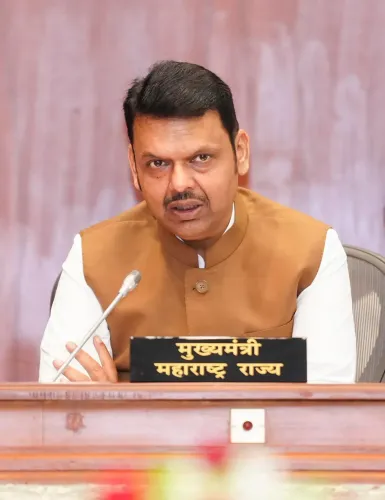
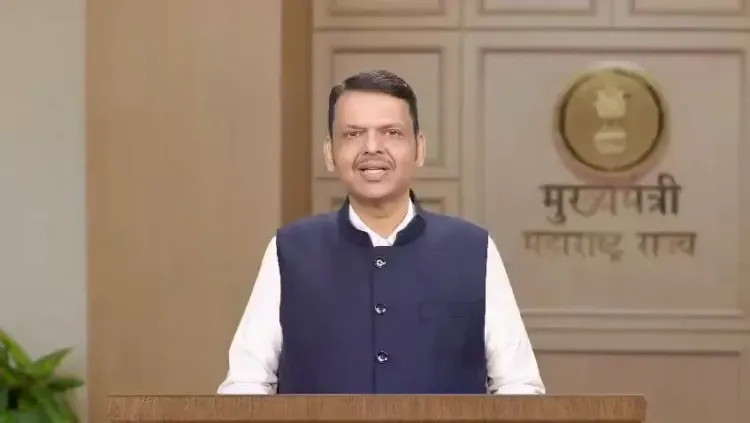
Maharashtra Chief Minister Devendra Fadnavis is putting the state's innovation future in the hands of its sharpest student minds. On Monday, August 3, 2026, Fadnavis announced the launch of The Governance Challenge (TGC) 2026, a competition organised by Samagra that invites students from India's top business schools and public policy institutions to design bold, workable solutions for transforming Maharashtra into a leading innovation hub.
In his post, Fadnavis called on 'bright young minds' to 'solve for Maharashtra and help shape its future' — framing the challenge not as an academic exercise but as a direct pipeline into state-level governance. The registration portal is live on Unstop, signalling an open, competitive format aimed at drawing the widest possible talent pool.
What TGC 2026 asks students to do
The competition tasks participants with developing 'bold, implementable solutions' to strengthen Maharashtra's innovation ecosystem. The emphasis on 'implementable' is deliberate — the ask is not blue-sky thinking but practical proposals that a state government could realistically pilot or integrate into policy. That framing sets TGC 2026 apart from the typical B-school case competition.
Samagra, the organising body, works at the intersection of government and governance reform. Its involvement signals that winning ideas are meant to travel beyond the competition stage and into actual administrative consideration.
Maharashtra's innovation push and the crowdsourcing trend
Maharashtra — home to Mumbai, India's financial capital — has long positioned itself as the country's economic engine. Under Fadnavis's earlier tenure as Chief Minister from 2014 to 2019, the state pushed hard on e-governance and ease-of-doing-business reforms, building a foundation that subsequent administrations have continued to build on. TGC 2026 fits squarely within that lineage.
Across India, state governments have increasingly turned to student competitions and crowdsourced policy ideas to supplement official innovation strategies — a pattern that aligns with national frameworks like Startup India. The logic is straightforward: academic institutions carry concentrated analytical firepower, and competitions are a low-cost, high-signal way to surface ideas that bureaucracies might miss.
For business school and public policy students, the stakes are equally real. A winning proposal that gets piloted by the Maharashtra government is a credential unlike any classroom case study.
What to watch next
The announcement of selected teams and winning proposals will be the first test of how seriously the government intends to act on the submissions. The real measure of TGC 2026's impact will come if any proposals move from competition stage to actual pilot implementation — a step that would distinguish this initiative from ceremonial outreach and cement it as a genuine governance tool.
Maharashtra has set the stage. Now it waits to see what India's next generation of policy thinkers can deliver.
Point of View
The government is signalling that student ideas could genuinely feed into Maharashtra's innovation policy pipeline. This mirrors a national pattern of states using structured competitions to stay competitive in the startup and technology race. The real political dividend for Fadnavis, however, lies less in the competition itself and more in whether any proposals visibly translate into on-ground pilots — that is the benchmark that will define TGC 2026's legacy.
NationPress
3 Aug 2026
Frequently Asked Questions
What is The Governance Challenge 2026?
The Governance Challenge 2026 is a student competition organised by Samagra and launched by Maharashtra CM Devendra Fadnavis. It invites students from India's top business schools and public policy institutions to develop implementable solutions for strengthening Maharashtra's innovation ecosystem.
Who can participate in TGC 2026?
Students from India's leading business schools and public policy institutions are eligible to participate in TGC 2026. Registrations are open on the Unstop platform.
What is Samagra and why is it organising TGC 2026?
Samagra is a governance-focused organisation that works at the intersection of government and reform. It is organising TGC 2026 to channel student talent toward practical policy solutions for Maharashtra's innovation and startup ecosystem.
How does TGC 2026 connect to Maharashtra's innovation goals?
Maharashtra has long positioned itself as India's economic and technology leader, building on e-governance and ease-of-doing-business reforms initiated during Fadnavis's 2014–2019 tenure. TGC 2026 is designed to crowdsource fresh ideas that could accelerate the state's ambition to become a top innovation hub.
Where can students register for The Governance Challenge 2026?
Students can register for TGC 2026 on the Unstop platform via the link shared by CM Devendra Fadnavis in his official post on X.