CM Bhagwant Mann: Punjab racing toward 'Padhhda Punjab' and 'Tandrust Punjab'
Synopsis
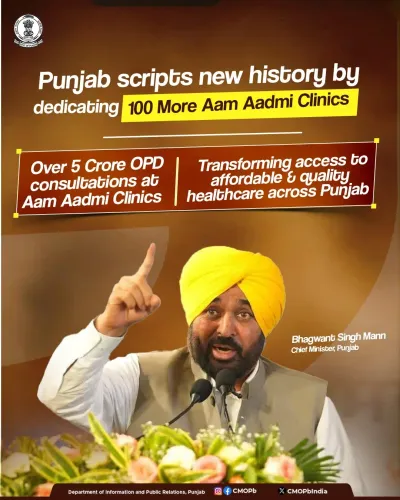
Chief Minister Bhagwant Mann says Punjab's people-first policies are driving the state toward 'Padhhda Punjab' and 'Tandrust Punjab', with over 1,100 Aam Aadmi Clinics already operational and a target of 1,400 set for the near future.
Key Takeaways
CM Bhagwant Mann addressed residents on 3 August 2026 , highlighting Punjab's twin welfare goals.
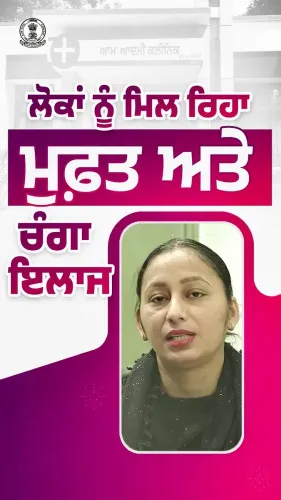
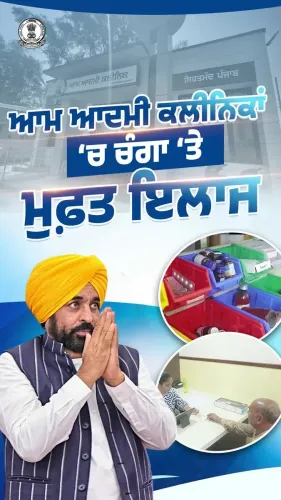
Over 1,100 Aam Aadmi Clinics are currently operational across Punjab, providing free primary healthcare.
The government has set a near-term target of scaling the clinic network to 1,400 .
The dual vision — 'Padhhda Punjab' (Educated Punjab) and 'Tandrust Punjab' (Healthy Punjab) — frames education and health as one integrated agenda.
The clinic model mirrors the AAP's Mohalla Clinic programme from Delhi, adapted for Punjab after the party's 2022 election victory .
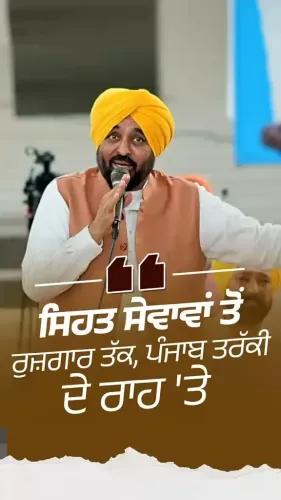
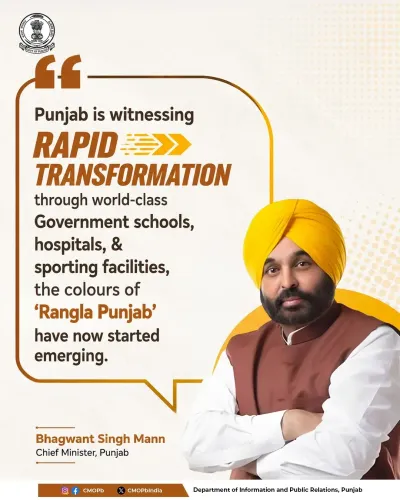
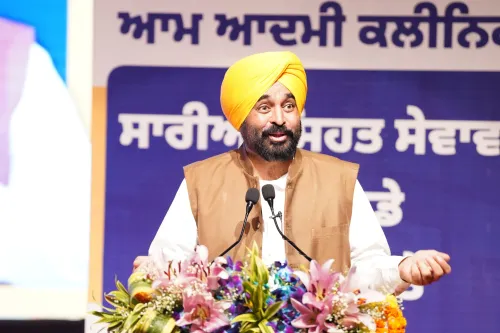
A state that once struggled with crumbling government schools and inaccessible primary healthcare is now being held up as a turnaround story. Addressing residents on Monday, 3 August 2026, Chief Minister Bhagwant Mann declared that Punjab's people-first policies are rapidly steering the state toward two defining goals — 'Padhhda Punjab' (Educated Punjab) and 'Tandrust Punjab' (Healthy Punjab).
1,100 clinics running — and 300 more on the way
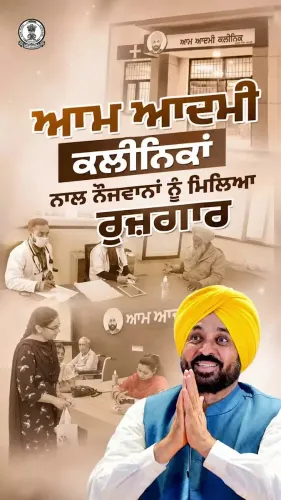
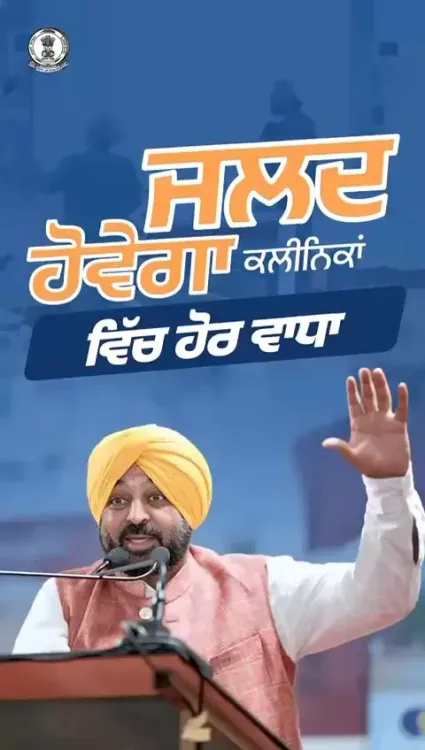
The centrepiece of Mann's address was the Aam Aadmi Clinic network. He told the gathering that more than 1,100 Aam Aadmi Clinics are already operational across Punjab, delivering free primary healthcare at the neighbourhood level. The Chief Minister added that this number will soon cross 1,400 — a scale-up that would deepen the programme's reach into rural and peri-urban pockets that have historically depended on costly private practitioners for basic care.
The clinics are modelled on the Mohalla Clinic concept pioneered by the Aam Aadmi Party in Delhi — walk-in facilities offering free consultations, diagnostics, and medicines without the intimidating corridors of district hospitals. Punjab's version, launched after the AAP swept the 2022 assembly elections, has become the government's most visible proof-of-delivery on its healthcare promise.
The twin-pillar bet: education and health as one agenda
Mann's framing of 'Padhhda Punjab' and 'Tandrust Punjab' as a paired vision is deliberate. The #PunjabSikhyaKranti hashtag anchoring the post signals that the education overhaul — government school upgrades, improved teacher attendance, and infrastructure investment — is being projected alongside the clinic expansion as two sides of the same welfare coin.
This dual branding echoes the AAP playbook from Delhi, where school transformations and Mohalla Clinics became the twin pillars of the party's governance identity. In Punjab, where the party won its first-ever state majority, replicating that formula carries both political and policy weight.
What the 1,400-clinic target means on the ground
Reaching 1,400 Aam Aadmi Clinics would mean roughly one clinic for every cluster of villages across a state of over 30 million people. For rural Punjab — where out-of-pocket healthcare spending has long strained household budgets — each additional clinic represents a direct reduction in that burden. The government's stated urgency on the timeline suggests the expansion is already in the pipeline, not merely aspirational.
Punjab's welfare push is now entering a phase where delivery numbers, not just announcements, will define the political narrative heading into the next electoral cycle. The 1,400 mark is the next milestone the government has publicly committed to — and the one it will be held to.
Point of View
Countable welfare infrastructure to anchor its re-election narrative. Scaling Aam Aadmi Clinics to 1,400 directly mirrors the Delhi model that helped the party consolidate its urban base, but Punjab's challenge is rural penetration at scale. The pairing of health and education under a single branded vision ('Padhhda Punjab, Tandrust Punjab') signals a deliberate attempt to build a durable welfare identity before the next assembly cycle. Whether delivery numbers match the political pitch will be the defining test.
NationPress
3 Aug 2026
Frequently Asked Questions
What are Aam Aadmi Clinics in Punjab?
Aam Aadmi Clinics are neighbourhood-level health centres set up by the Punjab government to provide free primary healthcare, including consultations, diagnostics, and medicines, modelled on Delhi's Mohalla Clinics.
How many Aam Aadmi Clinics are operational in Punjab?
According to Chief Minister Bhagwant Mann's address on 3 August 2026, more than 1,100 Aam Aadmi Clinics are currently operational across Punjab.
What is the Punjab government's target for Aam Aadmi Clinics?
The Punjab government has stated that the number of Aam Aadmi Clinics will soon be expanded to 1,400.
What is 'Padhhda Punjab' and 'Tandrust Punjab'?
'Padhhda Punjab' means 'Educated Punjab' and 'Tandrust Punjab' means 'Healthy Punjab' — the two branded welfare pillars of Chief Minister Bhagwant Mann's governance agenda covering education reform and free healthcare expansion.
What is Punjab Sikhya Kranti?
Punjab Sikhya Kranti is the AAP government's education transformation initiative in Punjab, aimed at upgrading government schools and improving learning outcomes, running parallel to the Aam Aadmi Clinic health programme.