Rajasthan CM Office: iStart yields 8,700 startups, Rs 1,000 cr investment
Synopsis
Rajasthan's Chief Minister's Office says the iStart programme has nurtured over 8,700 startups, drawn more than Rs 1,000 crore in investment and created 48,000-plus direct jobs, marking eleven years of Digital India and ahead of the National Conference on e-Governance 2026.
Key Takeaways
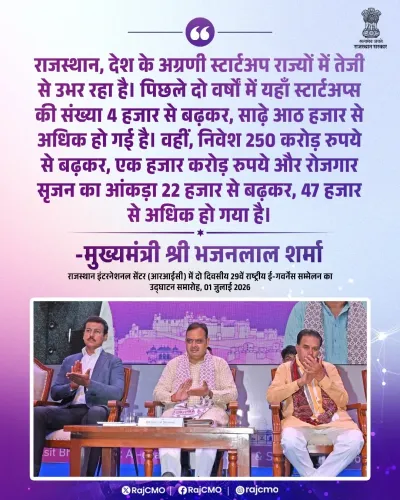
The iStart programme has supported more than 8,700 startups in Rajasthan since its launch in 2015 .
Total investment attracted through iStart exceeds Rs 1,000 crore , according to the Chief Minister's Office.
More than 48,000 direct jobs have been created through startups nurtured under the scheme.
The announcement was made in the context of 11 years of Digital India and tagged to CM Bhajanlal Sharma .
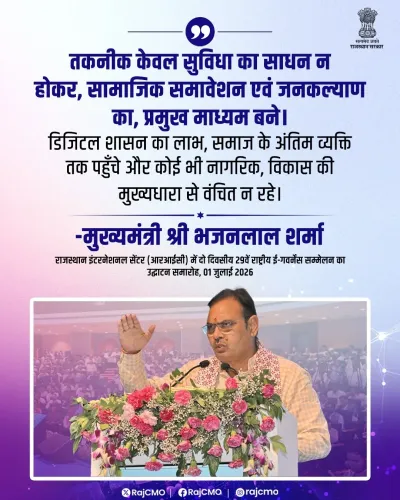
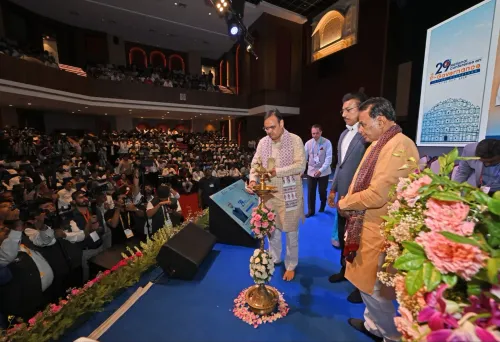
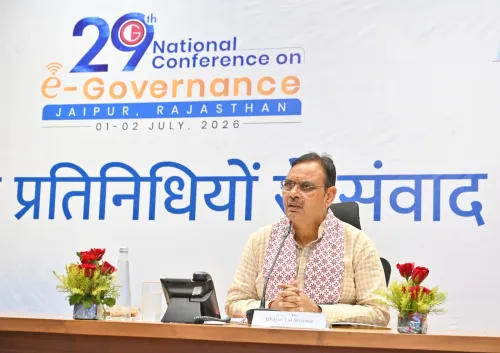
The milestone coincides with the upcoming National Conference on e-Governance 2026 (NCeG2026) , where state digital economy outcomes are expected to be showcased.
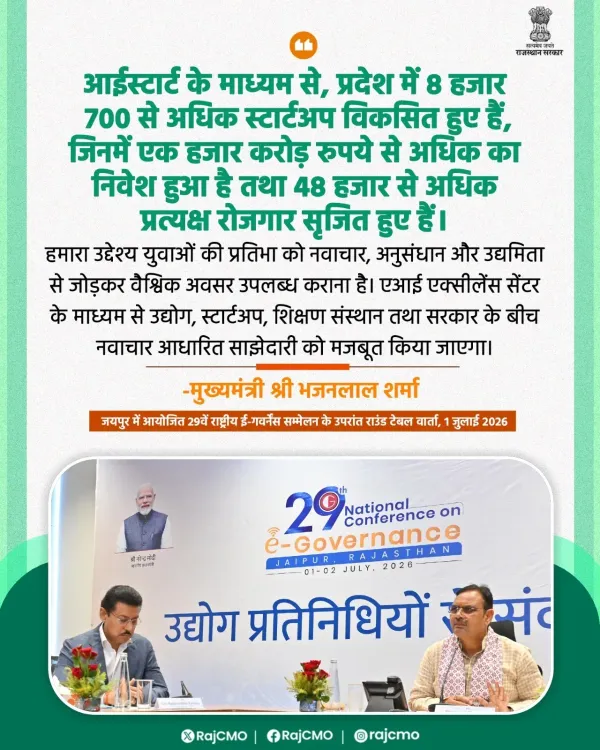
The Chief Minister's Office of Rajasthan announced on 2 July 2026 that the state's flagship iStart programme has fostered more than 8,700 startups, attracted over Rs 1,000 crore in investment, and generated more than 48,000 direct jobs, sharing the milestone in the context of #11YearsOfDigitalIndia and the upcoming National Conference on e-Governance 2026 (NCeG2026).
Context
The post, tagged to Chief Minister Bhajanlal Sharma (@BhajanlalBjp), states: 'iStart ke madhyam se, pradesh mein 8 hazar 700 se adhik startups viksit hue hain, jinmein ek hazar crore rupaye se adhik ka nivesh hua hai tatha 48 hazar se adhik pratyaksh rojgar srjit hue hain' — translated as: 'Through iStart, more than 8,700 startups have been developed in the state, in which more than Rs 1,000 crore has been invested and more than 48,000 direct jobs have been created.' The announcement was made as India marks eleven years of the Digital India mission, lending the figures a symbolic national dimension.
Policy Backdrop
Rajasthan's iStart programme was launched in 2015 to provide seed funding, mentorship, incubation support, and single-window regulatory clearance to early-stage ventures. It runs in parallel with the central government's Startup India initiative, announced in 2016, which offers tax benefits and a fund-of-funds mechanism to complement state-level efforts.
Digital India, launched in 2015 by the Union government, set the broader framework for digitising public service delivery and building digital infrastructure across states. Rajasthan, traditionally known for sectors such as tourism and mining, has used both programmes to diversify its economic base toward technology and innovation-led growth.
Stakeholders and Impact
The primary beneficiaries of iStart are young entrepreneurs and early-stage startups across Rajasthan, including ventures in tier-2 cities that have historically lacked access to venture capital and mentorship networks. The claim of 48,000-plus direct jobs is significant for a state where youth employment has been a persistent policy challenge.
Since 2015, multiple Indian states have introduced dedicated startup policies aligned with central missions, gradually shifting economic activity and venture capital toward smaller cities. Rajasthan's figures reflect this nationwide pattern of benchmarking startup ecosystems through counts, investment inflows, and direct employment numbers. The NCeG2026 conference is expected to serve as a national platform where such state-level digital governance outcomes are presented and compared.
What's Next
The National Conference on e-Governance 2026 is anticipated to spotlight digital economy metrics from states including Rajasthan, potentially influencing future central allocations and policy direction for startup incentives. Observers will watch whether the Bhajanlal Sharma government follows the milestone announcement with fresh budget allocations or expanded iStart incentives to sustain momentum beyond the symbolic eleven-year mark of Digital India.
Point of View
Timed to the eleventh anniversary of Digital India and the NCeG2026 conference — two platforms that amplify state-level digital achievements to a national audience. For the Bhajanlal Sharma government, which took office in December 2023, publicising inherited and built-upon programme outcomes helps establish a narrative of continuity and growth in technology-led governance. The figures — startups, investment, and jobs — mirror the metrics Indian states routinely deploy to compete for central recognition and investor attention. Whether these numbers translate into sustained venture activity beyond incubation support will be the real test of Rajasthan's startup ecosystem depth.
NationPress
2 Jul 2026
Frequently Asked Questions
What is the iStart programme in Rajasthan?
iStart is Rajasthan's flagship state initiative launched in 2015 to promote entrepreneurship by offering seed funding, mentorship, incubation support, and single-window regulatory clearance to early-stage startups.
How many startups has iStart Rajasthan produced?
According to the Chief Minister's Office of Rajasthan, the iStart programme has helped develop more than 8,700 startups in the state as of July 2026.
How much investment has iStart Rajasthan attracted?
The Chief Minister's Office states that more than Rs 1,000 crore has been invested through startups developed under the iStart programme.
How many jobs has iStart Rajasthan created?
The Rajasthan CMO says iStart has resulted in the creation of more than 48,000 direct jobs across the state.
What is NCeG2026 and why is it relevant to Rajasthan?
NCeG2026 is the National Conference on e-Governance 2026, an upcoming national platform where states are expected to present digital governance and economy outcomes; Rajasthan's iStart figures were shared with the conference hashtag, signalling the state's intent to highlight its startup ecosystem at the event.