Rajasthan CMO Highlights Cooperative Sector Gains Since 2021 Ministry
Synopsis
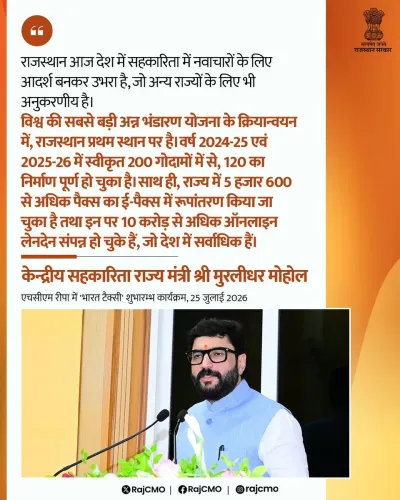
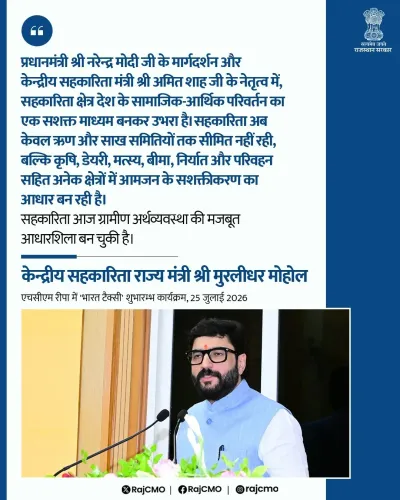
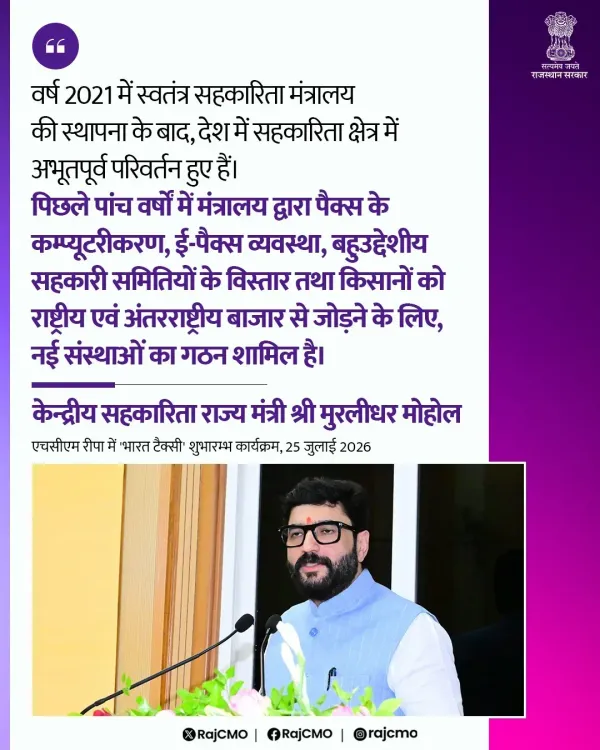
The Rajasthan Chief Minister's Office on 26 July 2026 credited the 2021 creation of India's standalone Ministry of Cooperation with bringing unprecedented transformation to the cooperative sector, tagging Union Minister Murlidhar Mohol under the 'Our Leading Rajasthan' campaign.
Key Takeaways
The Rajasthan CMO posted on 26 July 2026 highlighting cooperative sector gains since 2021 .
India's Ministry of Cooperation was established in July 2021 as the country's first standalone cooperative ministry, carved out from the agriculture ministry.
Union Minister Murlidhar Mohol , a politician with cooperative sector roots, was tagged in the post.
The post was shared under the state campaign hashtag #आपणो_अग्रणी_राजस्थान ('Our Leading Rajasthan').
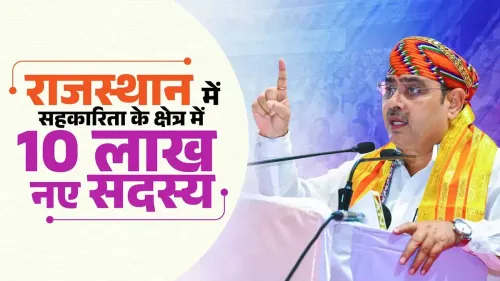
Rajasthan has an extensive network of cooperative societies, including Primary Agricultural Credit Societies, aligned with the national cooperative framework.
Key beneficiaries of cooperative sector reform include farmers, rural credit borrowers, and small producers across the state.
The Chief Minister's Office of Rajasthan on Sunday, 26 July 2026 highlighted the sweeping transformation of India's cooperative sector following the establishment of a dedicated Ministry of Cooperation in 2021, tagging Union Minister Murlidhar Mohol in the post under the campaign hashtag #आपणो_अग्रणी_राजस्थान ('Our Leading Rajasthan').
Context
The post, shared from the official Rajasthan CMO account, states: 'After the establishment of an independent Ministry of Cooperation in the year 2021, unprecedented changes have taken place in the cooperative sector in the country.' The message aligns Rajasthan's governance narrative with a central policy milestone, framing the state as an active participant in the national cooperative revival.
The tag to Murlidhar Mohol — a politician with deep roots in cooperative institutions and a former Mayor of Pune — signals coordination between the state government and central cooperative leadership, though the specific occasion for the post was not elaborated upon.
Policy Backdrop
Before July 2021, cooperative affairs were managed as a sub-department under the Ministry of Agriculture, Cooperation and Farmers Welfare, receiving limited independent attention at the central level. The creation of a standalone Ministry of Cooperation was a structural shift intended to give the sector — which encompasses dairy cooperatives, rural credit societies, housing cooperatives, and marketing federations — a dedicated policy voice.
The move drew on the success of models such as large dairy cooperative networks and sought to expand their reach into credit, rural marketing, and affordable housing. Rajasthan, with its extensive network of Primary Agricultural Credit Societies (PACS) and state-level cooperative federations, has been one of the states actively aligning local cooperative infrastructure with the national framework.
Stakeholders and Impact
The cooperative sector in India encompasses millions of member-farmers, rural credit borrowers, and small producers who depend on cooperative societies for financial access, input supply, and market linkages. Strengthening the sector's policy architecture directly affects rural livelihoods, particularly in agrarian states like Rajasthan.
The campaign hashtag #आपणो_अग्रणी_राजस्थान ('Our Leading Rajasthan') situates this post within a broader state-branding effort, projecting Rajasthan as a proactive contributor to national development goals. Cooperative societies, farmers, and rural credit institutions are the primary beneficiaries cited in the broader policy discourse around the 2021 ministry's mandate.
What's Next
Attention will now turn to the state-level rollout of new multi-state cooperative societies and any Rajasthan-specific schemes that integrate with central guidelines on cooperative governance and digital modernisation of PACS. The engagement between the Rajasthan CMO and central cooperative leadership, as reflected in this post, suggests continued coordination on policy implementation. The trajectory of cooperative sector reform — from structural creation in 2021 to on-ground impact — will be closely watched by rural stakeholders across the state.
Point of View
Particularly ahead of electoral cycles. The #आपणो_अग्रणी_राजस्थान campaign framing adds a state-pride dimension, positioning Rajasthan not merely as a recipient of central policy but as a proactive leader within it. Whether this translates into measurable cooperative sector outcomes on the ground remains the more substantive question for rural stakeholders.
NationPress
25 Oct 2026
Frequently Asked Questions
When was India's Ministry of Cooperation established?
India's Ministry of Cooperation was established in July 2021 as the country's first standalone ministry dedicated to the cooperative sector, carved out from the Ministry of Agriculture, Cooperation and Farmers Welfare.
Who is Murlidhar Mohol and what is his connection to cooperatives?
Murlidhar Mohol is an Indian politician and former Mayor of Pune who has been active in cooperative institutions. He was tagged by the Rajasthan CMO in the post about cooperative sector development.
What is the Aapno Agrni Rajasthan campaign?
Aapno Agrni Rajasthan ('Our Leading Rajasthan') is a state government campaign hashtag used by the Rajasthan CMO to brand the state as a proactive leader in national development and governance initiatives.
How does Rajasthan participate in India's cooperative sector?
Rajasthan has an extensive network of cooperative societies including Primary Agricultural Credit Societies (PACS) and state-level cooperative federations that align with the national cooperative framework established under the 2021 ministry.
What changes did the Ministry of Cooperation bring after 2021?
The creation of a standalone Ministry of Cooperation in 2021 gave the sector independent policy focus, aiming to expand cooperative reach into rural credit, marketing, housing, and digital modernisation of societies, though specific outcomes referenced in the Rajasthan CMO post were not detailed.