Rajasthan CMO highlights tribal livelihood push under double-engine govt
Synopsis
The Chief Minister's Office of Rajasthan highlighted the state government's ongoing livelihood schemes for tribal communities, crediting the 'double engine' alignment between CM Bhajan Lal Sharma's BJP government and the BJP-led central government for the welfare push in the state's scheduled areas.
Key Takeaways
The Chief Minister's Office of Rajasthan posted on 3 August 2026 highlighting livelihood schemes for tribal communities.
Chief Minister Bhajan Lal Sharma was directly tagged, signalling personal ownership of the tribal welfare agenda.
The post invoked the 'double engine' government frame, arguing that BJP control at both state and centre accelerates tribal welfare delivery.
Rajasthan's tribal populations are concentrated in Udaipur, Banswara, Dungarpur and Pratapgarh districts.
No specific scheme names or budget figures were cited; implementation reports remain the next key data point to watch.
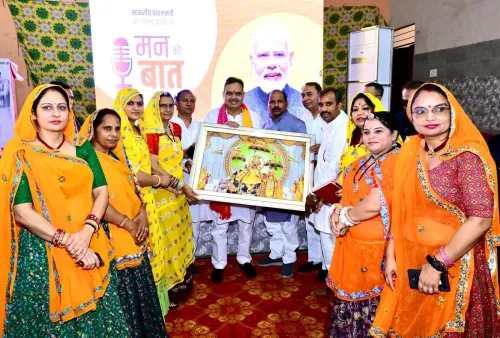
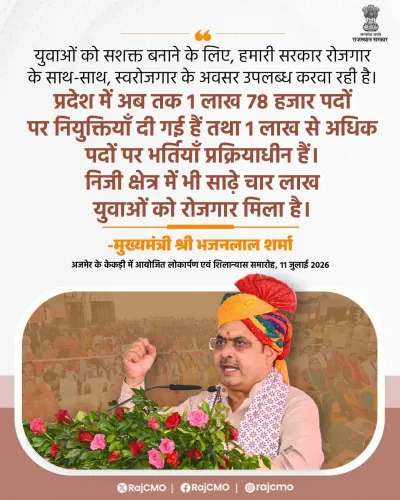
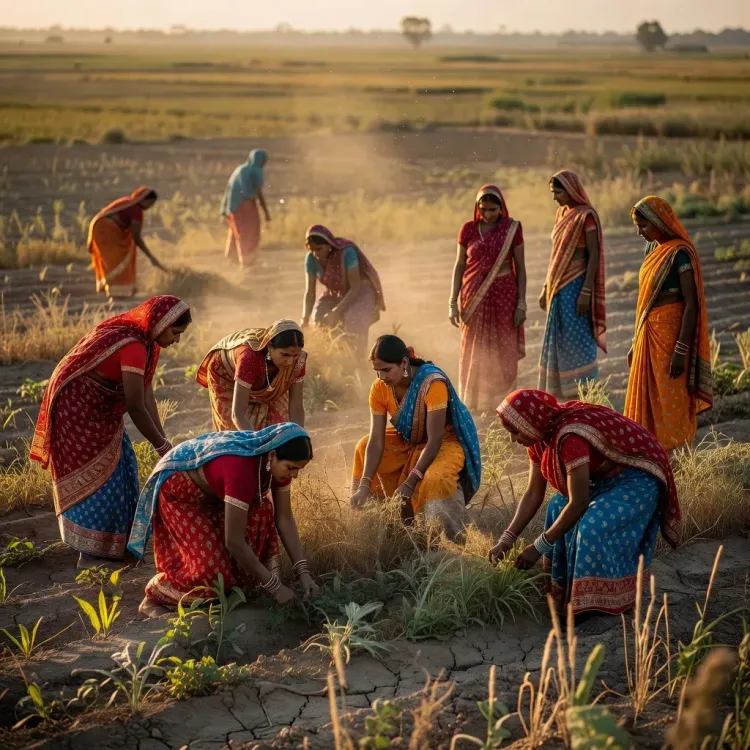
Tribal communities across Rajasthan are at the centre of a renewed livelihood push, with the Chief Minister's Office of Rajasthan spotlighting the coordinated welfare drive running under Chief Minister Bhajan Lal Sharma and the aligned central government on Monday, 3 August 2026.
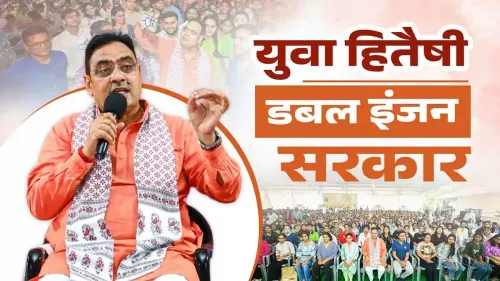
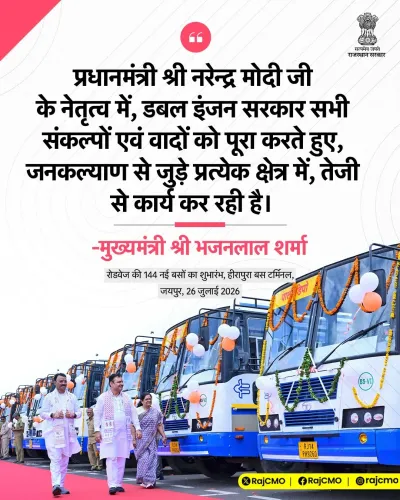
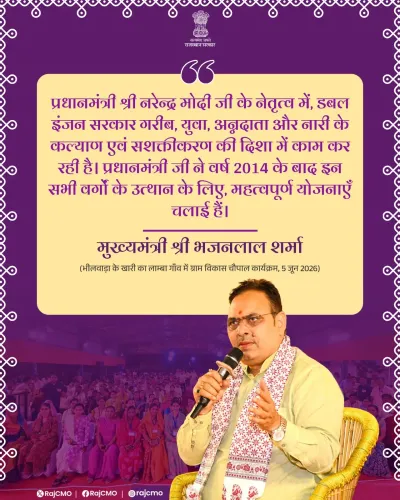
The post, shared under the hashtag #आपणो_अग्रणी_राजस्थान ('Our Leading Rajasthan'), invokes the now-familiar 'double engine' formulation — the idea that a state and centre governed by the same party can deliver welfare faster and with less friction. The message: schemes targeting livelihoods in tribal regions are running precisely because that political alignment exists.
Where the tribal belt sits in Rajasthan's map
Rajasthan's tribal populations are concentrated in its southern and southeastern districts — Udaipur, Banswara, Dungarpur and Pratapgarh — areas that have historically lagged on income and employment indicators. These scheduled areas fall under the constitutional framework that mandates special planning and spending for tribal development, giving both the state government and the Ministry of Tribal Affairs in New Delhi a direct role in livelihood programming.The 'double engine' message and what drives it
Since 2014, BJP administrations at the centre and in BJP-governed states have consistently used the 'double engine' frame to argue that policy alignment translates into faster fund flow and smoother scheme implementation in scheduled areas. CM Bhajan Lal Sharma, who took office in December 2023, has continued that messaging pattern in Rajasthan. The CMO's post tags Sharma directly, signalling personal ownership of the tribal welfare agenda ahead of what the government is positioning as a visible delivery phase. No specific scheme names or budget figures were cited in the post — the next meaningful signal will come when the state releases implementation reports or budget utilisation data for tribal livelihood programmes in its scheduled districts. For millions of families in Rajasthan's tribal belt, the proof will be in those numbers.Point of View
Making the BJP's simultaneous hold on Jaipur and New Delhi the implied reason tribal schemes are running at all. For Sharma, who is still consolidating his political identity since taking office in December 2023, associating himself visibly with tribal welfare is strategically significant: southern Rajasthan's scheduled districts are both electorally important and historically underserved. The absence of specific scheme names or numbers, however, keeps the message in the register of political signalling rather than policy accountability — the harder test will come when utilisation data is public.
NationPress
3 Aug 2026
Frequently Asked Questions
What is the 'double engine' government concept in India?
'Double engine' government refers to the same political party holding power at both the state and central levels, with the argument that this alignment allows faster fund release and smoother implementation of welfare schemes, particularly in areas like tribal development that require coordination between both governments.
Which districts in Rajasthan have large tribal populations?
Rajasthan's tribal communities are concentrated primarily in the southern and southeastern districts of Udaipur, Banswara, Dungarpur and Pratapgarh , which fall under the constitutional framework for scheduled area governance.
Who is Bhajan Lal Sharma?
Bhajan Lal Sharma is the Chief Minister of Rajasthan, representing the Bharatiya Janata Party. He assumed office in December 2023 following the BJP's victory in the Rajasthan assembly elections.
What schemes does the Rajasthan government run for tribal livelihood?
The post did not name specific schemes. Tribal livelihood programmes in Rajasthan's scheduled areas are funded and implemented through a combination of state government initiatives and central schemes under the Ministry of Tribal Affairs .
What is the hashtag Aapno Agrani Rajasthan about?
Aapno Agrani Rajasthan translates to 'Our Leading Rajasthan' and is a branding hashtag used by the Rajasthan BJP government to promote its governance and development messaging across social media.