Rajasthan CMO: State Is Shaping India's Digital Future
Synopsis
The Chief Minister's Office of Rajasthan marked 11 years of Digital India by positioning the state as a rising contributor to India's digital future, ahead of the National Conference on e-Governance 2026. The statement signals a deliberate shift in Rajasthan's identity beyond tourism and heritage.
Key Takeaways
The Chief Minister's Office of Rajasthan posted on 2 July 2026 marking 11 years of Digital India .
The post declares Rajasthan is becoming a key player in building India's digital future , beyond its traditional tourism and heritage identity.
The message references Chief Minister Bhajanlal Sharma and the upcoming National Conference on e-Governance 2026 (#NCeG2026) .
Digital India was launched in July 2015 as a flagship central programme to digitise government services and promote digital literacy.
State-level announcements and digital project showcases are expected at NCeG2026 .
The Chief Minister's Office of Rajasthan, on Thursday, 2 July 2026, declared that Rajasthan is no longer defined solely by its tourism and heritage legacy but is emerging as a key contributor to India's digital future, marking the occasion of #11YearsOfDigitalIndia and the upcoming #NCeG2026 — the National Conference on e-Governance.
Context
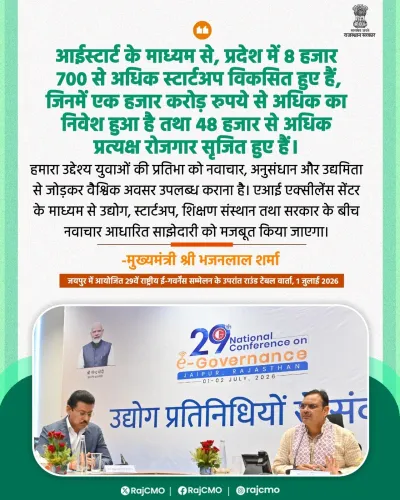
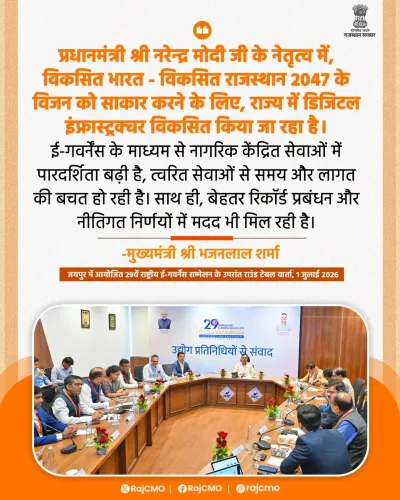
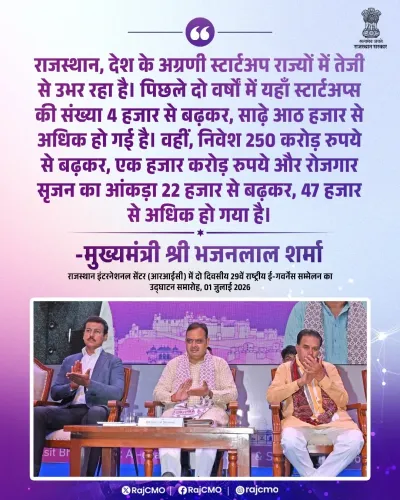
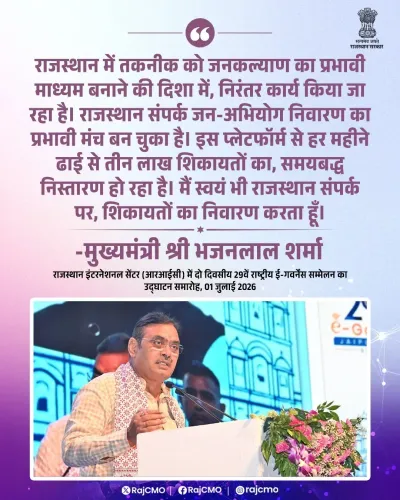
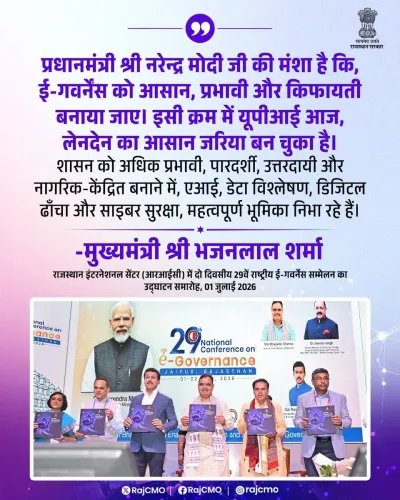
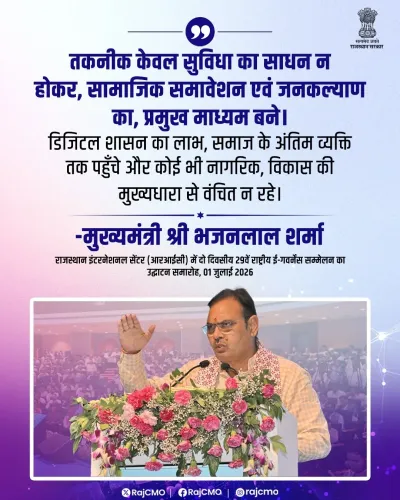
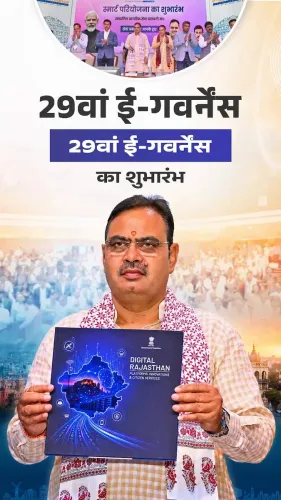
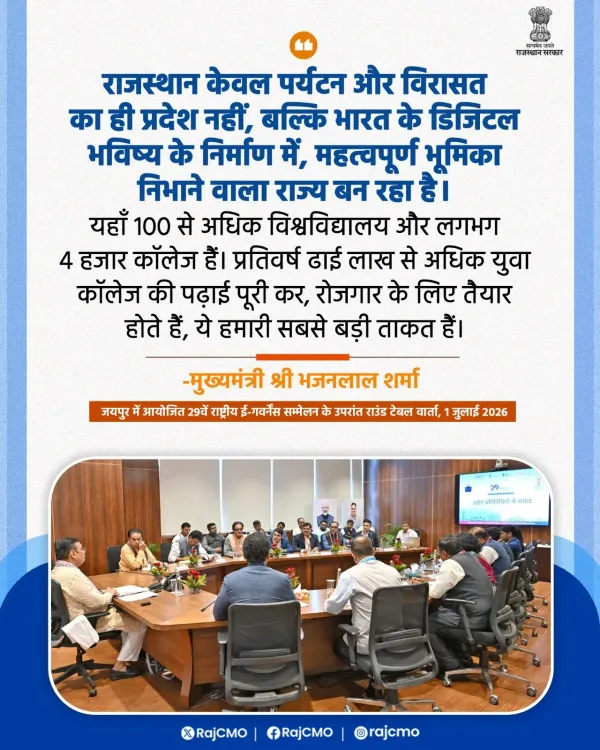
The post, attributed to the office of Chief Minister Bhajanlal Sharma, states in Hindi: 'Rajasthan keval paryatan aur virasat ka hi Pradesh nahin, balki Bharat ke digital bhavishy ke nirman mein, mahatvapurn bhumika nibhane wala rajya ban raha hai' — meaning, 'Rajasthan is not merely a state of tourism and heritage, but is becoming a state that plays an important role in building India's digital future.' The message was shared alongside an image, signalling an intent to reposition the state's public identity ahead of a major national e-governance gathering.
Policy Backdrop
Digital India, the flagship central programme launched in July 2015 by the Government of India, was designed to transform the country into a digitally empowered society and knowledge economy by delivering government services electronically and expanding digital literacy. This year marks 11 years of that initiative, prompting states across the country to take stock of their contributions to the programme. Rajasthan, under CM Bhajanlal Sharma — who took office in December 2023 following a Bharatiya Janata Party victory — has been aligning state governance priorities with the national digital framework, seeking to attract IT investments and modernise public service delivery alongside its dominant tourism sector.
The National Conference on e-Governance (NCeG) is an annual platform that brings together central ministries, state governments, and technology stakeholders to showcase digital governance achievements and chart the road ahead. The 2026 edition, referenced in the post as #NCeG2026, is expected to serve as a stage for state-level project showcases and policy announcements, though specific dates, agenda, and outcomes of the event have not been confirmed.
Stakeholders and Impact
The primary beneficiaries of Rajasthan's push into digital governance are the state's residents, who stand to gain from more accessible and efficient public services delivered through electronic platforms. For the state government, the messaging serves a dual purpose: reinforcing its commitment to the national Digital India vision while simultaneously signalling to investors and the technology sector that Rajasthan is open for business beyond its traditional heritage economy. Multiple Indian states have pursued similar repositioning since 2015, competing to attract data centres, IT parks, and e-governance contracts.
The framing also carries political significance for the BJP-led state government, which benefits from associating Rajasthan's progress with a decade-plus central programme that originated under the party's national leadership.
What's Next
Attention will now turn to what Rajasthan presents at #NCeG2026, where state-level digital infrastructure schemes and e-governance milestones are expected to be showcased before a national audience. Progress reports on the state's ongoing digital initiatives and any new project announcements linked to the 11th anniversary of Digital India will be closely watched by policy observers and technology investors alike. The CMO's messaging suggests the state government intends to use this moment to cement Rajasthan's credentials as a serious digital-economy player on the national stage.
Point of View
Chief Minister Bhajanlal Sharma's office is signalling ambition to compete with states like Telangana and Karnataka for IT investments and e-governance recognition. The reference to NCeG2026 suggests the state is preparing a structured showcase of its digital credentials before a national audience. This aligns with a broader BJP pattern of using central programme anniversaries to highlight state-level delivery, reinforcing the party's governance narrative at both the state and national level.
NationPress
2 Jul 2026
Frequently Asked Questions
What is Digital India and how many years has it completed?
Digital India is a flagship central government programme launched in July 2015 to transform India into a digitally empowered society by delivering services electronically and expanding digital literacy. It completed 11 years in July 2026.
What did the Rajasthan CMO say about the state's digital role?
The Chief Minister's Office of Rajasthan stated that the state is not just known for tourism and heritage but is becoming an important contributor to building India's digital future , in a post marking 11 years of Digital India.
Who is the Chief Minister of Rajasthan in 2026?
Bhajanlal Sharma of the Bharatiya Janata Party is the Chief Minister of Rajasthan, having taken office in December 2023 after the BJP won the state assembly elections.
How is Rajasthan contributing to Digital India?
Rajasthan is aligning its state governance priorities with the national Digital India framework, working to modernise public service delivery and attract IT investments alongside its established tourism sector, with showcases expected at NCeG2026 .